Historical Dioramas
Ashgabat, Turkmenistan
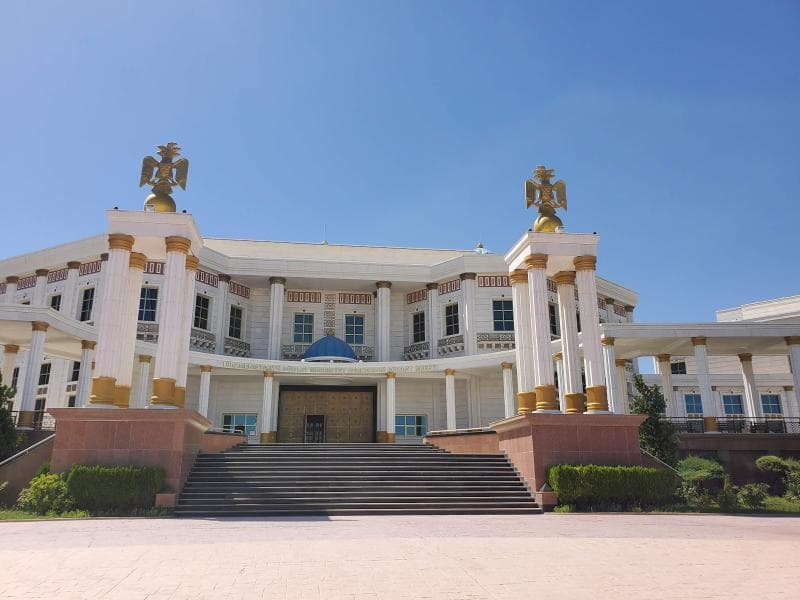
Explore the Historical Dioramas at the National Museum Of Turkmenistan in Ashgabat, showcasing the nation's ancient past, diverse nature, and rich culture.
Overview
Stepping into the National Museum Of Turkmenistan in Ashgabat offers a captivating journey through time, and central to this experience are its remarkable Historical Dioramas. These meticulously crafted three-dimensional scenes serve as vibrant windows into Turkmenistan's rich past and diverse natural heritage. Far from being mere static displays, the dioramas provide an immersive context, bringing ancient civilizations, pivotal historical moments, and varied ecosystems to life for visitors. They are an integral part of the museum's extensive collection, which encompasses over half a million artifacts, and offer a unique visual narrative that complements the archaeological and ethnographic exhibits.
History & Cultural Background
The Historical Dioramas within the National Museum Of Turkmenistan intricately trace the history of humankind across the country's territory, spanning from the Paleolithic era through the Mesolithic, late Stone Age, and Eneolithic periods. Housed significantly in the Hall of Ancient History, these displays utilize a blend of photographic materials, explanatory information, and genuine archaeological finds to reconstruct early human settlements and activities. Visitors can visualize life in ancient sites such as the caves of Dam-dam Cheshme and Jebel, explore the nuances of the Jeytun culture, and witness the development of the city of Altyndepe. Moving into later periods, the Hall of the Middle Ages employs similar diorama techniques to illustrate the early, developed, and late Middle Ages (V-XVI centuries). These historical dioramas, supported by archaeological discoveries, reconstructions, and visual aids, depict the states established by Turkmen people during these eras, alongside models of significant medieval monuments from Merv, Kunya Urgench, and Anau.
Beyond human history, the museum also houses extensive dioramas dedicated to the natural and ethnographic heritage of Turkmenistan, particularly within the Museum of Ethnography and Local Lore, a part of the larger complex. These exhibits explore the unique landscapes, flora, and fauna of Turkmenistan's diverse regions, offering insights into traditional life and customs.
What Makes It Special
What truly sets the Historical Dioramas apart is their capacity to transport the viewer directly into the scenes they depict. Unlike simply viewing artifacts in isolation, these dioramas provide essential context, illustrating how these objects were used and the environments in which people lived. They transform abstract historical periods into tangible realities. The blend of artistry in their creation with accurate historical and scientific detail makes them powerful educational tools. Reviewers have often highlighted the 'detailed dioramas of historic sites' as particularly impressive, noting how they evoke a sense of the past that might otherwise be difficult to grasp.
The dioramas extend their interpretive power beyond history to nature and culture. The nature department's dioramas, for instance, recreate the unique landscapes and biodiversity of Turkmenistan, from the desert to mountainous regions, enriching visitors' understanding of the country's natural wealth. The ethnographic dioramas, on the other hand, portray cultural practices, offering a visual narrative of the Turkmen way of life.
Stories, Fun Facts & Local Details
Among the many fascinating depictions, the Hall of Ancient History's dioramas tell stories of ancient civilizations, showing the advanced development of early agricultural societies like Jeitun and Altyn-Depe through reconstructed models and displays of artifacts. A particularly engaging diorama within the ethnographic section vividly portrays a traditional Turkmen marriage ceremony, known as 'toy', providing a detailed glimpse into customs and traditions.
The natural history dioramas are equally captivating. Visitors can explore scenes recreating the flora and fauna of the Kopetdag Mountains, showcasing animals such as the badger, bezoar goat, leopard, and various bird species. The vast Karakum Desert, covering 80% of Turkmenistan, is represented with its unique wildlife, including gazelles, caracals, and monitor lizards. A poignant diorama even features the now-extinct Turanian tiger, offering a glimpse into the region's past biodiversity. These immersive scenes are complemented by geological findings, such as dinosaur footprints found in Koytendag, further enriching the narrative of Turkmenistan's ancient past.
Visitor Perspective
For any curious traveler, the Historical Dioramas at the National Museum Of Turkmenistan offer an unparalleled opportunity to engage with the nation's heritage on a deeper level. They provide a comprehensive visual overview, making complex historical periods and intricate cultural practices more accessible and memorable. The experience of walking through these halls, surrounded by vivid reconstructions of past lives and environments, is both educational and deeply moving. It allows one to connect with the resilience and ingenuity of the Turkmen people throughout millennia and appreciate the natural beauty that has shaped their existence. The dioramas enhance the understanding of archaeological finds and cultural exhibits, leaving visitors with a richer appreciation for Ashgabat and Turkmenistan's profound history and vibrant culture.
Coordinates: 58.3489, 37.8851
View on Google Maps💬 How Travelers Describe This Place
Based on community votes
Must See
826Photogenic
494Beautiful
242Interesting
125Unique
82
Traveler Stories
Discover memorable experiences shared by travelers who have visited this place.
No traveler stories yet.
Be the first traveler to share what made this place memorable.

Tour
By
Spot
Discover amazing places around the world. Your journey starts here.
Explore
© 2026 TourBySpot. All rights reserved.