Historic Walls
Tallinn, Estonia
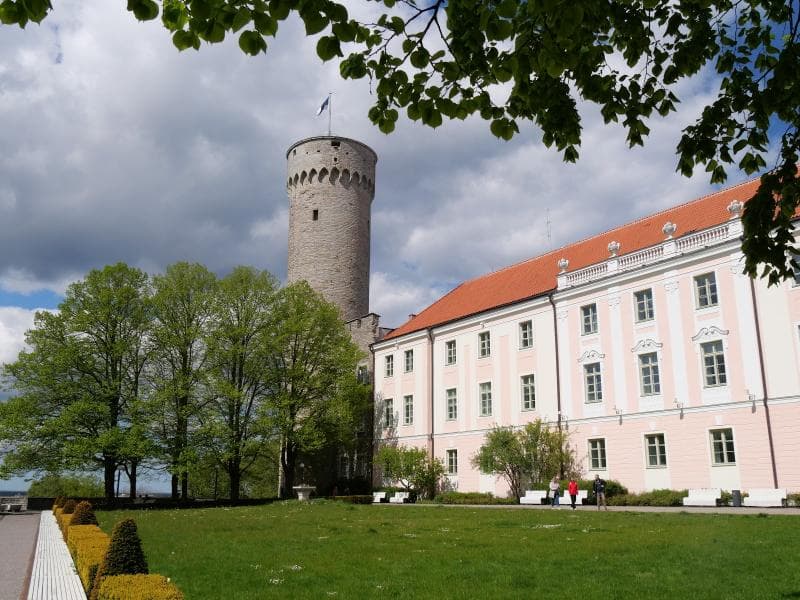
Explore the Historic Walls of Toompea Castle in Tallinn, Estonia. Discover centuries of history, iconic towers like Pikk Hermann, and panoramic city views.
Overview
The Historic Walls of Toompea Castle in Tallinn, Estonia, stand as a formidable testament to centuries of turbulent history and enduring national identity. Perched atop Toompea Hill, these ancient fortifications are more than just stone structures; they are the silent witnesses to the many powers that have shaped Estonia's past. As an integral part of the medieval Tallinn Old Town, a UNESCO World Heritage Site, the walls encapsulate the essence of this captivating Baltic capital. They offer a tangible connection to the past, inviting visitors to walk in the footsteps of ancient rulers, knights, and revolutionaries.
Today, Toompea Castle, with its impressive walls, serves as the seat of the Estonian Parliament, known as the Riigikogu, making it a unique example of a medieval fortress that continues to function as an active center of government. The architectural tapestry of the castle complex, including its historic walls, showcases a blend of styles from various epochs, reflecting the diverse influences throughout its 800-year history as Estonia's center of power.
History & Cultural Background
The origins of the Toompea stronghold date back to at least the 9th century, with the first wooden fortress built by the residents of the ancient Estonian county of Revala. This strategic location on a limestone hill provided natural defenses and commanding views. The transition to a stone castle began in the 13th century after Danish crusaders, led by King Valdemar II, took control in 1219. The castle later fell to the Order of the Brethren of the Sword, also known as the Livonian Order, which initiated significant rebuilding and fortification efforts.
By the second half of the 13th century, the Great Castle on Toompea was surrounded by a perimeter wall, largely constructed by the local vassals. Over the next century, these defenses were continuously strengthened, with new, higher outer walls built and moats widened and deepened. By the close of the 14th century, the wall of the Great Castle was further fortified with a total of fourteen defensive towers, transforming Toompea into an almost impenetrable stronghold. Each successive ruler—Danes, Germans, Swedes, and Russians—contributed to the castle's development, leaving their architectural mark and enhancing its defensive capabilities and grandeur.
What Makes It Special
The Historic Walls of Toompea Castle are remarkable for their layered architecture, showcasing a timeline of Estonia's complex past. The rugged, unplastered limestone curtain walls, particularly visible on the western and northern edges, are authentic remnants built by the Livonian Order in the 13th and 14th centuries. These walls dramatically drop down the side of the cliff, illustrating the strategic importance and natural defensive strength of Toompea Hill.
Perhaps the most iconic feature of the walls is the Pikk Hermann, or 'Tall Hermann,' tower. Standing 45 meters (148 feet) tall at the southwestern corner, its first part was completed between 1360 and 1370, later rebuilt and heightened in the 16th century. Pikk Hermann holds the distinction of being the first tower in Tallinn specifically adapted for defense against firearms. Other formidable towers like Landskrone, Pilsticker, and Stür den Kerli further highlight the military prowess embedded within these ancient stones. The castle's ability to withstand numerous sieges and remain largely intact, evolving rather than being destroyed, underscores its enduring strength and significance.
Stories, Fun Facts & Local Details
Beyond their structural might, the Historic Walls, especially the Pikk Hermann tower, are imbued with profound cultural symbolism. The flag flying atop Pikk Hermann is one of the most potent symbols of Estonian independence and national identity. Every morning at sunrise (or no earlier than 7:00 AM in the dark winter months), the blue, black, and white Estonian flag is ceremonially raised to the tune of the national anthem, 'Mu isamaa, mu õnn ja rõõm.' It is lowered at sunset, or no later than 10:00 PM in summer, to the melody of 'Mu isamaa on minu arm.' This daily ritual is a powerful reminder of the nation's sovereignty and resilience.
The castle complex itself is described as a 'structural timeline' of Estonia's history, where each conquering empire added its own architectural layer. This creates a fascinating mosaic of Gothic, Renaissance, Baroque, and even Expressionist styles within the castle walls. A lesser-known detail is that the Stür den Kerli tower features an 11-meter deep basement, a remnant of its original defensive functions. Exploring these walls allows you to uncover not just history, but also the legends and mysteries that have accumulated over eight centuries.
Visitor Perspective
Experiencing the Historic Walls of Toompea Castle offers a deeply immersive journey into Tallinn's past. Visitors are encouraged to explore the exterior of the castle and the surrounding Toompea Hill, which is freely accessible. Walking along the ancient walls provides breathtaking panoramic views of Tallinn's red-tiled rooftops, the modern cityscape, and the Baltic Sea, particularly from viewpoints like Kohtuotsa and Patkuli.
While the Pikk Hermann tower is generally not open for regular tours, it is occasionally accessible on special occasions like the Riigikogu Open House Day. For a deeper dive into the castle's interior and its current function, free guided tours of the Riigikogu (Parliament) are available. These tours delve into both the castle's history and the workings of the Estonian Parliament. Advance booking and a valid photo ID are required for these interior tours, which typically last around 45 minutes and are offered in several languages, including English. Be sure to allocate time to simply wander and absorb the historic ambiance that permeates this elevated district.
Coordinates: 24.737029108310807, 59.435731992086914
View on Google Maps💬 How Travelers Describe This Place
Based on community votes
Photogenic
623Must See
363Interesting
302Beautiful
250Unique
88
Traveler Stories
Discover memorable experiences shared by travelers who have visited this place.
No traveler stories yet.
Be the first traveler to share what made this place memorable.

Tour
By
Spot
Discover amazing places around the world. Your journey starts here.
Explore
© 2026 TourBySpot. All rights reserved.