Historic Stops
Lisbon, Portugal
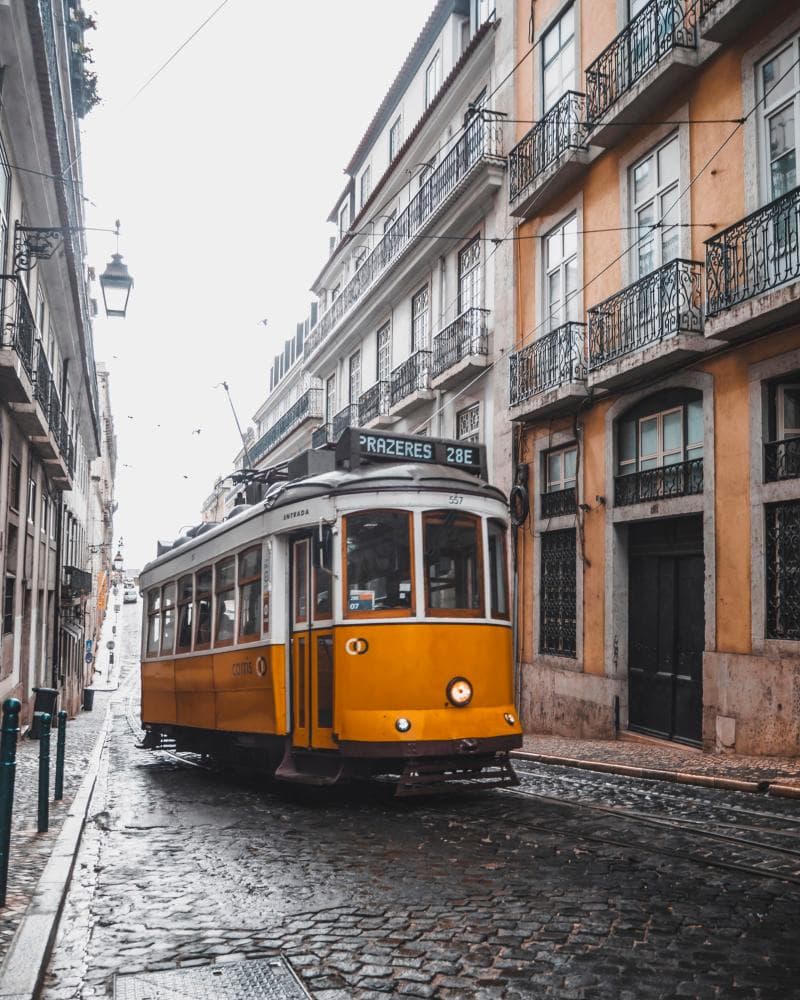
Discover Lisbon's historic stops along the iconic Tram 28 route, from ancient Alfama to grand cathedrals, experiencing the city's rich past.
Overview
Stepping aboard Lisbon's Tram 28 is more than just a ride; it's a journey through the beating heart of the city's storied past. This iconic yellow streetcar, locally known as 'Eléctrico 28', traverses a serpentine route through some of Lisbon's most historic and picturesque neighborhoods, linking centuries of history with the vibrant present. From the bustling Martim Moniz square to the charming Campo de Ourique, the tram’s creaking wooden interior and vintage charm offer a unique perspective on Lisbon's undulating landscape and architectural grandeur. It serves not only as an essential part of the public transport network, especially for areas inaccessible to modern vehicles due to their narrow streets and steep gradients, but also as a beloved moving landmark for curious travelers.
History & Cultural Background
The history of Tram 28 is deeply interwoven with Lisbon's evolution. Its origins trace back to the early 1900s, part of a crucial transition from horse-drawn carriages to electric trams, a necessary innovation for a city built upon seven steep hills. The specific 'Remodelado' model trams, with their distinctive wooden frames and polished brass details, have been operating since the 1930s, making them nearly a century old. As the tram rattles along its 7-kilometer route, it glides through districts that bear the indelible marks of various historical epochs. The ancient Alfama district, with its labyrinthine alleys, whispers tales of Moorish occupation, its name deriving from the Arabic 'Al-Hamma' meaning hot fountains. Remarkably, Alfama largely survived the devastating 1755 earthquake, preserving its medieval layout and rich history. The tram also passes through Baixa, a testament to post-earthquake reconstruction, meticulously rebuilt on a grid plan by the Marquis of Pombal.
What Makes It Special
What truly sets the 'Historic Stops' of Tram 28 apart is the authentic, immersive experience they provide. Unlike a typical bus tour, the tram weaves through residential areas, past laundry lines swaying from balconies, and offers glimpses into local life that larger vehicles simply cannot access. The vintage trams are specifically designed to navigate gradients exceeding 13%, making the journey itself an engineering marvel of its time. Each twist and turn reveals a new vista, from the red-tiled rooftops of Alfama to the shimmering Tagus River. The journey is a constant visual feast, offering panoramic viewpoints such as Miradouro de Santa Luzia and Miradouro das Portas do Sol, where visitors can pause to absorb the breathtaking scenery. It's a living museum on wheels, where the clang of the bell and the rumble of the tracks transport you to a bygone era.
Stories, Fun Facts & Local Details
Along its historic path, the Tram 28 reveals fascinating stories and local details. The Lisbon Cathedral, known as Sé de Lisboa, is the city's oldest church, constructed around 1150 shortly after the city was reconquered from the Moors. Legend has it that ravens, the symbols of Lisbon, protected the body of St. Vincent and guarded the boat that transported his relics to the city in 1173, later nesting in one of the cathedral's towers. At the Miradouro de Santa Luzia, decorative azulejo tile panels depict Lisbon's historic Praça do Comércio before the 1755 earthquake and the siege of São Jorge Castle in 1147, offering a visual narrative of the city's resilience. Further along the route, the impressive Basílica da Estrela was built to fulfill a vow made by Queen Maria I for a male heir, though tragically, her son died before its completion. Locals once affectionately referred to the tram as a 'sardine can' during peak hours, a testament to its popularity and the tight squeeze when it's full.
Visitor Perspective
For the curious traveler, riding Tram 28 provides an unparalleled opportunity to connect with Lisbon's soul. It encourages a slow, contemplative appreciation of the city's layers of history and culture. Hopping off at various stops allows for deeper exploration: wander through Alfama's ancient streets, visit the formidable Castelo de São Jorge with its panoramic views, or step inside the majestic Sé Cathedral to trace centuries of religious history. From the lively squares of Baixa to the cultural hub of Chiado, and the atmospheric viewpoints of Graça, each stop offers a distinct flavor of Lisbon. While it's a popular tourist attraction, approaching the Tram 28 journey with an open mind allows you to experience it as a resident would, appreciating its functional charm and the authentic urban tapestry it weaves together. It is an immersive adventure, providing insights into Lisbon's past and present with every turn and stop.
Coordinates: -9.1328, 38.7088
View on Google Maps💬 How Travelers Describe This Place
Based on community votes
Interesting
965Must See
862Photogenic
629Beautiful
443Unique
184
Traveler Stories
Discover memorable experiences shared by travelers who have visited this place.
No traveler stories yet.
Be the first traveler to share what made this place memorable.

Tour
By
Spot
Discover amazing places around the world. Your journey starts here.
Explore
© 2026 TourBySpot. All rights reserved.