Historic Maps
Reykjavik, Iceland
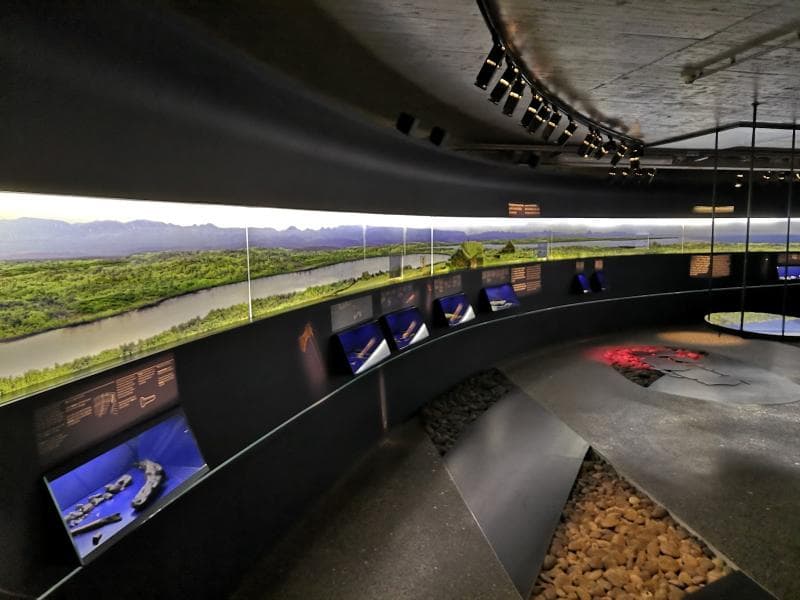
Explore the interactive 'Historic Maps' at The Settlement Exhibition in Reykjavik, Iceland, uncovering Viking Age settlement and early city life.
Overview
While there isn't a traditionally named 'Historic Maps' exhibit within The Settlement Exhibition in Reykjavik, Iceland, the entire museum is a masterclass in interactive historical mapping. This renowned exhibition, also known as 'Reykjavík 871±2', ingeniously uses advanced technology, archaeological data, and insightful visualizations to allow visitors to 'map' the early history and physical landscape of the city. Instead of displaying antique paper maps, the exhibition reconstructs the past environment and settlement patterns, providing a dynamic and immersive understanding of early Reykjavík. It centers around the actual archaeological remains of a Viking Age longhouse and a wall fragment, dating back to circa 871 AD, bringing the city's origins directly to life for every visitor.
History & Cultural Background
The story of Reykjavík's first inhabitants is inextricably linked to its unique geography, and The Settlement Exhibition brilliantly illuminates this connection. The exhibition is built directly over the excavated ruins of one of Iceland's oldest human-made structures: a 10th-century longhouse and an even older turf wall dating to 871 ± 2 AD. This remarkably precise dating is made possible by a layer of volcanic tephra—ash from a major eruption in the Torfajökull area—that settled across Iceland around that year, serving as an invaluable archaeological timestamp. Through the presentation of these findings, visitors gain a profound understanding of the Viking Age settlement, exploring how early Norse settlers adapted to and shaped this challenging northern environment. The exhibition delves into daily life, building techniques, and the very first steps of urban development in what would become Iceland's capital, giving crucial historical and cultural context to the physical remnants.
What Makes It Special
The uniqueness of the 'Historic Maps' experience here lies in its interactive and multi-sensory approach. Rather than static displays, the exhibition employs cutting-edge multimedia to reconstruct and visualize the ancient landscape. Visitors can engage with interactive tables that explain the archaeological excavations, allowing them to virtually navigate through different layers of the longhouse's construction and explore the surrounding settlement area. A wraparound panorama transports guests back to the Viking Age, depicting what Reykjavík might have looked like when the first settlers arrived. Physical models, such as one showcasing the old town center of Kvosin as it appeared in 1906, further bridge the gap between past and present. This fusion of authentic archaeological ruins with digital overlays and touchscreen displays creates a living 'map' that evolves before your eyes, offering a deep and personal connection to the historical geography.
Stories, Fun Facts & Local Details
The interactive displays serve as gateways to countless stories. Imagine using a multi-user table to pinpoint where individual artifacts, like an iron axe or fish-oil lamps, were found, and then seeing them come to life with contextual information. The exhibition allows curious travelers to explore the settlement farm and its surroundings in 874, imagining the lives of those who laid the foundations of Reykjavík. It highlights the resourcefulness of the early settlers and their daily struggles, from constructing buildings in a harsh climate to forging tools and navigating the unfamiliar terrain. The precise dating of the '871±2' layer, derived from glacial ice in Greenland, is a fascinating detail that underscores the scientific rigor behind the exhibition. These 'maps' are not just about locations; they are about lives lived and stories told across centuries, connecting visitors to the very first Icelanders.
Visitor Perspective
For the curious traveler, exploring the spatial interpretations within The Settlement Exhibition is an incredibly enriching experience. You'll literally walk above the preserved ruins of the longhouse, glimpsing its foundations through a glass walkway, while digital projections overlay reconstructions of what it once looked like. This creates a powerful sense of presence, allowing you to mentally step into the Viking Age. The ability to interact with the historical 'maps'—whether through touchscreens revealing excavation details or models showing urban development—makes the learning process engaging and personal. It fosters a deeper appreciation for the ingenuity of the early settlers and the archaeological marvel that allows us to connect with their world. The exhibition doesn't just show you where things were; it helps you understand *why* they were there and *how* that shaped the Reykjavík of today.
Coordinates: -21.94278, 64.14735
View on Google Maps💬 How Travelers Describe This Place
Based on community votes
Photogenic
984Unique
878Beautiful
795Interesting
793Must See
134
Traveler Stories
Discover memorable experiences shared by travelers who have visited this place.
No traveler stories yet.
Be the first traveler to share what made this place memorable.

Tour
By
Spot
Discover amazing places around the world. Your journey starts here.
Explore
© 2026 TourBySpot. All rights reserved.