Historic Inscriptions
Yerevan, Armenia
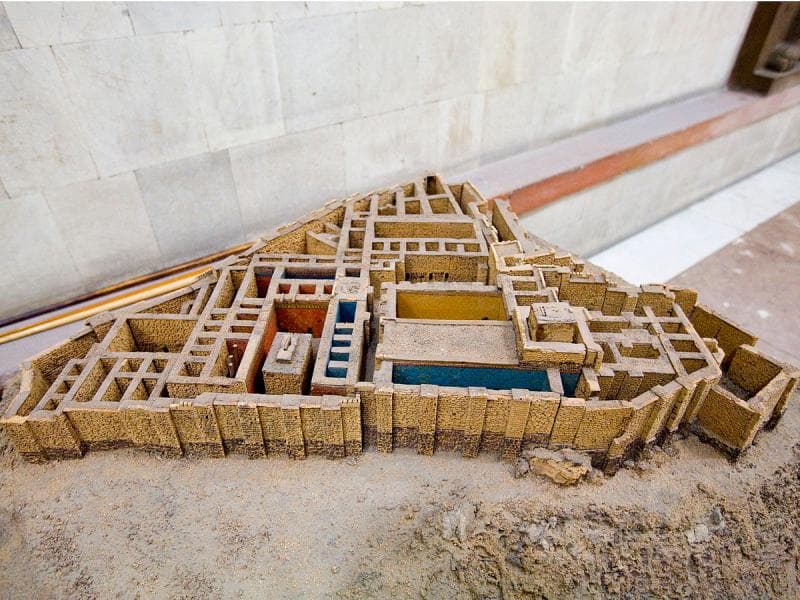
Uncover the ancient Historic Inscriptions at Erebuni Fortress in Yerevan, Armenia, the Urartian 'birth certificate' of the capital city. Explore cuneiform records from King Argishti I and experience millennia of history.
Overview
Stepping onto the grounds of Erebuni Fortress in Yerevan, Armenia, is like walking through a living document of history. Among its ancient stones, the 'Historic Inscriptions' stand out as extraordinary testaments to a powerful civilization. These aren't just old carvings; they are the very birth certificate of Yerevan, the modern capital, revealing its origins in the Urartian Kingdom over 2,800 years ago. Written in the distinctive Urartian cuneiform script, these inscriptions offer a direct voice from the past, detailing the ambitious vision of King Argishti I and his successors.
Visitors to Erebuni can encounter these monumental records both within the historical site itself and in the adjacent Erebuni Historical and Archaeological Museum-Reserve. They provide an unparalleled connection to a bygone era, illuminating the strategic, cultural, and religious importance of what was once a formidable Urartian stronghold.
History & Cultural Background
The story of Erebuni, and by extension Yerevan, officially begins in 782 BC with the founding inscription left by King Argishti I of Urartu. The Urartian Kingdom, a major power in the Ancient Near East, established Erebuni as a crucial military, administrative, and religious center on the Arin Berd hill, strategically overlooking the fertile Ararat Valley. The fortress served to protect the kingdom's northern borders and project its influence.
The inscriptions themselves are primarily cuneiform, a system of writing developed in ancient Mesopotamia, characterized by wedge-shaped marks pressed into clay tablets or carved into stone. The Urartians adapted this script, and their cuneiform records at Erebuni detail the construction efforts, dedications to deities like the supreme god Khaldi, and the settlement of thousands of prisoners of war to populate the new city. These durable stone documents offer invaluable primary source material for understanding the political, economic, and cultural fabric of Urartian society.
What Makes It Special
The Historic Inscriptions of Erebuni are truly special for several profound reasons. Firstly, they provide tangible, irrefutable proof of Yerevan's ancient lineage, directly connecting the vibrant modern city to its Urartian predecessor. This direct historical link, established by the founding inscription of Argishti I, is rare for many capital cities around the world.
Secondly, these are not mere records; they are monumental declarations of power and purpose. King Argishti I explicitly stated that he built Erebuni 'for the glory of Biainili (Urartu) and to instill fear among the king's enemies.' This insight into the mindset of an ancient king and the strategic importance of the fortress adds a compelling layer to the archaeological remains. Thirdly, while many artifacts are housed in museums, some original cuneiform inscriptions are still visible on the walls of the fortress, allowing visitors to encounter history precisely where it was made.
Stories, Fun Facts & Local Details
The most famous of Erebuni's inscriptions is King Argishti I's founding declaration, which famously reads: 'By the greatness of the God Khaldi, Argishti, son of Menua, built this mighty stronghold and proclaimed it Erebuni for the glory of Biainili (Urartu) and to instill fear among the king's enemies. Argishti says: The land was a desert, before the great works I accomplished upon it. By the greatness of Khaldi, Argishti, son of Menua, is a mighty king, king of Biainili, and ruler of Tushpa.' This powerful statement is considered Yerevan's 'birth certificate.'
Interestingly, more than twenty Urartian cuneiform inscriptions have been found at Erebuni, detailing various aspects of the fortress's construction and life within it. Three identical copies of the primary founding inscription exist: one remains at the archaeological site, two are preserved in the Erebuni Museum, and another is in the History Museum of Armenia. The very name of Yerevan is widely believed to be derived from 'Erebuni', forging an unbreakable linguistic and historical bond between the ancient fortress and the present-day capital.
Visitor Perspective
Visiting the Historic Inscriptions of Erebuni offers a deeply immersive historical experience. As you walk through the ancient ruins, imagining the bustling Urartian city, stumbling upon a cuneiform inscription carved into a stone wall brings the past vividly to life. These are not merely artifacts behind glass; they are integrated into the very fabric of the fortress, allowing for a profound, tangible connection to the people who once lived and ruled here.
For a more detailed understanding and to see other well-preserved examples, the Erebuni Historical and Archaeological Museum-Reserve, located at the base of the hill, houses a significant collection of these inscriptions and other artifacts unearthed during excavations. Here, you can examine the intricate details of the cuneiform script up close and appreciate the broader context of Urartian culture and ingenuity. The combination of the open-air fortress and the comprehensive museum provides a complete and captivating journey into Armenia's ancient past, anchored by these remarkable stone records.
Coordinates: 44.537257, 40.136771
View on Google Maps💬 How Travelers Describe This Place
Based on community votes
Must See
517Beautiful
422Unique
394Interesting
269Photogenic
145
Traveler Stories
Discover memorable experiences shared by travelers who have visited this place.
No traveler stories yet.
Be the first traveler to share what made this place memorable.

Tour
By
Spot
Discover amazing places around the world. Your journey starts here.
Explore
© 2026 TourBySpot. All rights reserved.