Historic Gates
Tirana, Albania
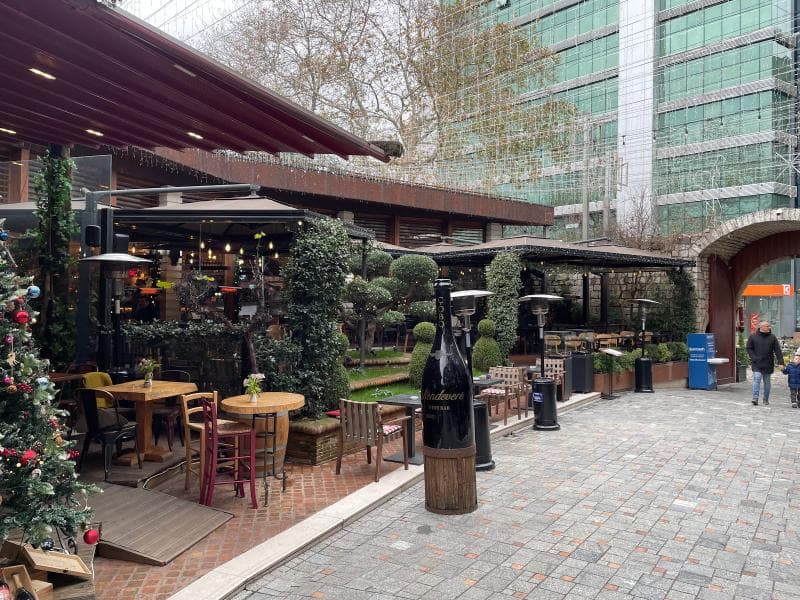
Explore the historic gates and ancient walls of Tirana Castle in Tirana, Albania. Discover its Byzantine and Ottoman past amidst a vibrant cultural hub.
Overview
Nestled in the heart of Tirana, Albania, Tirana Castle, also known as the Fortress of Justinian, stands as a testament to centuries of tumultuous history. While much of the original fortress has transformed over time, its historic gates, along with impressive wall foundations, offer a captivating glimpse into the city's ancient past. Today, these ancient remnants are integrated into a vibrant, pedestrianized cultural and commercial hub, where history seamlessly blends with modern Albanian life. It is a unique destination where visitors can literally walk through layers of history, observing the strategic significance of the castle's former entry points.
Far from being a mere ruin, Tirana Castle has been thoughtfully revitalized, showcasing its enduring heritage through a lively bazaar, artisan shops, and traditional eateries. The historic gates, though perhaps not grand arches still standing in their entirety, are symbolically present in the preserved sections of the fortifications, reminding us of the stronghold this area once was.
History & Cultural Background
The history of Tirana Castle stretches back to the Byzantine era, with its origins potentially dating to the 6th century under Emperor Justinian I, hence its alternative name, the Fortress of Justinian. It was strategically located at a crucial crossroads where main east-west and north-south roads intersected, making it the historical heart of the region. The castle served as a vital military stronghold, protecting the city and surrounding areas from invasions during a period of intense territorial contestation.
Throughout the centuries, the castle underwent significant modifications, particularly during the Ottoman Empire's rule which began in the 15th century. It was during this period that the fortifications were strengthened, and features such as 'fortified gates, towers, and walls designed to withstand artillery attacks' were added. These 'Old Ottoman gates' are cited as key remaining structures, reflecting a fusion of Byzantine military architecture with Ottoman defensive strategies. The castle's walls, some standing 6 meters high, are remnants of this rich, layered past, bearing witness to numerous historical events and transformations.
What Makes It Special
What makes the historic gates and the broader Tirana Castle site truly special is their embodiment of historical continuity and adaptation. Unlike many ancient fortresses that remain isolated relics, Tirana Castle's remnants, including its gates, have been cleverly incorporated into the fabric of contemporary urban life. The visible wall foundations, including a notable Ottoman-era section along Murat Toptani Street, allow visitors to literally trace the ancient boundaries of the fortress. This blend creates a living museum, where the defensive architecture of past empires now frames a dynamic cultural space. The gates, implicitly marked by these preserved wall sections, offer a unique perspective on the evolution of urban planning and preservation in Tirana.
Stories, Fun Facts & Local Details
Imagine walking through these historic gateways centuries ago. They were not just entry points but crucial arteries for trade and communication, connecting various parts of Albania and beyond. The castle's role as a nexus of routes undoubtedly meant a bustling flow of merchants, soldiers, and travelers passing through its gates. Today, the spirit of commerce and community lives on within the castle walls. The 'Old Bazaar' inside Tirana Castle, opened in December 2018, is a modern interpretation of its historical market function, filled with souvenir shops, traditional restaurants, and cultural activities. This transformation means that the ancient pathways, once guarded by formidable gates, now lead to inviting cafes and artisan studios, offering a playful contrast between past and present. It's a place where you might sip a traditional Albanian coffee within earshot of walls that once repelled invaders.
Visitor Perspective
For the curious traveler, exploring the historic gates and walls of Tirana Castle offers an immersive journey through time. It's important to approach this site not expecting a fully preserved medieval fortress with towering gatehouses, but rather a unique archaeological park integrated into a vibrant urban setting. Visitors can wander along the pedestrianized Murat Toptani Street, where sections of the ancient walls and foundations are exposed, inviting contemplation about the castle's strategic importance and its layered past. The atmosphere is lively and engaging, with the castle grounds hosting artisan shops, restaurants, and cultural events. The historic gates, as integral components of these surviving fortifications, provide a tangible link to the Byzantine and Ottoman eras. Standing by these remnants, one can feel the pulse of history while observing the contemporary life unfolding around them, making Tirana Castle a truly distinctive and memorable destination in Albania's capital.
Coordinates: 19.82194, 41.32639
View on Google Maps💬 How Travelers Describe This Place
Based on community votes
Photogenic
639Unique
421Interesting
366Must See
298Beautiful
212
Traveler Stories
Discover memorable experiences shared by travelers who have visited this place.
No traveler stories yet.
Be the first traveler to share what made this place memorable.

Tour
By
Spot
Discover amazing places around the world. Your journey starts here.
Explore
© 2026 TourBySpot. All rights reserved.