Historic Exhibits
Bucharest, Romania
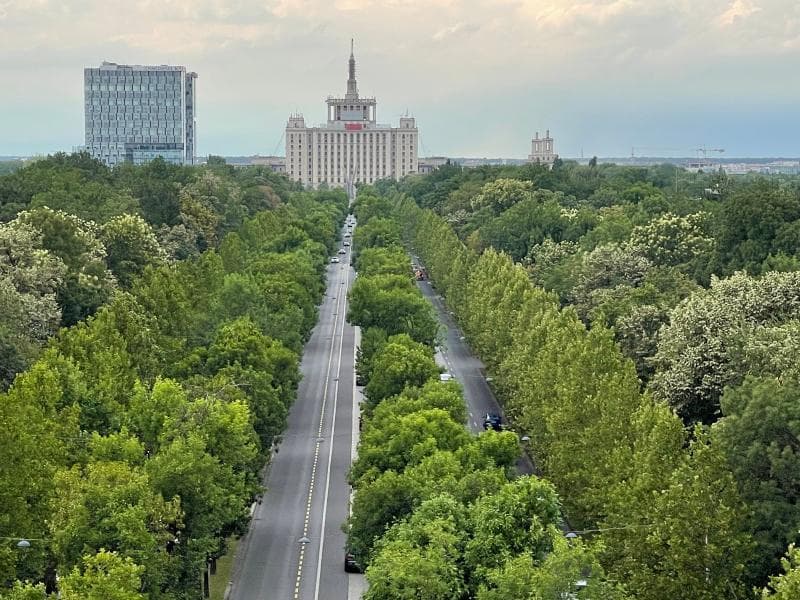
Explore the Historic Exhibits within Bucharest's Arcul de Triumf, a majestic monument commemorating Romania's WWI victories and national unity.
Overview
Nestled in the bustling northern part of Bucharest, the Arcul de Triumf stands not just as an imposing monument, but as a silent storyteller of Romania's rich past. While many admire its grandeur from the outside, the true essence of its historical narrative is revealed within its structure. The 'Historic Exhibits' at Arcul de Triumf aren't presented in the conventional sense of a museum with extensive collections. Instead, they are woven into the very fabric of the arch itself: through intricate sculptures, commemorative inscriptions, and photographic records that offer a poignant journey through defining moments in Romanian history. Ascending its internal staircase, when open to the public, provides a unique opportunity to connect with the nation's struggles and triumphs, culminating in breathtaking panoramic views of the city.
History & Cultural Background
The Arcul de Triumf in Bucharest is a testament to Romania's enduring spirit and its journey towards national unity and independence. Its origins trace back to 1878 when a temporary wooden arch was hastily erected to celebrate Romania's newly won independence from Ottoman rule. This initial structure allowed victorious troops to march beneath it, marking a pivotal moment for the young nation. A second, more elaborate wooden arch followed in 1922, commemorating the unification of Romanian lands after World War I and the triumphant entry of Romanian soldiers into Bucharest.
The permanent stone edifice we see today, designed by the acclaimed Romanian architect Petre Antonescu, was completed in 1936. It stands 27 meters tall, with a robust rectangular base measuring 25 by 11.5 meters. This final iteration was a conscious effort to monumentalize Bucharest and assert Romanian national identity, blending Roman imperial architectural influences with distinct Romanian sculptural traditions. The arch primarily commemorates the over 800,000 Romanian soldiers who participated in World War I, particularly the 1916-1918 campaigns, and the subsequent Great Union of 1918 which nearly doubled the country's size.
What Makes It Special
What makes the 'Historic Exhibits' at Arcul de Triumf truly special is their integral connection to the monument's purpose. The arch's surfaces are adorned with detailed carved sculptures by renowned Romanian artists such as Ion Jalea and Dimitrie Paciurea. These sculptures are not merely decorative; they are visual chronicles, depicting important moments in national history, key figures, and the military past of Romania. Visitors can examine these intricate carvings that capture the struggles and triumphs of the Romanian people. The monument's base further enriches this historical tapestry with inscriptions commemorating Romanian victories and naming major battles of World War I, providing invaluable context to the sacrifices made.
Moreover, the arch's interior occasionally hosts photographic records that illustrate its earlier forms and renovations, offering a rare glimpse into its architectural evolution. The opportunity to climb the steep spiral staircase to the top platform is a reward in itself, presenting unparalleled panoramic vistas of Bucharest, including Herăstrău Park and the residential neighborhoods. This unique vantage point allows one to reflect on the historical significance below while absorbing the modern urban landscape. The limited public access to the interior makes a visit a particularly cherished and immersive historical experience.
Stories, Fun Facts & Local Details
The Arcul de Triumf is more than just stone and sculpture; it's a living monument deeply embedded in Romania's cultural identity. It serves as the magnificent centerpiece for Romania's National Day celebrations every December 1st. On this day, thousands gather to witness grand military parades passing beneath the arch, a powerful display of patriotism and remembrance. For the public, December 1st is one of the rare occasions when the interior staircase and top platform are open, offering a spectacular bird's-eye view of the festivities.
Bucharest earned the nickname 'Little Paris' partly due to architectural similarities like its own Triumphal Arch, drawing a parallel to its French counterpart. A charming local tradition sees newlywed couples driving under the arch for good luck, a quirky and heartwarming detail that connects the monument to everyday life and joy. The southern facade features bronze medallions depicting King Ferdinand and Queen Maria, revered monarchs who oversaw the Great Union, adding a personal touch to the national narrative. The arch stands as a constant reminder of the immense sacrifice of Romanian soldiers, with texts in Romanian offering historical context often missed by casual visitors.
Visitor Perspective
For a curious traveler, a visit to the Arcul de Triumf offers a profound connection to Romanian heritage, even if the internal 'Historic Exhibits' are not always readily accessible. During the limited periods when the arch is open – typically on National Day (December 1st) and sometimes during weekends in summer and autumn – the experience of exploring its interior is truly unforgettable. The climb up the internal staircase, while steep, is rewarded with a close-up view of the detailed battle scenes and commemorative inscriptions that adorn its walls. From the observation deck, you're treated to a sprawling panorama of northern Bucharest, offering a unique perspective on the city's blend of history and modernity. It's advisable to check official Bucharest tourism websites for the most up-to-date information on visiting hours and accessibility, as access to the interior is not constant. Even from the exterior, the arch's sculptures and grand scale convey a powerful sense of history, making it a compelling stop for anyone seeking to understand the soul of Romania.
Coordinates: 26.07805162507369, 44.46714322415046
View on Google Maps💬 How Travelers Describe This Place
Based on community votes
Interesting
953Beautiful
695Photogenic
658Must See
396Unique
22
Traveler Stories
Discover memorable experiences shared by travelers who have visited this place.
No traveler stories yet.
Be the first traveler to share what made this place memorable.

Tour
By
Spot
Discover amazing places around the world. Your journey starts here.
Explore
© 2026 TourBySpot. All rights reserved.