Historic Entry Gate
Tirana, Albania
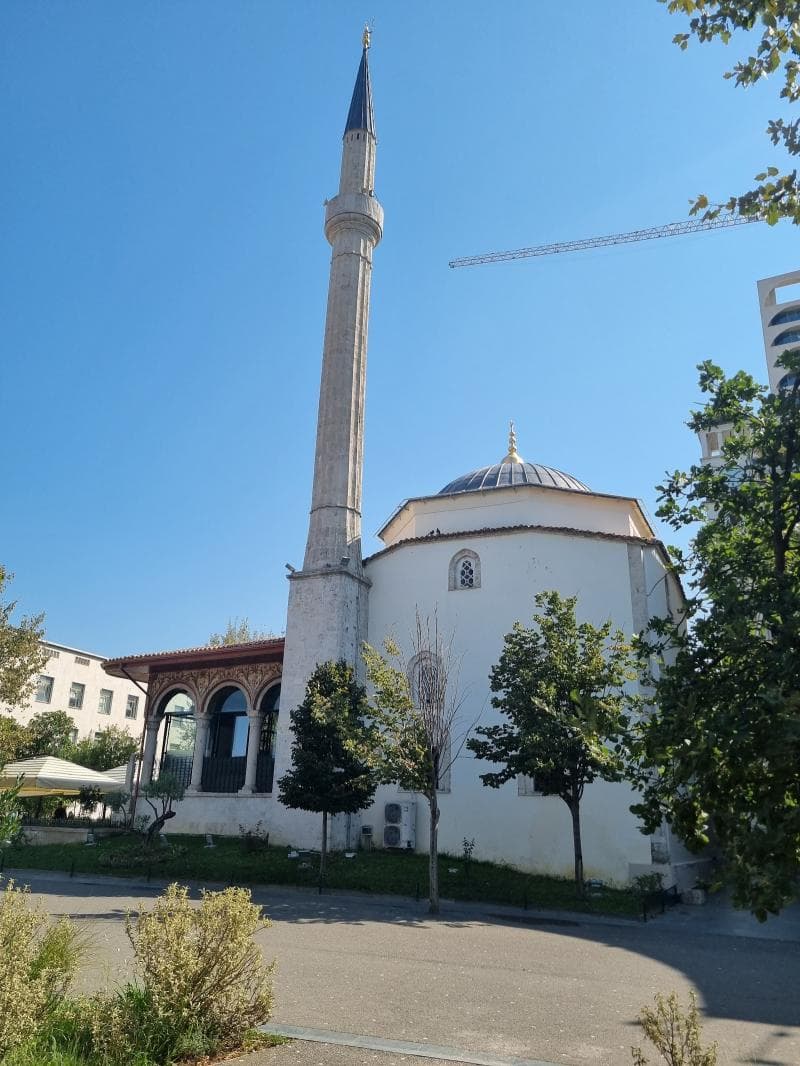
Discover the Historic Entry Gate of Et'hem Bey Mosque in Tirana, Albania, famed for its unique landscape frescoes and rich history.
Overview
Stepping into the heart of Tirana, Albania, visitors are greeted by the serene presence of the Et'hem Bey Mosque. While the entire structure is a testament to Ottoman architectural heritage, its northern portico serves as a 'Historic Entry Gate' in the most meaningful sense. This entrance is not merely a functional threshold but an integral part of the mosque's artistic and historical identity, immediately distinguishing it from many other Islamic places of worship across the Balkans. Adorned with remarkable frescoes, this gateway invites travelers into a unique cultural experience that bridges centuries of Albanian history and artistic expression. The mosque, including its captivating entry, stands as a symbol of resilience and the enduring spirit of faith in the nation's capital.
Situated prominently on Skanderbeg Square, the 'Historic Entry Gate' to the Et'hem Bey Mosque offers more than just passage; it provides a visual prelude to the artistic treasures within and reflects Tirana's rich Ottoman past. Its intricate detailing and vibrant artwork make it an unforgettable first impression for anyone exploring the city's central square.
History & Cultural Background
The construction of the Et'hem Bey Mosque began in the late 18th century, initiated by Molla Bey, and was completed between 1819 and 1821 by his son, Haxhi Et'hem Bey, whose name the mosque proudly bears. This architectural marvel was once part of a larger complex that defined Tirana's historic center, standing alongside the old Bazaar and other significant religious buildings.
The mosque's 'Historic Entry Gate' and its entire structure witnessed profound changes in Albania's history, most notably surviving the communist regime from 1967 to 1990, during which Albania was declared the world's first atheist state and most religious sites were destroyed or repurposed. Its artistic value and protected heritage status played a crucial role in its preservation.
A deeply symbolic moment for the nation's religious freedom occurred on January 18, 1991, when thousands of Albanians gathered at the mosque for public prayer, despite official restrictions. This courageous act, starting from the very entrance, marked a turning point in the country's return to religious liberty.
What Makes It Special
What truly sets the 'Historic Entry Gate' and indeed the entire Et'hem Bey Mosque apart are its extraordinary frescoes. Unlike many traditional Ottoman mosques that primarily feature geometric motifs or calligraphy, the exterior portico and interior walls of Et'hem Bey are adorned with vibrant landscape paintings.
These unique murals depict scenes of trees, waterfalls, bridges, architectural views, and pastoral settings, subjects rarely found in Islamic art. These delicate landscapes lend the mosque a distinctive character, reflecting a unique local tradition that blended spiritual reverence with the beauty of nature. The frescoes, some of which are imaginary scenes, create an immersive world for visitors, hinting at a connection to broader Ottoman visual culture, with some academic research suggesting references to Istanbul's skyline, including the Süleymaniye Mosque.
The meticulous craftsmanship and the rarity of these naturalistic depictions on the entrance make it a focal point of artistic interest, inviting closer inspection and contemplation of its intricate details.
Stories, Fun Facts & Local Details
Beyond its visual appeal, the 'Historic Entry Gate' holds powerful stories. The defiance of 10,000 people who entered the mosque for prayer in 1991, despite the ban on religion, is a 'fun fact' that underscores the deep cultural and spiritual significance of this place to the Albanian people. It was a peaceful act of resistance that resonated across the country, signifying the rebirth of faith.
The mosque is not just a standalone monument; it forms an architectural complex with the nearby Clock Tower, which was also completed by Et'hem Bey's family. Together, these structures represent a surviving fragment of Ottoman Tirana, standing proudly amidst the modern capital and telling a tale of continuous urban development and resilience.
Interestingly, the mosque's architecture itself exhibits a 'fun fact' of resilience: its single central dome and thick masonry walls with lime-based mortar were designed to withstand earthquakes, a testament to the builders' foresight in a seismically active region. This structural integrity has allowed it to endure centuries of tremors.
Visitor Perspective
Approaching the Et'hem Bey Mosque and its 'Historic Entry Gate' from Skanderbeg Square is an experience in itself. The beautifully painted portico immediately captures attention, offering a glimpse into the mosque's artistic soul even before stepping inside. Visitors often remark on the intimate scale of the mosque, which enhances the feeling of connection to its rich history and delicate artwork.
To enter the prayer hall through this historic gate, visitors are respectfully asked to remove their shoes, and women are often provided with scarves to cover their heads, aligning with the mosque's role as an active place of worship. Tours are generally available outside of prayer times, allowing for a quiet and reflective exploration of the unique frescoes and the calm atmosphere. The experience of walking through this painted gateway is not just about observing art; it's about connecting with a vibrant piece of Albanian heritage that has stood the test of time and change.
Coordinates: 19.81917, 41.32778
View on Google Maps💬 How Travelers Describe This Place
Based on community votes
Beautiful
894Unique
862Interesting
443Must See
304Photogenic
184
Traveler Stories
Discover memorable experiences shared by travelers who have visited this place.
No traveler stories yet.
Be the first traveler to share what made this place memorable.

Tour
By
Spot
Discover amazing places around the world. Your journey starts here.
Explore
© 2026 TourBySpot. All rights reserved.