Historic Buildings
Reykjavik, Iceland
Explore historic buildings around Tjörnin in Reykjavik, Iceland, from the Free Church to the National Gallery and Reykjavik Junior College.
Overview
Nestled in the heart of Reykjavik, Tjörnin, often affectionately called 'The Pond,' is more than just a tranquil body of water; it's a living canvas framed by some of Iceland's most historically significant and architecturally diverse buildings. This central urban lake, a hub of both nature and culture, offers a unique opportunity to witness centuries of Icelandic heritage in a single glance. Around its serene shores stand structures that tell tales of religious freedom, artistic evolution, educational pursuits, and the very governance of the nation. From the distinctive green-roofed Free Church to the grand National Gallery and the venerable Reykjavik Junior College, Tjörnin’s historic surroundings invite curious travelers to step back in time and explore the foundations of Icelandic society and identity.
History & Cultural Background
The area surrounding Tjörnin has been central to Reykjavik's development for centuries. While the lake itself is a natural formation, its shores became integral to the city's urban environment as early urban development took place between the lake and the northern coast of the peninsula. Over time, key institutions chose this picturesque setting for their homes, shaping the cultural and administrative landscape of the capital. The establishment of structures like the Fríkirkjan í Reykjavík in the early 20th century reflects a period of significant social change and a desire for more accessible worship. Meanwhile, educational institutions, such as the Menntaskólinn í Reykjavík, trace their origins back to medieval times, symbolizing Iceland's enduring commitment to learning and intellectual growth. Even a building like the National Gallery, with its unexpected past as a freezing plant, speaks to the adaptive and resourceful spirit of Icelandic architecture and design.
What Makes It Special
The collection of historic buildings around Tjörnin is special due to their individual stories and their collective contribution to Reykjavik's identity. The Fríkirkjan í Reykjavík (Free Church in Reykjavik), consecrated in 1903, stands out with its charming architecture and unique history. It was founded by a congregation seeking independence from the state church, desiring more democratic and accessible worship, reflecting broader Scandinavian social reform ideas. Its modest form underwent expansions in 1905 and 1924, but it retains its original spirit.
Another gem is Iðnó, a cultural house built in 1897. Originally the headquarters of the Reykjavik Craftsmen Association, it famously hosted Iceland's first professional theater, the Reykjavik Theatre Company. Its architecture blends neoclassical and traditional Icelandic styles, creating a distinctive landmark that has been a continuous hub for arts and community gatherings for over a century.
The building housing the National Gallery of Iceland is equally fascinating. Designed by renowned Icelandic architect Guðjón Samúelsson, it began its life in 1916 not as an art museum, but as a freezing plant, an 'icehouse.' It was converted to house the National Gallery in 1987, symbolizing the transformation of a functional industrial building into a sanctuary for national and international art.
Lastly, the Menntaskólinn í Reykjavík (Reykjavik Junior College) is one of Iceland's oldest educational institutions, with roots tracing back to 1056. The building at its current site, constructed in 1846, was once the largest in Iceland and is even featured on the 500 Icelandic króna banknote, underscoring its profound national significance.
Stories, Fun Facts & Local Details
- The Fríkirkjan í Reykjavík was born not from doctrinal disagreements, but from a desire to make worship more accessible to ordinary citizens during Reykjavik's rapid growth. This democratic mission saw the congregation quickly swell to 600 members shortly after its 1899 founding.
- Iðnó, whose name is derived from 'iðnaður' meaning 'industry,' has hosted countless concerts, dances, and feasts. It remains a vibrant cultural venue where visitors can enjoy a coffee during the day and often live music or performances by night.
- The National Gallery of Iceland's main building, a former icehouse, reveals a unique aspect of Iceland's architectural ingenuity – repurposing sturdy, well-built structures for new public uses. Its original architect, Guðjón Samúelsson, also designed some of Iceland's most iconic buildings, including Hallgrímskirkja.
- The Menntaskólinn í Reykjavík has educated many of Iceland's politicians, including several Prime Ministers and even Presidents. Until recently, it held a spirited tradition called 'the classroom battle' where graduating seniors had to reach a bell while younger students tried to stop them. This tradition, though lively, had to cease in the early 2000s due to safety concerns.
- While not historic in age, the modern Reykjavik City Hall, completed in 1992, visually integrates with Tjörnin, appearing almost to float on the water. Inside, it houses a fascinating enormous 3D topographical map of Iceland, offering a unique perspective on the country's geography.
Visitor Perspective
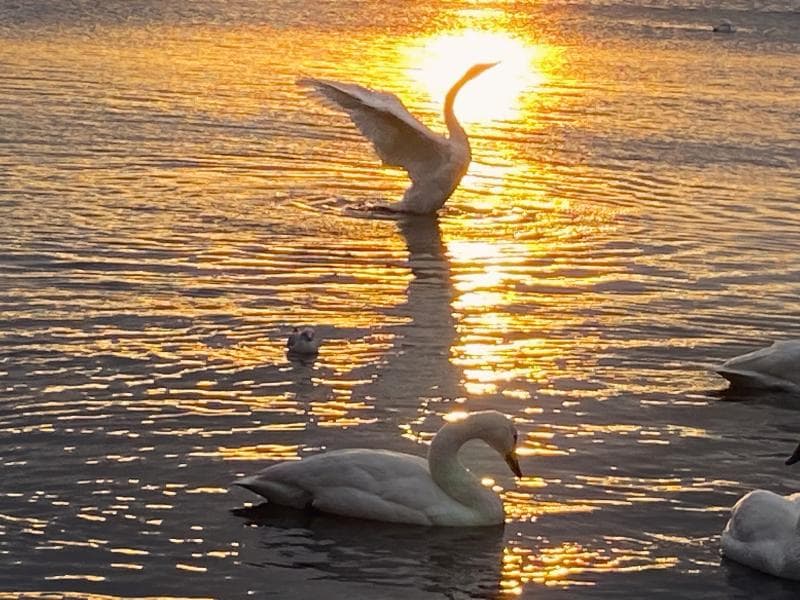
Walking around Tjörnin offers a serene and insightful journey through Reykjavik's past and present. It's a peaceful escape where the sounds of urban life mix with the gentle rustling of leaves and the calls of numerous bird species. The historic buildings create a picturesque backdrop, inviting photographs at every turn. You can stroll along the paved paths, feeding the ducks and swans – a popular pastime that has earned Tjörnin the nickname 'the biggest bread soup in the world' amongst locals. Each building is within easy walking distance, making it an ideal self-guided architectural tour. Whether you step inside the Free Church for a moment of quiet reflection, explore the art within the National Gallery, or simply admire the facades that hold so many stories, the historic buildings of Tjörnin provide a tangible connection to Iceland's rich cultural heritage and its ongoing narrative. It's a place where history feels alive, not just preserved in museums, offering a meaningful experience for any curious traveler.
Coordinates: -21.9389, 64.1401
View on Google Maps💬 How Travelers Describe This Place
Based on community votes
Must See
926Beautiful
450Unique
280Photogenic
90Interesting
38
Traveler Stories
Discover memorable experiences shared by travelers who have visited this place.
No traveler stories yet.
Be the first traveler to share what made this place memorable.

Tour
By
Spot
Discover amazing places around the world. Your journey starts here.
Explore
© 2026 TourBySpot. All rights reserved.