Historic Buildings
Belgrade, Serbia
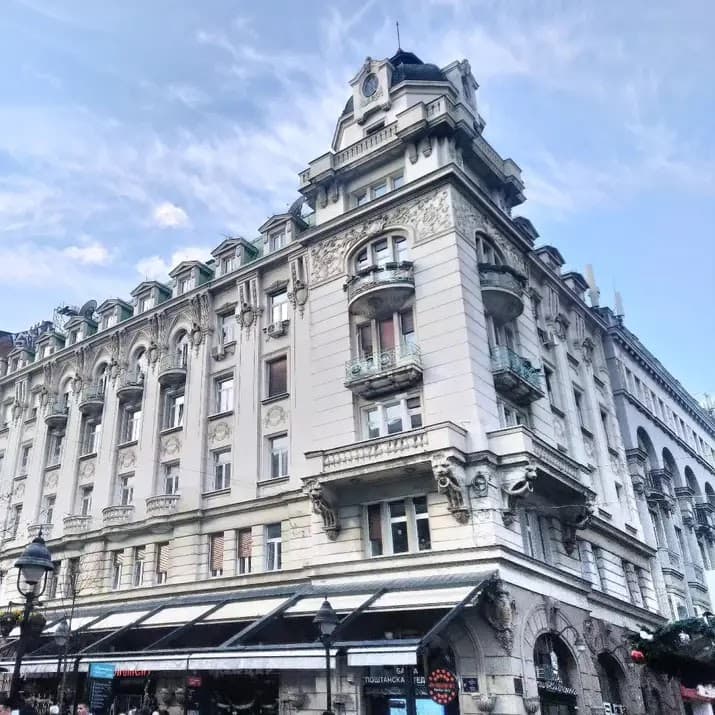
Explore the historic buildings of Knez Mihailova Street in Belgrade, Serbia. Discover diverse architecture and rich cultural heritage.
Overview
Knez Mihailova Street in Belgrade, Serbia, stands as the city's vibrant main pedestrian and shopping zone, a place where history beautifully intertwines with contemporary life. Recognized by law as one of Belgrade's oldest and most valuable landmarks, this iconic street is a spatial cultural-historical unit of exceptional importance, a status it attained in 1979. Stretching for approximately one kilometer between Republic Square and the majestic Kalemegdan Park and Belgrade Fortress, Knez Mihailova is more than just a thoroughfare; it is the beating heart of the Serbian capital. Named after Prince Mihailo Obrenović III, who reigned in the mid-19th century, the street is renowned for its remarkable ensemble of historic buildings and mansions, predominantly constructed in the late 1870s. Its architectural grandeur and bustling atmosphere make it an essential stop for any traveler seeking to understand the soul of Belgrade.
History & Cultural Background
The roots of Knez Mihailova Street delve deep into antiquity, tracing back to the Roman city of Singidunum, where it formed a central grid layout and served as one of the main access roads. Beneath its modern pavement lie remnants of Roman thermae, ancient graves, and mosaic-clad villas, whispering tales of a forgotten era. As Belgrade changed hands between the Ottoman and Austrian empires, the street bore witness to significant transformations. During Ottoman rule, it flourished as a bustling commercial center, adorned with mosques, fountains, and lush gardens. However, with the Austrian conquests, Western architectural influences began to assert themselves.
The decisive modern transformation of Knez Mihailova began in the 19th century, following the withdrawal of Ottoman garrisons. In 1867, the street was meticulously regulated according to the urban plan of Emilijan Josimović, an influential Serbian urbanist, which reshaped it into a sophisticated, European-style promenade. Two years later, in 1870, it was officially named Ulica Kneza Mihaila in honor of Prince Mihailo Obrenović. This period saw the construction of numerous ornate mansions and significant public buildings, as the city's wealthiest and most influential families established their homes here, eager for their facades to reflect European tastes and Belgrade's new political confidence.
What Makes It Special
The unique allure of Knez Mihailova's historic buildings lies in their architectural diversity and their collective narrative of Belgrade's evolution. Unlike a single monument, the street offers an 'urban sequence' of historic facades that capture various styles, including Academic Classicism, Romanticism, Renaissance, and Secessionist influences. Each building tells a story, from the grandeur of the Serbian Academy of Sciences and Arts, with its theatrical facade and intricate sculptural decoration, to the former Srpska Kruna Hotel, an 1869 Romanticism masterpiece that once ranked among Belgrade's most modern lodgings. The concentration of these preserved 19th-century structures in a bustling pedestrian zone is truly exceptional, allowing visitors to immerse themselves in a bygone era while enjoying the modern pulse of the city. The fact that the entire street is legally protected ensures the preservation of this invaluable architectural heritage for generations to come.
Stories, Fun Facts & Local Details
Knez Mihailova is rich with fascinating tales and local details. For instance, the Grčka Kraljica (Greek Queen) coffee shop, built in 1835 in academism style, stands as one of the oldest preserved buildings on the street, originally serving as an inn called Despotov Han. The street also boasts the site of the former Hajduk Veljko kafana, which holds the distinction of being the first place in Belgrade where a phonograph was heard in 1896, and later, the city's inaugural cinema in 1906. In front of the Serbian Academy of Sciences and Arts building, you'll find a pyramidal sculpture that marks the precise geographical coordinates of the city, along with its altitude. Many buildings along the street proudly display the year of their construction engraved into their facades, a subtle nod to their enduring legacy. The street is also intrinsically linked to the 'korzo', a cherished Belgrade tradition of the evening promenade, where people historically gathered to be seen, exchange news, and observe the city's evolving fashions.
Visitor Perspective
Strolling along Knez Mihailova Street is an immersive experience, akin to walking through an open-air museum. As a visitor, you're not just observing buildings; you're stepping into Belgrade's past. The street's pedestrian nature makes it a relaxed and enjoyable place for exploration, free from the intrusion of vehicle traffic. To truly appreciate the architectural nuances, a slow walk is recommended, looking beyond the ground-level shops to admire the upper floors with their balconies, stucco decorations, and corner domes. Mornings often offer a quieter experience, allowing for a better appreciation of the architecture, while evenings bring a vibrant atmosphere filled with locals and tourists alike, drawn by street performers, artists, cafes, and the constant buzz of city life. Knez Mihailova seamlessly connects to other significant Belgrade attractions, making it an ideal starting point for exploring the Republic Square, the National Museum, and the ancient Belgrade Fortress and Kalemegdan Park.
Coordinates: 20.4569, 44.8178
View on Google Maps💬 How Travelers Describe This Place
Based on community votes
Beautiful
804Unique
733Must See
563Interesting
404Photogenic
336
Traveler Stories
Discover memorable experiences shared by travelers who have visited this place.
No traveler stories yet.
Be the first traveler to share what made this place memorable.

Tour
By
Spot
Discover amazing places around the world. Your journey starts here.
Explore
© 2026 TourBySpot. All rights reserved.