Hilltop Paths
Podgorica, Montenegro
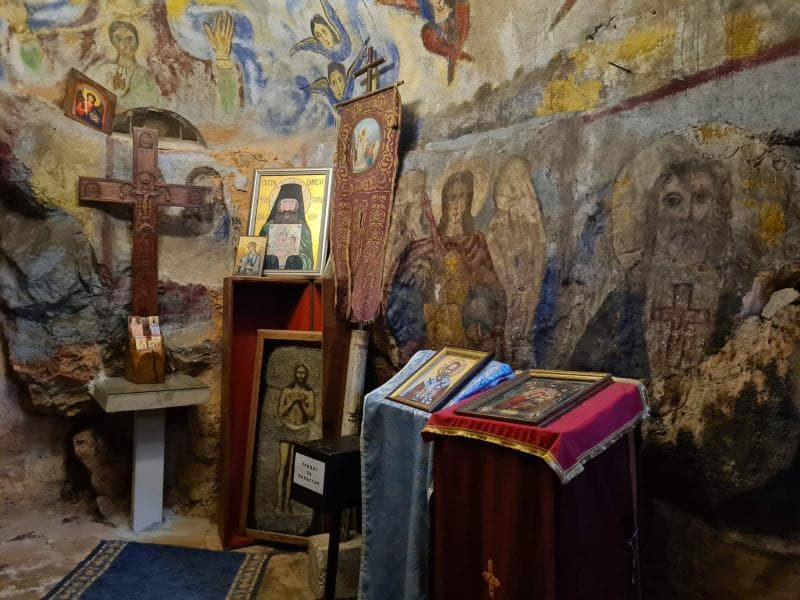
Explore the spiritual Dajbabe Monastery and its scenic Hilltop Paths in Podgorica, Montenegro. Discover unique cave frescoes and panoramic views.
Overview
Nestled atop Dajbabe Hill, overlooking the verdant Zeta Valley and the sprawling landscape of Podgorica, Montenegro, lies the serene Dajbabe Monastery. While the monastery itself is a profound spiritual retreat, the surrounding 'Hilltop Paths' offer visitors a unique opportunity to connect with both nature and history. These informal trails, winding through fragrant vegetation like cypresses, pines, and olives, provide breathtaking panoramic vistas of the Zeta Plain, extending towards Skadar Lake and the Rumija Mountain. Exploring these paths is an integral part of the Dajbabe experience, offering moments of quiet contemplation amidst Montenegro's natural beauty. It's a place where the spiritual tranquility of the monastery extends into the peaceful embrace of the hill, inviting travelers to wander and discover.
History & Cultural Background
The Dajbabe Monastery, a Serbian Orthodox monastery, was founded in 1897 by Archimandrite Simeon Popovic. What makes it particularly remarkable is its unique integration with the natural landscape: the church is largely built within a natural cave. Initially, only the cave space served as a sanctuary, but it was later expanded to form a cross-shaped design with additional chapels. The visible part of the church, featuring a spacious entrance porch and two belfries, is the only section standing outside the cave.
The monastery is dedicated to the Assumption of the Theotokos, also known as Uspenje Bogorodice. Its interior is a testament to the founder's artistic devotion; Monk Simeon Popovic personally painted the intricate frescoes, adapting the scenes to the irregular shapes of the natural rock walls until his death in 1941. These frescoes depict various saints, prophets, and local revered figures, including Saint Peter of Cetinje and Saint Basil, with Christ and the Holy Virgin appearing in medallions in the dome. The Dajbabe Monastery also holds significant spiritual weight as it houses a reliquary containing the relics of Saint Simeon Dajbabe, making it a pilgrimage site for many faithful seeking blessings and healing.
What Makes It Special
The true magic of Dajbabe lies in its seamless blend of natural wonder and profound spirituality. The monastery's unique cave architecture, where the very rock forms the sacred space, creates an atmosphere unlike any other. The frescoes, painted directly onto the uneven cave walls by the founder himself, tell stories not just through their imagery but also through their harmonious adaptation to nature's contours. This intimate connection between the divine and the geological is deeply moving. The Hilltop Paths further enhance this distinctiveness, offering a gradual unveiling of the monastery from a distance and providing diverse perspectives of its setting within the Dajbabe Hill. The paths invite exploration, allowing visitors to feel the history underfoot and to breathe in the tranquil air that has enveloped this sacred site for over a century.
Stories, Fun Facts & Local Details
Legend has it that the location of the monastery was revealed to Archimandrite Simeon Popovic through a miraculous providence, leading him to discover the ancient sacred cave that had been miraculously preserved from Turkish devastation. This divine guidance led to the establishment of the monastery. The irregular interior of the cave church, approximately 21.5 meters long and 2.5 meters wide, challenged traditional fresco painting, prompting Father Simeon to ingeniously adapt his art to the natural rock formations. Visitors often remark on the cool, earthy scent inside the cave, a mixture of beeswax from flickering candles and the mountain's damp breath, creating a truly immersive sensory experience. The hill itself, Dajbabe Hill, is often locally referred to as Dajbabska Gora, reinforcing its significance as a landmark in the region. While exploring the paths, one might stumble upon 19th-century graffiti scratched into the rock, offering a glimpse into the countless pilgrims who have journeyed here before.
Visitor Perspective
For the curious traveler, the Hilltop Paths around Dajbabe Monastery offer an enriching journey beyond the typical tourist experience. Reaching the monastery, whether via a 45-minute pilgrim path from the city center or one of the dirt tracks leading to various viewpoints, is part of the adventure. As you ascend, the city of Podgorica slowly unfolds below, a mosaic of red rooftops and cypress trees, accompanied by the distant hum of urban life. The views are particularly stunning at sunset, painting the Zeta Valley in warm hues. Once at the monastery, the cool, quiet interior of the cave church provides a stark contrast to the bright Montenegrin sun. It's a place for reflection, to admire the unique frescoes, and to feel the weight of centuries of devotion. The paths themselves, often lined with wild thyme and pomegranate hedges, are easy to navigate and offer a chance for fresh air and serene views away from the bustle of the city. It's a visit that promises not just sights, but a profound sense of peace and historical immersion.
Coordinates: 19.232456, 42.403852
View on Google Maps💬 How Travelers Describe This Place
Based on community votes
Must See
873Photogenic
521Unique
477Beautiful
422Interesting
157
Traveler Stories
Discover memorable experiences shared by travelers who have visited this place.
No traveler stories yet.
Be the first traveler to share what made this place memorable.

Tour
By
Spot
Discover amazing places around the world. Your journey starts here.
Explore
© 2026 TourBySpot. All rights reserved.