Hiking Trails
Sofia, Bulgaria
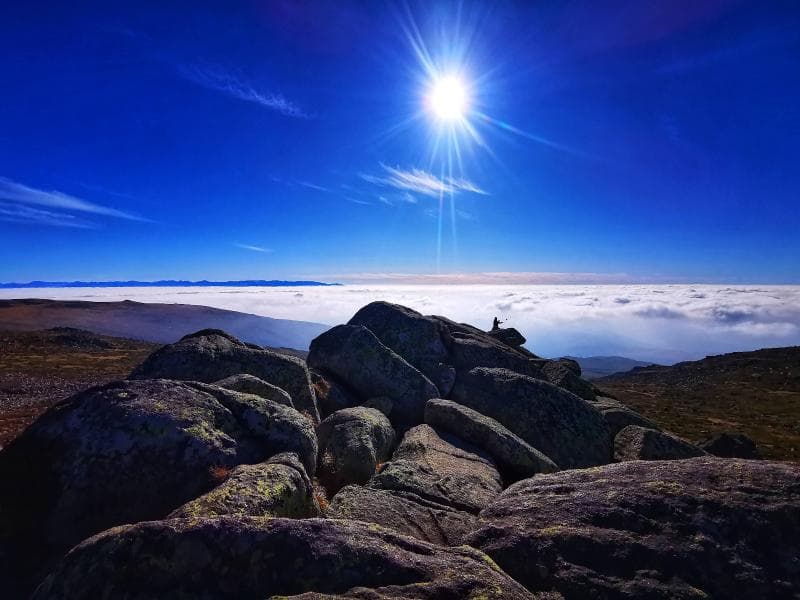
Discover the enchanting hiking trails of Mount Vitosha in Sofia, Bulgaria. Explore ancient stone rivers, the highest peak Cherni Vrah, and rich biodiversity.
Overview
Mount Vitosha, a majestic dome-shaped massif, serves as Sofia, Bulgaria's natural crown and most beloved escape. Rising proudly on the city's outskirts, it offers an unparalleled natural retreat just a stone's throw from the urban bustle. Vitosha holds the distinction of being the first nature park established in the Balkans, declared in 1934, safeguarding its rich biodiversity and unique landscapes. The mountain is crisscrossed by an extensive network of hiking trails, spanning over 300 kilometers, catering to all levels of experience, from leisurely strolls to challenging ascents. Key attractions for hikers include Cherni Vrah (Black Peak), the highest point; the fascinating stone rivers known as Zlatnite Mostove (Golden Bridges); and the picturesque Boyana Waterfall.
History & Cultural Background
Vitosha's history is deeply intertwined with the ancient Thracians, who settled in the region as early as 5000 BCE and revered the mountain as a sacred place, building numerous sanctuaries. During the Middle Ages, Vitosha became a spiritual haven, giving rise to many monasteries and chapels, earning it the moniker 'Bulgarian Little Mount Athos.' Notable among these is the Boyana Church, a UNESCO World Heritage site on the northern slopes, famed for its 13th-century frescoes, considered precursors to the European Renaissance. Another significant historical site is the Dragalevtsi Monastery. The modern history of Vitosha as a protected area began in 1934, when a part of the mountain was officially declared a nature park, a pioneering conservation effort in the Balkans. This initiative was largely inspired by the Bulgarian author Aleko Konstantinov, who, in 1895, led the first organized ascent of Cherni Vrah, sparking the organized tourist movement in Bulgaria.
What Makes It Special
What truly sets Vitosha's hiking trails apart is the mountain's extraordinary geological and ecological diversity, combined with its unique proximity to a major European capital. The mountain is home to a staggering 1,500 species of higher plants, over 500 species of fungi, and a rich variety of fauna, including various bird species, amphibians, reptiles, and even brown bears. It's remarkable to find such robust biodiversity, including a brown bear habitat, so close to a bustling city like Sofia. A distinctive geological phenomenon found on Vitosha are its 'stone rivers' or 'blockfields,' locally called 'skaluresti reki.' These are massive aggregations of rounded boulders that appear to flow down the mountain slopes. The most famous of these is Zlatnite Mostove, or Golden Bridges, a spectacular ribbon of huge boulders along the Vladayska River, formed by periglacial freeze-thaw action during the Ice Age. Cherni Vrah, at 2,290 meters, is Vitosha's highest peak, offering expansive panoramic views of Sofia, the Rila and Rhodope Mountains. The mountain's laccolithic, dome-shaped form, a result of volcanic activity, contributes to its unique character.
Stories, Fun Facts & Local Details
Vitosha is steeped in local folklore and interesting facts. One popular legend tells of two star-crossed shepherds, Vita and Lyulin. Vita sang from the 'Big ridge' while Lyulin played his fiddle from the 'Long ridge.' When Vita's mother cursed their unspoken love, Vita was turned into the black stone of Cherni Vrah, and Lyulin became the neighboring Lyulin Mountain. The Golden Bridges are said to have derived their name either from the yellowish lichens that cover the boulders, appearing golden in the sun, or from the historical presence of gold-bearing sands in the river. A quirky tradition at Cherni Vrah is to ring a bell suspended in a metal frame near the weather station upon a first ascent, symbolizing one's arrival at the summit. The meteorological station at Cherni Vrah, built in 1935, also serves as a crucial mountain rescue headquarters and a shelter for hikers. Vitosha is not just for quiet contemplation; it hosts events like the annual 'Vitosha 100K Ultramarathon,' a challenging race attracting athletes globally. The mountain also boasts a unique variety of flora, including the globular yellow blossoms of the Vitosha tulip (Trollius europaeus) in its high-mountain parts.
Visitor Perspective
For visitors, Vitosha offers an exceptionally accessible mountain experience. Many trails are well-marked, often color-coded, making navigation straightforward even for self-guided explorers. Popular starting points for hikes include the neighborhoods of Boyana, Knyazhevo, Dragalevtsi, and Simeonovo, all easily reachable from Sofia by public transport, including buses and even a tram. Cable cars from Dragalevtsi and Simeonovo provide alternative access to higher elevations like Aleko Hut. Along the trails, numerous mountain huts, such as Aleko Hut and Kumata Hut, offer places to rest, and some provide basic meals, like the famous bean soup at Cherni Vrah. Hikers are advised to wear sturdy shoes due to potentially slippery boulders, carry sufficient water, and dress in layers as mountain weather can change rapidly. The best times for hiking are generally late spring to early autumn (May to October), when the weather is mild and the landscapes are lush.
Coordinates: 23.2833, 42.5667
View on Google Maps💬 How Travelers Describe This Place
Based on community votes
Interesting
540Beautiful
470Unique
410Must See
254Photogenic
114
Traveler Stories
Discover memorable experiences shared by travelers who have visited this place.
No traveler stories yet.
Be the first traveler to share what made this place memorable.

Tour
By
Spot
Discover amazing places around the world. Your journey starts here.
Explore
© 2026 TourBySpot. All rights reserved.