High Altar
Rome, Italy
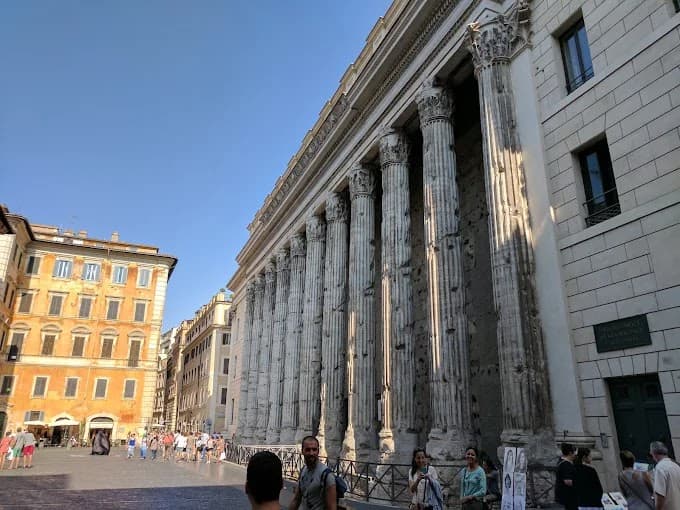
Discover the High Altar within Rome's Pantheon, a historic marvel. Explore its rich history, cultural significance, and unique features in Italy.
Overview
Stepping into the Pantheon in Rome, Italy, is to enter a space where millennia of history, architectural brilliance, and profound spiritual reverence converge. At the heart of this ancient marvel, directly beneath the iconic oculus that opens to the heavens, stands the High Altar. More than just a liturgical fixture, this sacred structure is a focal point within the Basilica of Santa Maria ad Martyres, the Pantheon's Christian incarnation, offering a tangible link between its pagan past and its enduring role as a place of worship. It silently presides over a space that has inspired awe and wonder for nearly two thousand years, continuously serving as a testament to human ingenuity and faith.
History & Cultural Background
The Pantheon, originally commissioned by Marcus Agrippa around 27-25 BC and later rebuilt by Emperor Hadrian around 126 AD, began its life as a temple dedicated to all Roman gods. This grand structure, with its innovative dome, was a testament to Roman engineering and spiritual plurality.
Its destiny, however, took a pivotal turn in 609 AD when Byzantine Emperor Phocas gifted the Pantheon to Pope Boniface IV. This act transformed the ancient temple into a Christian church, consecrated as the Basilica of Santa Maria ad Martyres (St. Mary and the Martyrs). This conversion was monumental, ensuring the building's preservation through centuries when many other ancient Roman structures fell into ruin or were dismantled for their materials.
A significant detail of this Christianization was the relocation of numerous martyrs' remains from the catacombs of Rome, which were then interred beneath the newly established altar. This infusion of sacred relics firmly cemented the Pantheon's new identity. Over the centuries, the interior underwent modifications to suit its Christian function. The present High Altar and its surrounding apses were commissioned in the early 1700s by Pope Clement XI and designed by Alessandro Specchi, further shaping the space for Catholic worship.
What Makes It Special
The High Altar of the Pantheon is special not only for its religious significance but also for its seamless integration into a structure initially conceived for an entirely different purpose. It stands as a powerful symbol of the Pantheon's transformation and continuous sacred use. Located centrally within the rotunda, it commands attention, drawing the eye towards the apse. Above the High Altar, visitors can admire a precious seventh-century Byzantine icon depicting the Virgin and Child, a gift from Phocas to Pope Boniface IV upon the Pantheon's dedication as a church. This icon adds another layer of historical and artistic depth, bridging early Christian art with the later Baroque modifications of the altar itself.
Its position allows the natural light from the oculus to illuminate the sacred space, creating a dynamic and ethereal atmosphere that changes throughout the day. The altar's design, attributed to Alessandro Specchi, blends harmoniously with the grand scale of the Pantheon's interior, providing a focal point for the spiritual activities that continue to take place within these ancient walls.
Stories, Fun Facts & Local Details
One of the most compelling stories associated with the High Altar is the act of Pope Boniface IV in 609 AD, who reportedly had 28 cartloads of sacred bones from early Christian martyrs transferred from the Roman catacombs and reinterred beneath the Pantheon's new altar. This was a deliberate act to sanctify the former pagan temple and dedicate it to the new faith.
While not directly about the High Altar, a famous anecdote often recounted about the Pantheon's history concerns Pope Urban VIII Barberini, who in the 17th century ordered the removal of bronze from the Pantheon's portico. Much of this bronze was purportedly used for cannons for Castel Sant'Angelo, though some claim it contributed to Bernini's baldachin over the high altar in St. Peter's Basilica. This controversial act led to the famous Roman saying, 'Quod non fecerunt barbari, fecerunt Barberini' (What the barbarians didn't do, the Barberini did). This story, though not directly about the High Altar of the Pantheon, illustrates the continuous layers of history and modification the building has undergone, even to its sacred elements.
Today, the Pantheon remains an active Catholic church, and it's not uncommon to witness Mass being celebrated at the High Altar amidst the throngs of visitors. This continuous religious function underscores its living heritage, blending solemn worship with its status as a historical monument.
Visitor Perspective
Approaching the High Altar within the Pantheon, visitors are often struck by the blend of ancient grandeur and spiritual serenity. The sheer scale of the rotunda and the dramatic play of light from the oculus create an immersive experience. The High Altar, situated at the far end, draws the gaze, inviting a moment of contemplation. Whether one approaches it with a religious or purely historical perspective, its presence is commanding. Many find themselves pausing, reflecting on the countless generations who have stood in this very spot, engaging in acts of devotion or marveling at human achievement. The atmosphere is one of respectful quiet, often punctuated by the murmurs of tourists and occasionally by the sounds of a service, reminding all that this is a sacred space where history is not just preserved, but actively lived. Maintaining a respectful demeanor and silence is encouraged, especially during religious services.
Coordinates: 12.4768, 41.8986
View on Google Maps💬 How Travelers Describe This Place
Based on community votes
Must See
996Unique
673Photogenic
186Beautiful
143Interesting
80
Traveler Stories
Discover memorable experiences shared by travelers who have visited this place.
No traveler stories yet.
Be the first traveler to share what made this place memorable.

Tour
By
Spot
Discover amazing places around the world. Your journey starts here.
Explore
© 2026 TourBySpot. All rights reserved.