Herrengasse
Graz, Austria
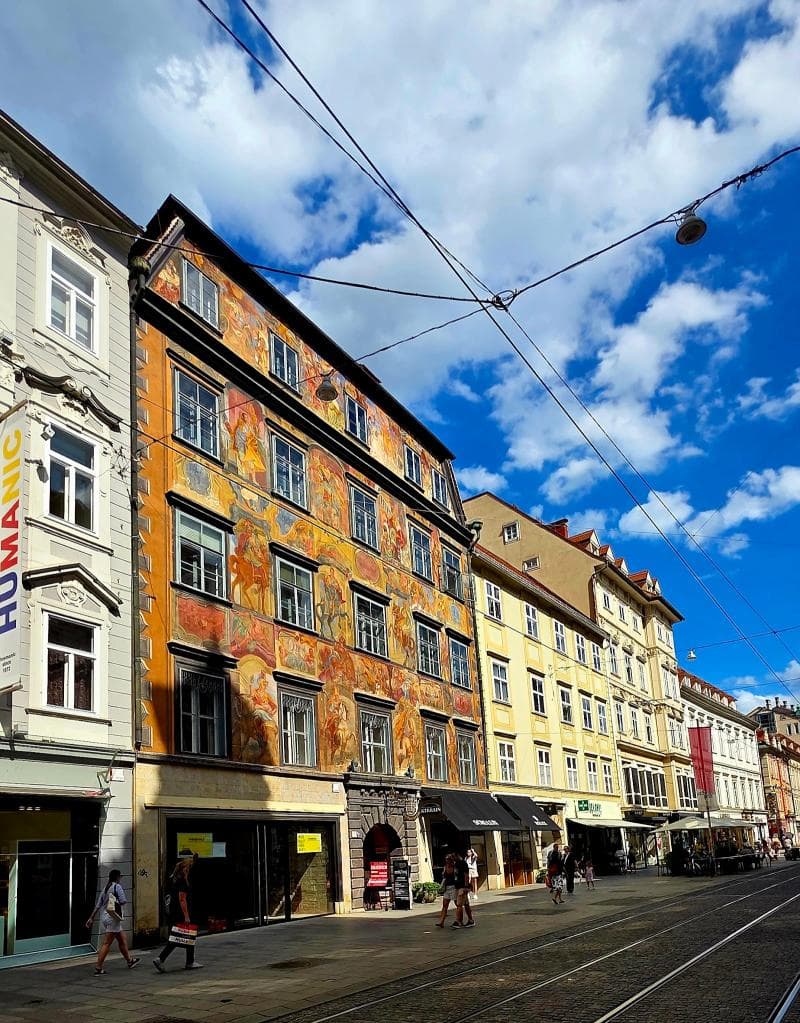
Discover Herrengasse, the historic heart of Graz's Altstadt, Austria. Explore its stunning architecture, the Painted House, and rich history.
Overview
Nestled within the UNESCO World Heritage-listed Altstadt von Graz, Herrengasse stands as the vibrant artery of Graz, Austria, connecting the bustling Hauptplatz to the historic Iron Gate. It is a place where centuries of history are etched into the facades of its magnificent buildings, offering a captivating journey through time for any curious traveler. This central boulevard is not merely a street; it's a living museum, a main thoroughfare that pulsates with the city's daily rhythm while inviting visitors to pause and admire its enduring charm.
As you stroll along Herrengasse, you're traversing a district celebrated for its stunning historic architecture and lively atmosphere, surrounded by elegant shops and inviting cafes. It's a key starting point for exploring Graz's rich cultural tapestry, where every turn reveals architectural marvels and glimpses into the city's storied past.
History & Cultural Background
Herrengasse's origins stretch back to the 13th century. By 1261, it was a Jewish neighborhood, and by 1475, it had evolved into the residential quarter for Graz's elite citizens. Its very name, 'Herrengasse' or 'Street of the Lords,' reflects this aristocratic past, as it was once lined almost exclusively with noble palaces. The street's architectural style is a harmonious blend of Renaissance, Baroque, and Neo-Baroque periods, showcasing the successive artistic movements that have shaped Graz over centuries.
From the 14th century onwards, Graz served as the residence for the Inner Austrian branch of the Habsburg dynasty, a significant period that greatly influenced the city's political, cultural, and architectural development. Many of the Renaissance and Baroque structures from this era continue to define the cityscape. The Altstadt of Graz, including Herrengasse, earned its designation as a UNESCO World Heritage Site in 1999, a testament to its exceptionally preserved medieval urban landscape and architectural diversity.
What Makes It Special
Herrengasse is distinguished by several architectural masterpieces and historical landmarks. Perhaps the most captivating is the 'Painted House' (Gemaltes Haus) at Herrengasse 3. Its facade is entirely covered with vibrant frescoes depicting figures from Greco-Roman mythology, a breathtaking work created by the Baroque painter Johann Mayer in 1742. This building, historically known as the Herzogshof, once served as a place where the Dukes of Styria conducted official business, adding layers of historical significance to its artistic splendor.
Another architectural gem is the Landhaus, an exquisite Renaissance building dating from the mid-16th century. Designed by the Italian military architect Domenico dell'Allio, it boasts a stunning three-story arcaded courtyard that exudes Italian flair, and today, it houses the Styrian regional parliament. Just next door, visitors can discover the Styrian Armoury (Landeszeughaus), renowned as the world's largest historic armory, housing an astonishing collection of approximately 32,000 pieces of weaponry, tools, and suits of armor. The street's overall architectural integrity, with its blend of styles and preserved structures, makes it a unique example of Central European urban development.
Stories, Fun Facts & Local Details
Originally known as 'Hochstraße' in the Middle Ages, the street's name changed to Herrengasse as the nobility increasingly settled in the city to be near the imperial court. While some of its grand palaces have been lost or repurposed over time, the street has largely retained its original appearance and relative exclusivity. For example, a Liechtenstein palace on Herrengasse 8 once housed the famous Bösendorfer-Konzertsaal, where renowned artists like Franz Liszt performed, though it was later replaced by a modern building.
Today, Herrengasse is not just about historical buildings; it's also a place where local life unfolds. The Graz Tourism Information office is conveniently located at Herrengasse 16, providing a central point for visitors to gather information and souvenirs. During a stroll, it's common to encounter street performers and musicians who add a lively and spontaneous cultural dimension to the historic setting, making every visit a unique experience.
Visitor Perspective
Exploring Herrengasse is best done on foot, allowing ample time to appreciate its pedestrian-friendly environment and observe the intricate details of its architecture. The street serves as an essential pedestrian link within the Altstadt, guiding you naturally from the vibrant Hauptplatz through a corridor of history and commerce. It's an ideal place for those who love to wander, to soak in the atmosphere, and to discover the interplay of past and present. While it offers a delightful experience, particularly for those interested in architecture and history, it can become quite crowded during peak tourist times, reflecting its popularity as a must-see destination in Graz.
Coordinates: 15.44008, 47.06986
View on Google Maps💬 How Travelers Describe This Place
Based on community votes
Must See
623Unique
545Beautiful
343Photogenic
211Interesting
20
Traveler Stories
Discover memorable experiences shared by travelers who have visited this place.
No traveler stories yet.
Be the first traveler to share what made this place memorable.

Tour
By
Spot
Discover amazing places around the world. Your journey starts here.
Explore
© 2026 TourBySpot. All rights reserved.