Harbor Viewpoints
Odessa, Ukraine
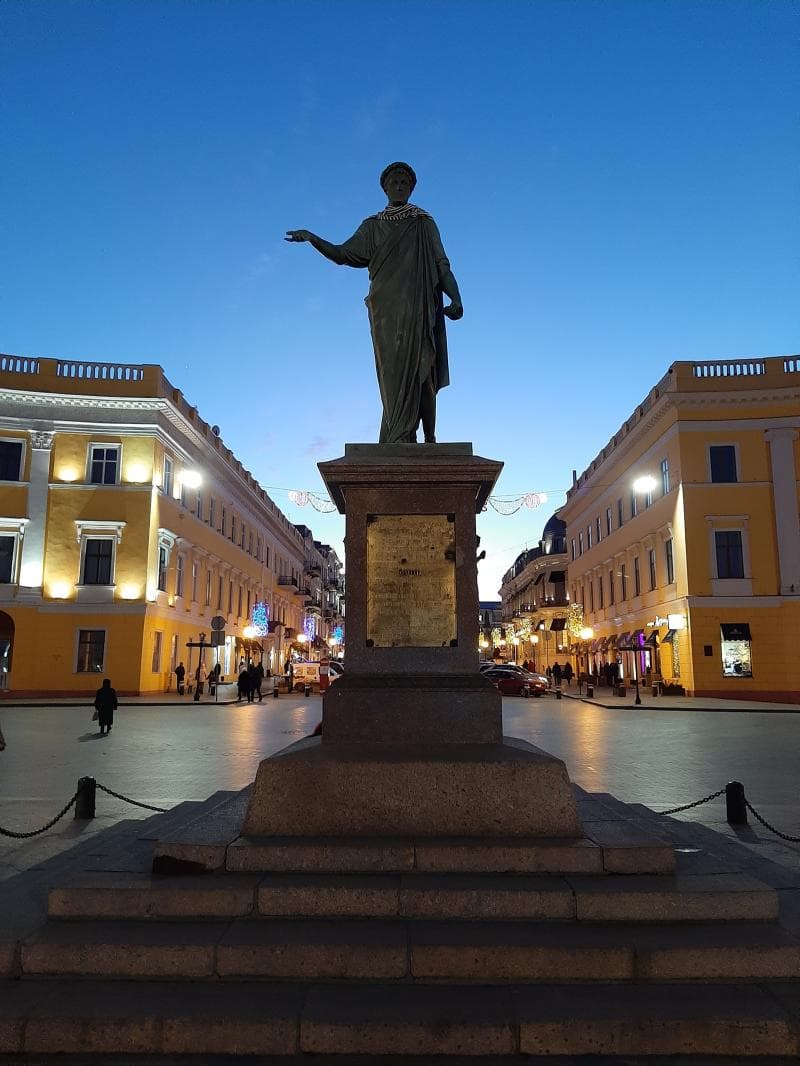
Discover the iconic Potemkin Stairs and its breathtaking Harbor Viewpoints in Odesa, Ukraine. Explore its history, unique optical illusion, and cinematic fame.
Overview
Perched majestically above the Black Sea, the Potemkin Stairs in Odesa, Ukraine, serve not only as a monumental architectural marvel but also as the primary gateway to the city's historic harbor, offering captivating 'Harbor Viewpoints'. This iconic structure seamlessly connects the bustling city center, situated on a high plateau, with the vibrant port below. It is recognized as a formal entrance into Odesa from the sea, making it a pivotal landmark for both historical significance and stunning panoramic vistas.
Comprising 192 steps and extending for 142 meters, the stairs are renowned for their clever optical illusion: from the top, only the landings are visible, creating an impression of uniform steps, while from the bottom, only the steps are seen, making it appear as a single, grand ascent. Parallel to the stairs, a funicular operates, providing a convenient alternative for ascending or descending, especially for those who wish to conserve their energy while still enjoying the journey between the city and the port.
History & Cultural Background
The construction of what was then known by various names such as the Boulevard Steps, Giant Staircase, or Richelieu Steps, began in 1837 and was completed in 1841. Commissioned by Prince Mikhail Semyonovich Vorontsov, the regional governor-general, the stairs were designed by Italian architect Francesco Boffo, with contributions from Russian architects Avraam Melnikov and Pot'e. Originally featuring 200 steps made of greenish-grey sandstone imported from Trieste, eight steps were later lost due to port expansion and street construction, bringing the count to its current 192. In 1933, the original sandstone was replaced with durable rose-grey granite during a renovation.
The stairs gained international fame following their dramatic portrayal in Sergei Eisenstein's 1925 silent film, 'Battleship Potemkin'. The film's iconic, though fictionalized, scene of a massacre on the steps immortalized the site and led to its renaming as the Potemkin Stairs in 1955, coinciding with the 50th anniversary of the mutiny that inspired the movie. Although officially reinstated to their original name, Primorsky Stairs, after Ukraine's independence, the name 'Potemkin Stairs' remains widely used by locals and tourists alike due to its profound cultural impact.
The port itself has a rich history, founded in 1794 by Catherine the Great as a military harbor and merchant pier. It quickly grew, becoming a 'porto franco' or free port in the 19th century, which allowed goods to move without duties and significantly boosted Odesa's economic prosperity, primarily through grain export. This vibrant maritime history is intrinsically linked to the stairs, which have always served as the elegant connection between the burgeoning city and its vital seaport.
What Makes It Special
The Potemkin Stairs are more than just a means of passage; they are a masterpiece of urban planning and optical engineering. The unique design, with its varying widths at the top (12.5 meters) and bottom (21.7 meters), ensures the aforementioned optical illusion, enhancing its monumental appearance. This creates a striking visual effect, making the stairs appear longer from below and shorter from above, a testament to the foresight of its designers.
From the top, adjacent to the monument of Duke de Richelieu, visitors are treated to expansive 'Harbor Viewpoints' of the Odesa Marine Terminal, the vast Black Sea, and the dynamic activity of one of Ukraine's largest seaports. This vantage point encapsulates the essence of Odesa as a major maritime city, providing a picturesque backdrop of ships, cranes, and the endless horizon. The stairs themselves act as a natural frame for this impressive seascape, making the views an integral part of the experience.
Stories, Fun Facts & Local Details
Beyond the architectural marvel and cinematic fame, the Potemkin Stairs hold numerous intriguing stories. The initial construction was supervised by English engineer John Upton, who had reportedly fled Britain while on bail for forgery. Such colorful characters add to the mystique of the stairs' origins. The stairs were once admired by famous writers such as Mark Twain and Jules Verne, who were undoubtedly captivated by their grandeur and the panoramic views they offered.
At the pinnacle of the stairs stands the bronze statue of Duke de Richelieu, Odesa's first mayor and governor. This monument, the first erected in the city, commemorates his significant contributions to Odesa's growth and prosperity in the early 19th century. Local lore even suggests a ghost story connected to the area, though it's the more tangible history and cultural connections that truly define this place. The stairs are often a backdrop for local events, performances, and simply a place where residents and visitors gather to enjoy the sea breeze and the city's maritime pulse.
Visitor Perspective
A visit to the Potemkin Stairs offers a multi-sensory journey. Whether you choose to walk down the 192 steps towards the harbor or ascend to the city center, the experience is impactful. Descending provides an ever-widening panorama of the port, revealing its scale and activity in progressive stages. Ascending, one faces the monument of Duke de Richelieu, with the city's elegant Primorsky Boulevard stretching out behind it, inviting further exploration.
For those less inclined to tackle the steps, the modern funicular provides a comfortable and scenic ride, offering similar 'Harbor Viewpoints' with minimal effort. At the base of the stairs, you are just steps away from the Black Sea coast and the active port area, while the top leads directly to Primorsky Boulevard, a charming promenade lined with historic buildings, statues, and cafes. This strategic location makes the Potemkin Stairs an ideal starting point for exploring Odesa's rich architectural heritage and its deep connection to the sea.
Coordinates: 30.74333, 46.48917
View on Google Maps💬 How Travelers Describe This Place
Based on community votes
Unique
680Interesting
588Photogenic
566Beautiful
432Must See
316
Traveler Stories
Discover memorable experiences shared by travelers who have visited this place.
No traveler stories yet.
Be the first traveler to share what made this place memorable.

Tour
By
Spot
Discover amazing places around the world. Your journey starts here.
Explore
© 2026 TourBySpot. All rights reserved.