Hanok Streets
Seoul, South Korea
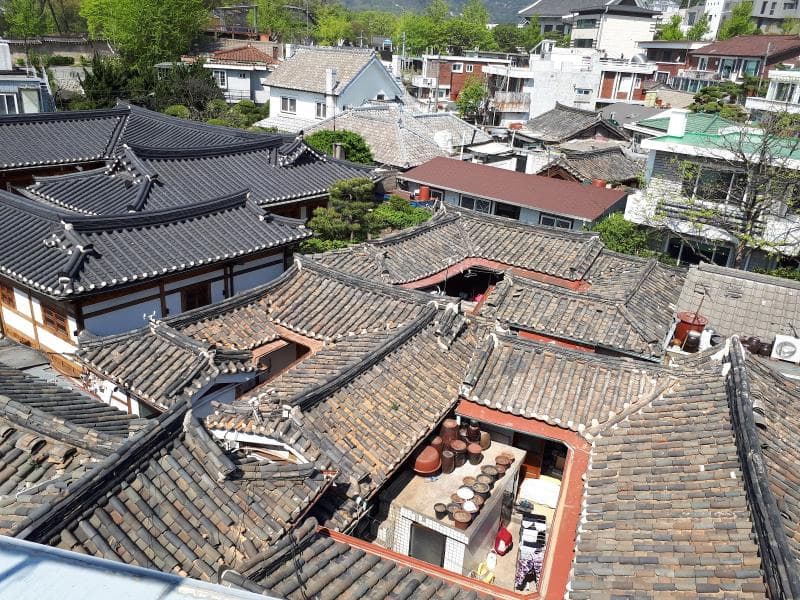
Wander the historic Hanok Streets of Bukchon Hanok Village in Seoul, South Korea. Discover traditional Korean houses, rich history, and cultural charm.
Overview
Tucked amidst the bustling modernity of Seoul, South Korea, lie the captivating Hanok Streets of Bukchon Hanok Village, a living testament to the nation's rich architectural heritage. This historic neighborhood, often referred to simply as Bukchon, offers a unique journey back in time, allowing visitors to wander through narrow alleys lined with hundreds of traditional Korean houses, known as hanok. Unlike many reconstructed historical sites, Bukchon remains a residential area, where the past and present gracefully coexist. Its prime location, nestled between the grand palaces of Gyeongbokgung and Changdeokgung, further enhances its charm, presenting picturesque views that blend ancient tiled roofs with the city's contemporary skyline.
History & Cultural Background
The history of Bukchon Hanok Village stretches back over 600 years to the Joseon Dynasty (1392-1910). During this period, it served as the exclusive residential quarter for high-ranking government officials and nobility, a strategic location close to the royal palaces. Evidence from a 1906 family register shows that a significant portion of its population comprised aristocrats. While many hanoks across Seoul were replaced by modern structures over time, Bukchon endured. However, the area underwent transformations, notably during the Japanese occupation in the early 20th century. During this time, a Korean real estate developer named Jeong Se-kwon played a pivotal role. He intentionally focused on building modernised hanoks in Bukchon to prevent Japanese encroachment on Korean land. These urban hanoks incorporated amenities like glass windows and electricity, making them accessible to a wider range of Korean families, rather than just the elite. Since the early 2000s, significant efforts have been made to preserve these traditional homes, safeguarding the village's unique character.
A hanok is more than just a house; it's a reflection of traditional Korean values, emphasizing harmony with nature. Built using natural materials such as wood, clay, stone, and paper, hanoks were designed to adapt to the land and the seasons. Key architectural principles include baesanimsu, where an ideal house is built with a mountain at the back and a river in the front. Hanoks feature characteristic curved tile roofs, wooden frames, and an ingenious heating system called ondol (underfloor heating) for warmth in winter, complemented by open wooden floor areas (maru) for cooling in summer.
What Makes It Special
What truly sets Bukchon's Hanok Streets apart is their authenticity as a continually inhabited traditional neighborhood, rather than a mere museum piece. It's a place where the echoes of history resonate through daily life. The village's architectural consistency, with its multitude of well-preserved hanoks, provides an immersive historical atmosphere. Many of these hanoks, though dating from the Joseon Dynasty, have been adapted to modern life, housing cultural centers, guesthouses, restaurants, and tea houses, creating a dynamic blend of old and new. Walking through these streets, travelers encounter the 'Eight Views of Bukchon,' specific vantage points offering particularly iconic scenes of the village's traditional architecture and panoramic vistas, often including the surrounding palaces and mountains. The subtle differences in hanok design, from the grand estates of former aristocrats to the more compact urban hanoks, tell a nuanced story of Seoul's past.
Stories, Fun Facts & Local Details
The name 'Bukchon' itself holds a charming story, meaning 'northern village,' derived from its geographical position north of the Cheonggyecheon Stream and Jongno, between Seoul's two main palaces. It's fascinating to consider how a single real estate developer, Jeong Se-kwon, intentionally built hanoks during the Japanese colonial period, making traditional Korean housing available to middle-class families and inadvertently preserving much of the area's character against cultural erasure. Today, the village faces the challenge of balancing its historical significance with its popularity. With millions of visitors annually, the once tranquil residential streets have experienced 'overtourism.' As a result, the local government and residents have implemented policies, including restricted visiting hours (generally 10 a.m. to 5 p.m. for non-residents), to ensure respect for the privacy and daily lives of the people who call Bukchon home. This emphasizes the importance of 'silent tourism' – experiencing the village respectfully and quietly.
Visitor Perspective
Exploring the Hanok Streets of Bukchon is an experience best savored on foot. The maze-like alleyways, stone walls, and gently curving tiled roofs invite a sense of discovery. Visitors can immerse themselves in traditional Korean culture by renting a hanbok (traditional Korean clothing) and strolling through the village, often creating striking photo opportunities against the historic backdrop. Beyond admiring the architecture, many hanoks now host cultural experiences, from tea ceremonies and calligraphy classes to craft workshops where visitors can learn traditional skills. The Bukchon Traditional Culture Center serves as an excellent starting point, offering maps and insights into the village's history and attractions. Finding a quiet cafe or a traditional tea house nestled within a hanok provides a peaceful respite, allowing for reflection on the layers of history that permeate every corner of this remarkable village. It's a journey that connects travelers with Korea's enduring past, set against the vibrant pulse of modern Seoul.
Coordinates: 126.98361, 37.58306
View on Google Maps💬 How Travelers Describe This Place
Based on community votes
Interesting
898Photogenic
667Beautiful
618Must See
449Unique
308
Traveler Stories
Discover memorable experiences shared by travelers who have visited this place.
No traveler stories yet.
Be the first traveler to share what made this place memorable.

Tour
By
Spot
Discover amazing places around the world. Your journey starts here.
Explore
© 2026 TourBySpot. All rights reserved.