Hanoi Flag Tower
Hanoi, Vietnam
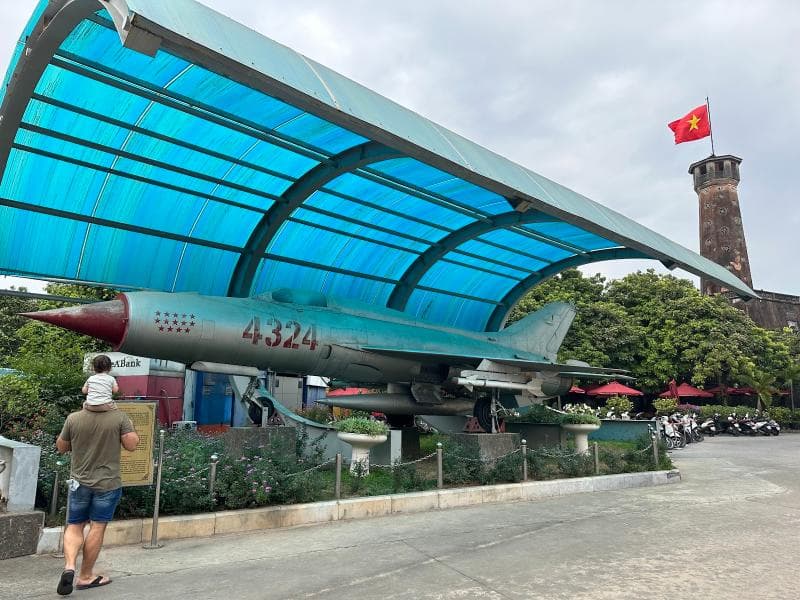
Discover the Hanoi Flag Tower, a symbol of Vietnamese history and resilience located within the Thang Long Imperial Citadel in Hanoi, Vietnam.
Overview
The Hanoi Flag Tower, or Cột cờ Hà Nội, stands as a poignant and enduring symbol of Vietnamese heritage and resilience in the heart of Hanoi. This historic architectural marvel is nestled within the sprawling grounds of the Thang Long Imperial Citadel, a UNESCO World Heritage Site, and adjacent to the Vietnam Military History Museum. At a height of 33.4 meters (or 41 meters including the flagpole), it is one of the city's most recognizable landmarks and a testament to centuries of Vietnamese history.
Constructed during the Nguyen Dynasty, the tower has witnessed the ebb and flow of empires, colonial occupation, and fierce struggles for national independence. Unlike many other structures within the Citadel, the Flag Tower remarkably survived various conflicts, including the French colonial period, due to its strategic utility as an observation post.
Today, visitors can explore the tower's unique architecture, learn about its significant past, and appreciate the panoramic views it offers of the surrounding capital. It serves not only as a historical relic but also as a powerful emblem of national pride, with the Vietnamese flag continuously flying at its summit.
History & Cultural Background
The Hanoi Flag Tower was built between 1805 and 1812 under the reign of Emperor Gia Long of the Nguyen Dynasty. Its original purpose was to serve as an observation tower for the Hanoi Citadel.
Its strategic importance proved to be its saving grace; while much of the Thang Long Imperial Citadel was destroyed by French colonial forces between 1894 and 1897, the Flag Tower was spared and repurposed as a military observation post. It continued to serve this function during the American War, used by Hanoi's air defense forces.
The tower holds deep cultural significance, particularly in the context of Vietnam's modern history. On October 10, 1954, following Vietnam's victory against French colonialism, the national flag was proudly raised atop the tower to celebrate Hanoi's Liberation Day. This act solidified its status as a historical monument and a powerful symbol of independence and freedom. The street where it stands was later renamed Dien Bien Phu, commemorating the historic victory. Its image has even graced the country's early banknotes, further cementing its place in the national consciousness.
What Makes It Special
What truly sets the Hanoi Flag Tower apart is its remarkable architectural integrity and its storied survival. Standing tall for over two centuries, it is one of the few original structures of the ancient Hanoi Citadel that remains largely intact. Its design reflects a blend of traditional Vietnamese building techniques with influences of its time.
The tower is comprised of three tiered bases, forming a truncated square pyramid, constructed mainly with bricks. The second tier features four doors, each facing a cardinal direction and inscribed with meaningful characters: 'Nghênh Húc' (To welcome dawn's sunlight) on the East door, 'Hướng Minh' (Directed to the sunlight) on the South door, and 'Hồi Quang' (To reflect light) on the West door.
Inside, a spiral staircase of 54 steps leads up to an octagonal observatory, lit and ventilated by 39 flower-shaped and 6 fan-shaped windows. While visitors can climb to a certain level to appreciate the structure, access to the very top where the flag flies is restricted. This architectural detail, combined with its historical role as a continuous observation point through various epochs, makes it a unique witness to Vietnam's tumultuous past.
Stories, Fun Facts & Local Details
A striking detail about the Hanoi Flag Tower is the national flag itself. Since 1986, a large red flag with a yellow star, measuring 24 square meters, has continuously flown from its peak, replaced every two to three weeks to ensure its pristine condition. This enduring display is a constant source of national pride for the Vietnamese people.
Locals often refer to the tower as Cột cờ Hà Nội, which directly translates to 'Hanoi Flagpole,' emphasizing its primary symbolic function. The tower's presence on Dien Bien Phu Street, named after a pivotal battle, further connects it to Vietnam's struggles for self-determination.
An interesting anecdote suggests that despite Hanoi's often hot climate, the atmosphere inside the tower remains remarkably cool, a testament to the ingenuity of its ancient design for ventilation. While climbing the internal staircase, visitors can observe the strategic placement of windows that once provided comprehensive views for military surveillance.
Visitor Perspective
Visiting the Hanoi Flag Tower offers a profound journey through time. It's a key component of any exploration of the Thang Long Imperial Citadel and the Vietnam Military History Museum, as understanding the tower enhances the appreciation of the broader historical context.
The tower is open from Tuesday to Sunday, typically between 8:00 AM or 9:00 AM and 4:30 PM or 5:00 PM, with an affordable entrance fee of approximately 20,000 VND for adults. Many recommend visiting in the early morning for a more serene experience, allowing for better photography and contemplation. While there isn't a strict dress code, wearing respectful attire is advised as it's a significant national heritage site.
From the observation decks (though not the very top), visitors can take in views of the surrounding museum grounds, including military equipment, and the vibrant cityscape of Hanoi. It's a place that powerfully evokes the spirit of Vietnam, inviting travelers to connect with its rich history and unwavering national identity.
Coordinates: 105.844781, 21.034509
View on Google Maps💬 How Travelers Describe This Place
Based on community votes
Beautiful
847Must See
685Unique
513Interesting
482Photogenic
62
Traveler Stories
Discover memorable experiences shared by travelers who have visited this place.
No traveler stories yet.
Be the first traveler to share what made this place memorable.

Tour
By
Spot
Discover amazing places around the world. Your journey starts here.
Explore
© 2026 TourBySpot. All rights reserved.