Hanging Incense Coils
Hong Kong, China
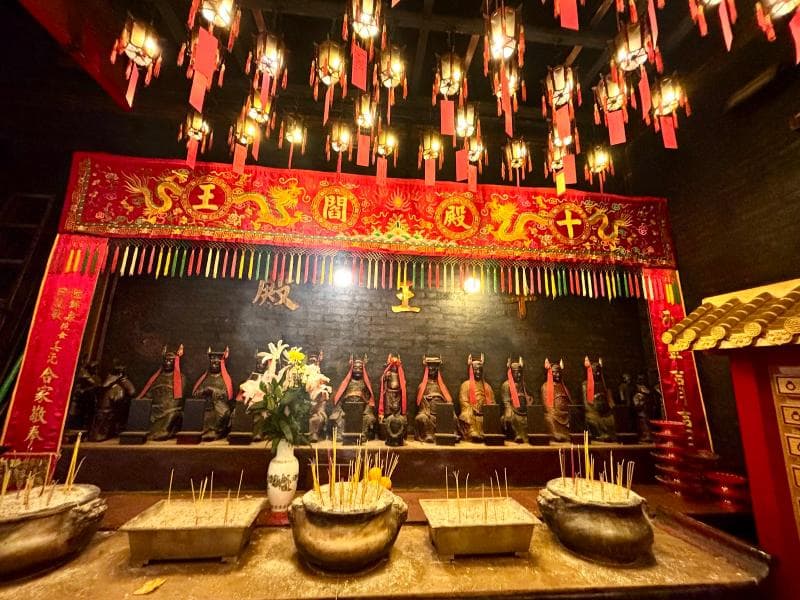

Discover the mystical Hanging Incense Coils at Man Mo Temple in Hong Kong, China. Explore its history, cultural significance, and unique spiritual ambiance.
Overview
Deep within the vibrant heart of Hong Kong, amidst the modern skyscrapers and bustling streets, lies the serene Man Mo Temple, a sanctuary steeped in history and spiritual reverence. One of its most captivating features, and often the first thing that strikes a visitor, is the sight of numerous 'Hanging Incense Coils'. These monumental, spiraling incense coils hang from the temple's ceiling, slowly burning and filling the air with a unique, mystical aroma. Man Mo Temple, located in Sheung Wan, is dedicated to Man Cheong, the God of Literature, and Mo Tai, the God of Martial Arts. It stands as a declared monument and is one of Hong Kong's oldest and most significant temples, offering a tangible link to the city's rich past and enduring traditions.
History & Cultural Background
The Man Mo Temple compound, comprising the main Man Mo Temple, Lit Shing Kung, and Kung Sor, was constructed between 1847 and 1862 by wealthy Chinese merchants during Hong Kong's early colonial period. More than just a place of worship, it served as a vital community hub where local residents would gather to discuss important matters and even settle disputes outside the British legal system. The temple's management was officially entrusted to the Tung Wah Hospital (now Tung Wah Group of Hospitals) in 1908, a charitable organization that continues to oversee its operations. The temple's dual dedication embodies the traditional Chinese philosophical balance between 'wen' (civil accomplishments, learning, and culture) and 'wu' (military prowess, justice, and protection). Man Cheong, the God of Literature, symbolized by a writing brush, was traditionally petitioned by scholars and students seeking success in imperial examinations and academic pursuits. Mo Tai, also known as Guan Yu or Kwan Tai, the God of Martial Arts, is revered for his unwavering loyalty, bravery, and righteousness.
What Makes It Special
The 'Hanging Incense Coils' are arguably the most iconic and emotionally resonant aspect of Man Mo Temple. These large, often bell-shaped spirals, some several feet wide, are suspended from the temple's ceiling, creating an awe-inspiring spectacle. As they burn slowly, sometimes for weeks, they release thick, fragrant smoke that gracefully swirls upwards, creating a misty, atmospheric ambiance that feels both ancient and deeply spiritual. This rising smoke is not merely aesthetic; it symbolizes prayers and wishes ascending to the heavens, carrying the hopes and petitions of devotees to the deities. Many also believe the smoke acts as 'food' for the spirits of ancestors and gods. The interplay of light filtering through the temple's structure and the drifting smoke creates an otherworldly, almost meditative, environment. This unique sensory experience, combined with the temple's traditional Qing Dynasty architecture—featuring intricate carvings, vibrant ceramic figurines, and vermillion red columns—makes a visit to Man Mo Temple profoundly special.
Stories, Fun Facts & Local Details
The very name 'Man Mo' succinctly captures its essence: 'Man' means civil or literary, and 'Mo' means martial. A fascinating historical detail is the temple's past role as a place for dispute resolution. During colonial times, Chinese residents would often prefer to settle conflicts here, taking oaths before the gods and burning papers inscribed with curses, believing divine retribution would befall those who broke their promises. The Man Cheong Festival, celebrating the God of Literature, has even been recognized as part of Hong Kong's Intangible Cultural Heritage. Among the temple's treasures is a bronze bell cast in 1847, marking its founding. While inside, visitors might notice small red prayer tablets or lanterns hanging alongside the incense coils, often bearing wishes for good fortune or academic success. Outside, one might occasionally encounter traditional fortune-tellers, adding another layer to the temple's cultural tapestry.
Visitor Perspective
Man Mo Temple offers a tranquil escape from the urban energy of Hong Kong. It is open daily from 8:00 AM to 6:00 PM, and admission is free, welcoming visitors of all backgrounds. For a more contemplative experience, it is advisable to visit in the early morning, before the larger tourist groups arrive, when local worshippers are often present, adding to the authentic atmosphere. While photography is generally allowed, visitors are kindly requested to be respectful, avoid using flash, and refrain from photographing individuals engaged in prayer to maintain the sanctity of the space. Many visitors choose to purchase small bundles of incense from nearby shops to participate in the ancient ritual of offering prayers. The temple is conveniently located on Hollywood Road, easily accessible via the Sheung Wan MTR station (Exit A2) followed by a short uphill walk, or by taking the Mid-Levels Escalator. Observing the silent devotion and the slow burn of the incense coils is a profound experience, connecting one to centuries of spiritual practice.
Coordinates: 114.1502, 22.284
View on Google Maps💬 How Travelers Describe This Place
Based on community votes
Interesting
748Unique
499Photogenic
427Must See
337Beautiful
94
Traveler Stories
Discover memorable experiences shared by travelers who have visited this place.
No traveler stories yet.
Be the first traveler to share what made this place memorable.

Tour
By
Spot
Discover amazing places around the world. Your journey starts here.
Explore
© 2026 TourBySpot. All rights reserved.