Handicraft Rooms
Tashkent, Uzbekistan
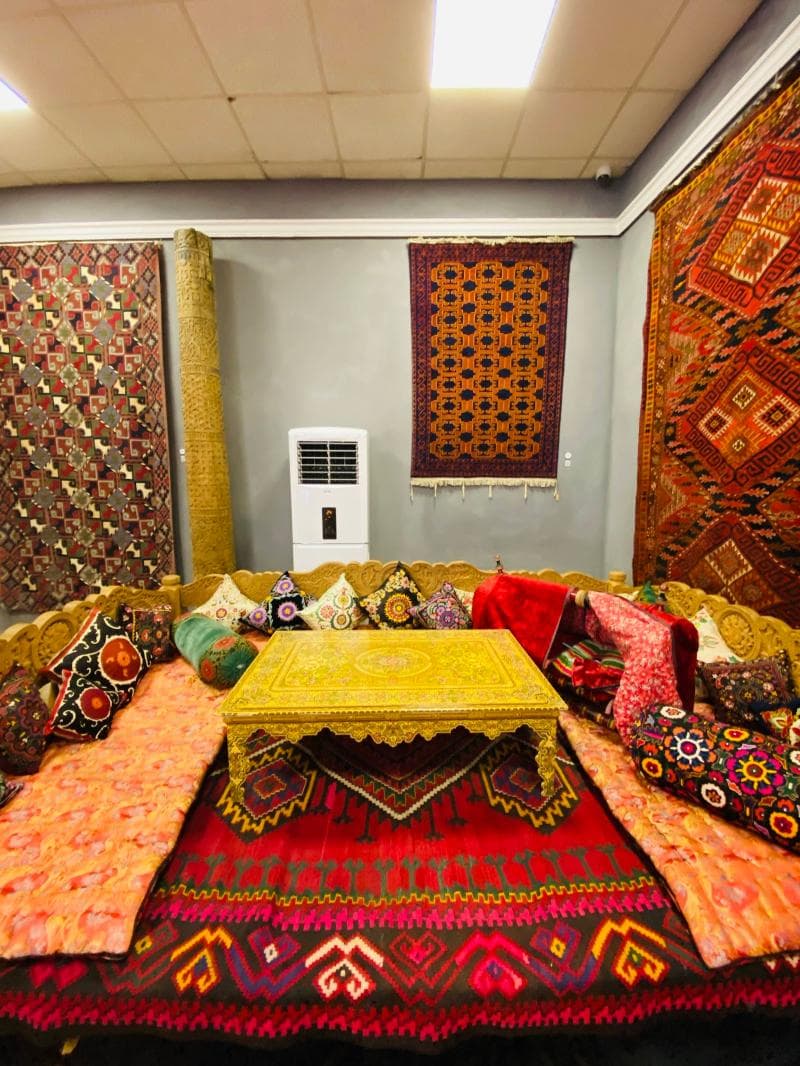
Discover the rich history and cultural significance of Uzbek handicrafts at the Museum of Applied Arts in Tashkent, Uzbekistan.
Overview
Stepping into the Museum of Applied Arts in Tashkent, Uzbekistan, is like entering a vibrant tapestry woven through centuries of artistry and tradition. While there isn't a specific section officially designated as 'Handicraft Rooms,' the entire museum serves as a magnificent showcase for Uzbekistan's rich heritage in applied arts and traditional crafts. Housed within a stunning architectural marvel that was once the residence of a Russian diplomat, the museum's collection boasts over 7,000 exquisite pieces, spanning from the early 19th century to contemporary works. From intricate ceramics and vibrant textiles to detailed wood carvings and shimmering gold embroidery, every corner of this institution offers a journey through the soulful expressions of Uzbek artisans. It's a place where the skill of human hands tells the story of a nation's enduring cultural identity.
History & Cultural Background
The building housing the Museum of Applied Arts is as much an exhibit as the artifacts it contains. Originally constructed in the late 19th century, it was the lavish palace of Russian diplomat Alexander Alexandrovich Polovtsev Jr.. Polovtsev was known for his admiration of local craftsmanship, and his home was intricately re-arranged and renovated in an Oriental style under the guidance of Mikhail Stepanovich Andreev, featuring the exquisite work of Uzbek folk artists like Usta Shirin Muradov and A. Kazymdzhanov. This architectural masterpiece, with its ornate ganch (carved plaster) and painted ceilings, embodies the artistic characteristics of the Uzbek nation.
The museum's origins trace back to 1927 when it began as a temporary exhibition showcasing the best works of Uzbek artists. Its popularity led to the establishment of the Handicrafts Museum in 1937, which eventually gained state status and its current name, the State Museum of Applied Arts of Uzbekistan, in 1997. This evolution reflects a continuous dedication to preserving and celebrating the country's diverse artisan traditions, which flourished along the historic Silk Road.
What Makes It Special
The Museum of Applied Arts stands out not only for its vast collection but also for the way it contextualizes Uzbek craftsmanship. It presents a comprehensive overview of how traditional techniques have been passed down through generations and adapted over time. Visitors can explore approximately 50 types of traditional applied art, categorized into three main areas: works rooted in ancient traditions, pieces from the second half of the 19th century reflecting traditional methods, and contemporary works inspired by modern decorative arts.
The sheer diversity of the collection is remarkable. You'll encounter the vivid blue ceramics of Rishtan, the sharp, distinctive knives of Chust, the luxurious atlas silk from Margilan, and the intricate gold embroidery from Bukhara. Other highlights include hand-embroidered textiles like suzani, traditional skullcaps (tyubeteykas), elaborate jewelry, carpets, and finely carved wood. Each piece, whether a functional object or a decorative masterpiece, showcases the profound skill and aesthetic sensibility of its creator.
Stories, Fun Facts & Local Details
Beyond the displays, the museum holds many layers of stories. Imagine the diplomat Polovtsev, whose appreciation for Uzbek art led to the creation of this architectural gem, filling his home with such treasures. The building itself, with its central hall designed like a traditional mehmonkhona (guest room), features decorative elements and paintings by renowned Uzbek craftsmen, creating an immersive cultural experience.
One intriguing detail is the aphorism inscribed above the reception room doors in Persian characters: 'World is a castle where new people enter every day,' a sentiment that resonates deeply within a museum dedicated to preserving historical crafts while welcoming new generations of admirers. The museum also reconstructs a 19th-century living room, offering a glimpse into the domestic life of a prosperous Central Asian household and demonstrating how these applied arts seamlessly integrated into everyday existence. The collection even includes a famous 'Yulduz' (Star) gold-embroidered panel, a monumental work that required the dedication of dozens of craftswomen to create.
Visitor Perspective
For any curious traveler, a visit to the Museum of Applied Arts is an enriching experience that goes beyond merely viewing artifacts. It's an opportunity to connect with the living history of Uzbekistan through its craftsmanship. The ambiance of the former palace, with its stunning interiors, enhances the appreciation for the artistry on display. The meticulous arrangement of exhibits allows visitors to trace the evolution of various craft schools and techniques across different regions.
You'll find yourself marveling at the intricate patterns of a suzani, the delicate brushstrokes on a miniature, or the detailed carving on a wooden panel, understanding the immense patience and skill each piece required. The museum offers an excellent introduction to Uzbek culture and art, making it an ideal place to understand the country's traditional crafts and their continued relevance today. It's a testament to the enduring legacy of Uzbek artisans and a truly inspiring stop for anyone seeking to delve into the heart of Central Asian artistic heritage.
Coordinates: 69.2593952, 41.3010284
View on Google Maps💬 How Travelers Describe This Place
Based on community votes
Must See
836Beautiful
797Photogenic
695Interesting
396Unique
286
Traveler Stories
Discover memorable experiences shared by travelers who have visited this place.
No traveler stories yet.
Be the first traveler to share what made this place memorable.

Tour
By
Spot
Discover amazing places around the world. Your journey starts here.
Explore
© 2026 TourBySpot. All rights reserved.