Hall Of Supreme Harmony
Beijing, China
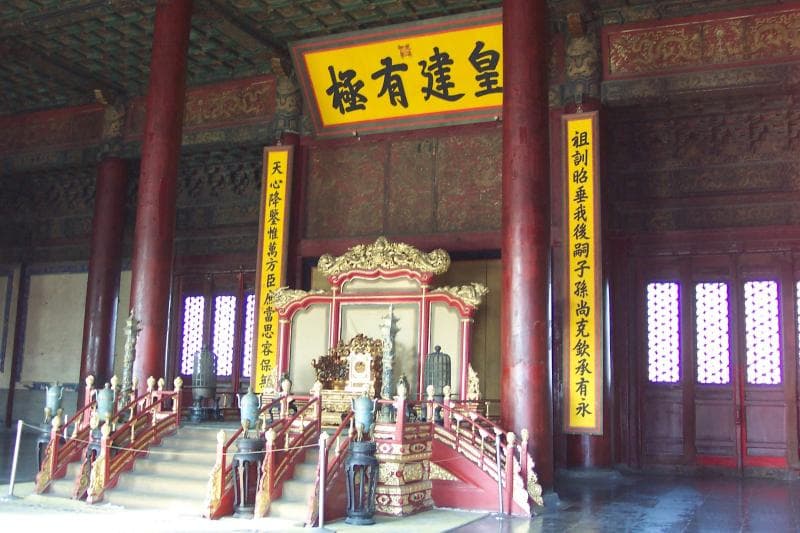
Explore Beijing's Hall of Supreme Harmony, the grandest hall in the Forbidden City, China. Discover its rich history, unique architecture, and imperial significance.
Overview
The Hall of Supreme Harmony, or Taihedian, stands as the paramount architectural masterpiece within the Forbidden City in Beijing, China. Positioned majestically on the central axis, directly behind the Gate of Supreme Harmony, it is not merely a building but a profound symbol of imperial power and grandeur. As the largest and most prestigious structure within the sprawling imperial complex, it served as the ceremonial heart of the Ming and Qing dynasties for centuries. Originally constructed in 1420 during the Yongle reign of the Ming Dynasty, it has undergone several destructions and rebuilds, with the present magnificent edifice dating back to the Kangxi era (1662-1722) of the Qing Dynasty. Its imposing scale, with dimensions of 11 bays wide by 5 bays deep, and soaring to a height of 35.05 meters, firmly establishes it as the largest surviving wooden structure in China, showcasing the pinnacle of ancient Chinese architectural prowess.
History & Cultural Background
The history of the Hall of Supreme Harmony is inextricably linked to the ebb and flow of imperial China. First erected in 1420, its primary function was to host the most solemn and significant national ceremonies of the Ming and Qing emperors. Imagine the scene: coronations, imperial weddings, the empress's enthronement, military dispatches, and even major celebrations like emperors' birthdays, the Winter Solstice, and Chinese New Year, all unfolded within its hallowed walls. This hall was the ultimate stage for displaying the emperor's absolute authority, symbolizing his role as the 'Son of Heaven' ruling 'All Under Heaven'. Its name, 'Taihe', thoughtfully translates to embody the wish for harmony between heaven and earth, a core philosophical ideal of the time. Over the centuries, its name evolved from the Hall of Venerating Heaven and the Hall of Imperial Supremacy, until the Shunzhi Emperor of the Qing dynasty bestowed its current, enduring title in 1645.
What Makes It Special
What truly sets the Hall of Supreme Harmony apart is its unparalleled architectural and symbolic grandeur. It is the largest and best-preserved wooden hall in China, boasting a double-eave hip roof adorned with distinctive yellow glazed tiles – a feature reserved for buildings of the highest imperial rank. Uniquely, its roof ridge is decorated with ten mythical beasts, a number higher than any other ancient Chinese building, signifying its supreme status. The hall rests upon an impressive three-tiered white marble base, rising 8.13 meters high, intricately carved with patterns. A testament to ancient engineering, the entire structure is built without a single nail, employing the ingenious 'dougong' bracket system and a 'raised beam' framework, which together allowed it to withstand multiple earthquakes. Inside, 72 grand columns support the roof, with six closest to the gilded lacquered cloud-dragon throne covered in gold and wrapped with dragon motifs. The imperial throne itself, a masterpiece of red sandalwood, is a focal point, intricately carved with five dragons. Furthermore, the floor is paved not with gold, but with 'golden bricks'—specially crafted fine bricks from Suzhou, so precious they were considered more valuable than gold.
Stories, Fun Facts & Local Details
- The Myth of the Golden Bricks: Despite their name, the 'golden bricks' paving the hall's floor aren't made of actual gold. They are, in fact, incredibly fine, specially manufactured bricks from Suzhou, renowned for their smooth, dark finish and resonance. Their intricate, time-consuming production process made them incredibly valuable and a symbol of imperial luxury.
- The Ten Mythical Beasts: Look up at the roofline and count the mythical figures. The Hall of Supreme Harmony is the only building in the Forbidden City, and indeed in traditional Chinese architecture, to feature ten such guardian beasts on its roof ridge. The tenth, known as 'Xingshi', is a winged monkey, a unique addition symbolizing unmatched authority.
- The Earthquake-Proof Design: The hall's construction, utilizing a complex system of interlocking wooden brackets called 'dougong' and a 'raised beam' framework, allows the massive wooden structure to flex and absorb seismic shocks, a remarkable feat of ancient engineering that has protected it through centuries.
- The Xuanyuan Mirror: Directly above the emperor's throne, an elaborate caisson in the ceiling features a coiled dragon. From its mouth hangs a chandelier-like set of metal balls, known as the 'Xuanyuan Mirror'. Legend whispers that these metal balls would fall and strike dead any usurper audacious enough to sit on the Dragon Throne.
- The Dragon Drainage System: During heavy rains, a truly magical sight unfolds. Water rushes over the yellow glazed tiles and pours out from hundreds of dragon-head spouts around the marble terraces, creating the illusion of 'a thousand dragons spitting water'. This 600-year-old drainage system is both practical and breathtakingly beautiful.
Visitor Perspective
Visiting the Hall of Supreme Harmony offers a profound glimpse into imperial China, but careful planning can greatly enhance the experience. Due to its immense popularity, the hall, and the Forbidden City as a whole, can become very crowded, especially during peak morning hours. Many seasoned travelers recommend arriving early to avoid the largest crowds, allowing for a more serene appreciation of its grandeur. Another unique tip is to visit on a rainy day, specifically to witness the impressive dragon-head drainage system in action. Given the sheer size of the Forbidden City complex, comfortable walking shoes are essential. To truly appreciate the historical significance and intricate details often missed by those who rush through, it's highly recommended to do some prior research or consider a guided tour. Remember that tickets for the Forbidden City must be booked online in advance, and your passport will be required for entry. The Forbidden City is typically closed on Mondays, except during national holidays. While the Hall of Supreme Harmony itself might be explored in 20-45 minutes, immersing yourself in its stories and details will make the visit far more rewarding.
Coordinates: 116.390667, 39.915889
View on Google Maps💬 How Travelers Describe This Place
Based on community votes
Must See
886Beautiful
564Unique
201Interesting
121Photogenic
87
Traveler Stories
Discover memorable experiences shared by travelers who have visited this place.
No traveler stories yet.
Be the first traveler to share what made this place memorable.

Tour
By
Spot
Discover amazing places around the world. Your journey starts here.
Explore
© 2026 TourBySpot. All rights reserved.