Hall Of Prisoners
Florence, Italy
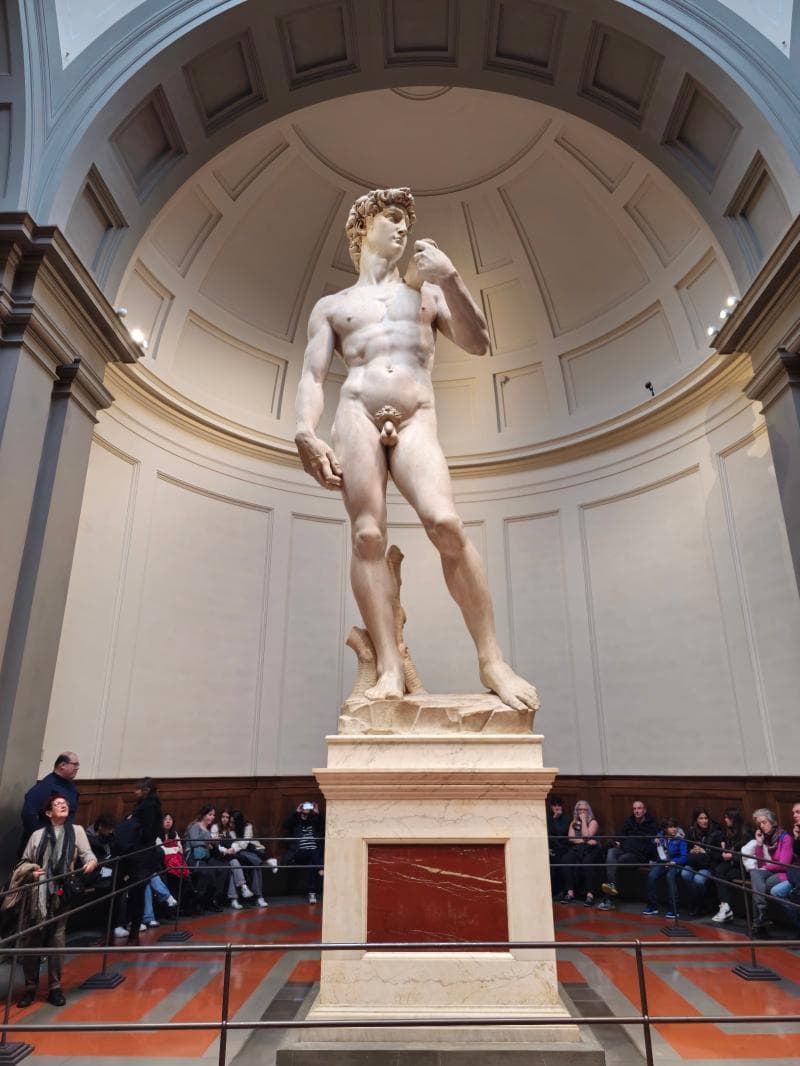
Discover the Hall of Prisoners in Florence, Italy's Accademia Gallery, home to Michelangelo's unfinished 'Slaves'. Witness the raw power of 'non-finito' sculpture.
Overview
Nestled within the renowned Accademia Gallery in Florence, Italy, the Hall of Prisoners serves as a profound prelude to one of the art world's most iconic masterpieces. This distinctive corridor is home to Michelangelo's powerful series of four unfinished marble sculptures, famously known as the 'Slaves' or 'Prisoners'. These figures, dynamically positioned, guide visitors through a compelling visual narrative that culminates in the presence of David. The hall's unique atmosphere, framed by these struggling forms, offers an intimate glimpse into the mind and method of a Renaissance master.
History & Cultural Background
The story of the Prisoners is deeply intertwined with one of Michelangelo's most ambitious yet ultimately unfulfilled projects: the tomb of Pope Julius II. Conceived around 1505, this monumental sepulcher was intended to be the grandest of Christian times, featuring over 40 figures. Michelangelo envisioned his 'Prisoners' as allegories, representing the soul trapped within the flesh, battling to escape human weaknesses and earthly bonds.
Carved between approximately 1519 and 1534, the four sculptures — the 'Awakening Slave', 'Young Slave', 'Bearded Slave', and 'Atlas Slave' — were originally destined for the lower level pilasters of the tomb, which was to be housed in St. Peter's Basilica in Rome. However, due to shifting papal priorities and financial constraints, Pope Julius II ordered the project to be set aside in 1506, leading to a decades-long 'tragedy of the sepulcher' as the design was repeatedly scaled down. By 1534, the 'Prisoners' were no longer part of the grand plan and remained in Florence.
After Michelangelo's death, these unfinished works were found in his studio. His nephew, Leonardo Buonarroti, later donated them to Duke Cosimo I de' Medici. For centuries, starting in 1586, they adorned the Buontalenti Grotto in the Boboli Gardens, where their rough marble surfaces complemented the grotto's artificial stalactites and stalagmites. It wasn't until 1909 that the 'Prisoners' were relocated to the Accademia Gallery, where they were thoughtfully arranged in their current hall, leading visitors towards David, becoming a central part of the museum's narrative.
What Makes It Special
The profound uniqueness of the Hall of Prisoners lies in Michelangelo's deliberate use of the 'non-finito' technique, meaning 'unfinished'. These sculptures are not merely incomplete; they are a powerful artistic statement. Visitors can observe the raw, uncarved marble alongside the emerging human forms, witnessing the artist's struggle and genius in real time. The chisel marks and rough textures vividly illustrate Michelangelo's belief that the figures were already present within the stone, and his role was simply to liberate them.
Each 'Prisoner' seems caught in a perpetual struggle, writhing and twisting as if attempting to break free from the inert matter. This visual tension creates a compelling emotional experience, symbolizing the eternal human striving for freedom—both physical and spiritual—from constraints. It is a rare opportunity to witness the creative process of a master, where the unfinished state itself becomes a celebrated aspect of the artwork's allure and a testament to Michelangelo's philosophical depth.
Stories, Fun Facts & Local Details
A popular interpretation suggests that Michelangelo intentionally left the 'Prisoners' unfinished to symbolize the struggle of mankind to free the spirit from matter, or the artistic process itself, where the sculptor liberates the form from the block. This 'non-finito' approach was revolutionary and influenced many artists who followed. It allows visitors to imagine Michelangelo's hands, seeing the grooves from his mallet and pointed chisel on the marble surface.
Another fascinating detail is that only four of Michelangelo's 'Prisoners' are housed in the Accademia today; two others, the 'Dying Slave' and the 'Rebellious Slave', are displayed at the Louvre Museum in Paris. The hall's design itself is strategic, forming a central axis that builds anticipation and draws the eye directly towards the magnificent 'David', creating a harmonious and impactful museum flow.
Visitor Perspective
Walking through the Hall of Prisoners is an immersive journey that prepares you for the ultimate encounter with David. The dramatic corridor, flanked by these powerful, struggling figures, creates a palpable sense of anticipation. To fully appreciate the 'Prisoners', take your time and observe them from various angles. Standing halfway down the corridor allows a unique perspective to absorb each sculpture's unfinished state and the profound message they convey. Guides often highlight Michelangelo's 'non-finito' technique, revealing subtle details that might otherwise be missed. This raw and emotional pathway offers a deeply moving and thought-provoking experience, enhancing your understanding of Michelangelo's genius and the Accademia Gallery's treasures.
Coordinates: 11.2587, 43.7769
View on Google Maps💬 How Travelers Describe This Place
Based on community votes
Interesting
951Beautiful
748Must See
499Photogenic
491Unique
427
Traveler Stories
Discover memorable experiences shared by travelers who have visited this place.
No traveler stories yet.
Be the first traveler to share what made this place memorable.

Tour
By
Spot
Discover amazing places around the world. Your journey starts here.
Explore
© 2026 TourBySpot. All rights reserved.