Hall of Mirrors
Versailles, France
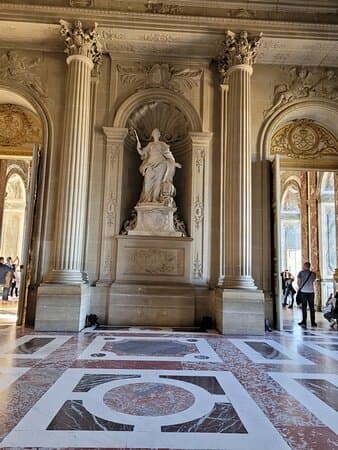
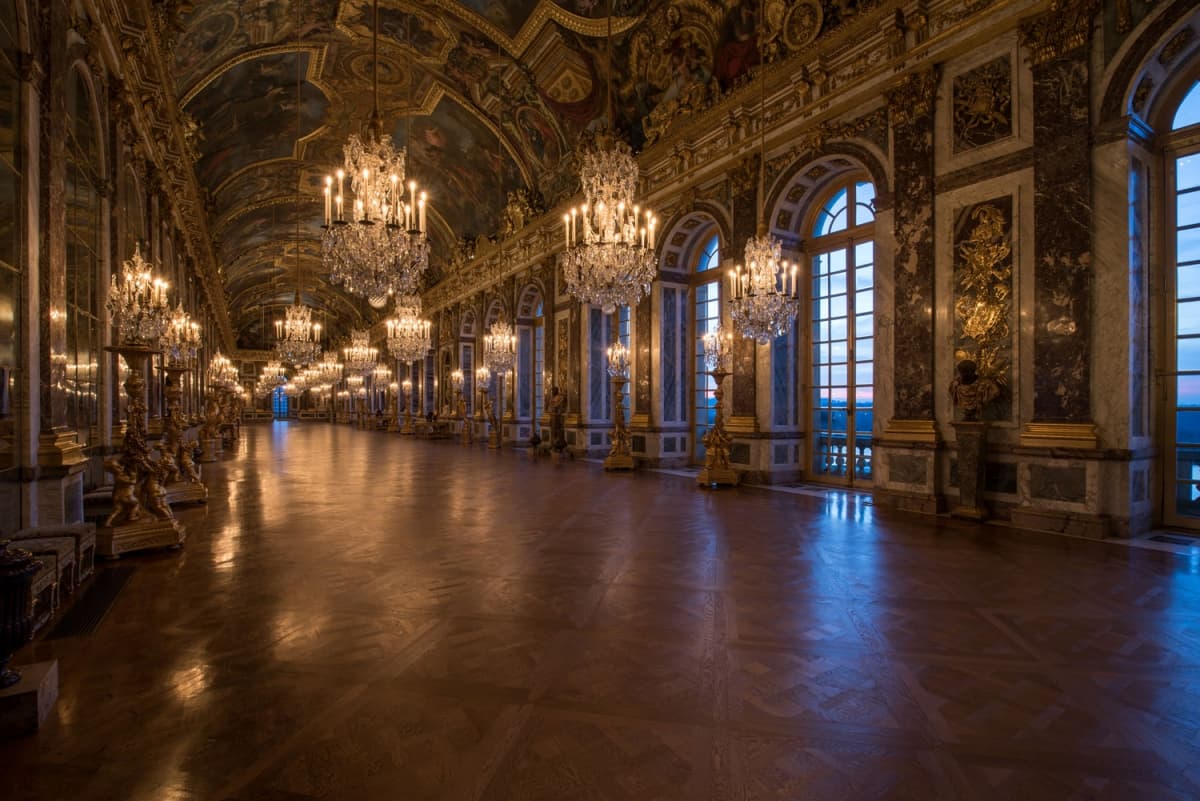
Discover the Hall of Mirrors at the Palace of Versailles, France. Explore its opulent history, stunning architecture, 357 mirrors, and pivotal role in French history.
Overview
The Hall of Mirrors, or 'Galerie des Glaces', is arguably the most famous and breathtaking room within the magnificent Palace of Versailles in Versailles, France. It stands as a powerful symbol of French artistry, economic prowess, and the absolute monarchy of Louis XIV. This iconic gallery served as a central ceremonial space, connecting the King's and Queen's State Apartments and offering a grand corridor where courtiers and diplomats would gather.
Stretching an impressive 73 meters in length, the Hall of Mirrors is characterized by 17 large arched windows on one side that overlook the beautiful gardens, and 17 equally grand mirrored arches on the opposite wall, each composed of numerous smaller mirrors. These 357 mirrors famously reflect the light and the intricate gardens, creating an illusion of boundless space and glittering spectacle.
History & Cultural Background
The Hall of Mirrors was commissioned by King Louis XIV in 1678, with construction concluding in 1684. Its primary purpose was to glorify the Sun King's reign and proclaim France's power following the Franco-Dutch War (1672–1678). It replaced a large, open terrace designed by architect Louis Le Vau, which was exposed to poor weather and proved awkward.
Jules Hardouin-Mansart, Louis XIV's favored architect, was responsible for the architectural design of the gallery, focusing on clean symmetry, monumental windows, and perfect alignment with the gardens. Charles Le Brun, the King's principal painter, adorned the vaulted ceiling with 30 masterful compositions depicting Louis XIV's political and military victories during the first 18 years of his reign, from 1661 to the peace treaties of Nijmegen.
Beyond its aesthetic appeal, the Hall of Mirrors was a profound political statement. In the 17th century, Venice held a monopoly on high-quality mirror production. France's ability to produce the innovative large mirror panes for the Hall, supplied by the Manufacture royale de glaces de miroirs (the future Saint-Gobain), showcased French craftsmanship, economic strength, and technological advancement, signaling that France could rival and even outshine its European competitors.
What Makes It Special
What truly sets the Hall of Mirrors apart is its unparalleled fusion of architecture, art, and natural light. The 17 arched windows on the garden side are perfectly mirrored by 17 corresponding mirrored arches, creating an extraordinary effect where the exterior landscape seems to extend infinitely indoors. This design bathes the hall in natural light during the day, creating a dazzling display of reflections.
The grandeur continues with the opulent decoration. The gallery is enhanced by gilded bronze capitals, pilasters made of Rance marble, and magnificent busts of Roman emperors and antique statues. Above, Charles Le Brun's monumental ceiling paintings narrate the glorious history of Louis XIV, intertwining royal epic with classical mythology and allegories. This comprehensive decorative program was meticulously planned to convey the Sun King's absolute authority and the splendor of France.
The meticulous craftsmanship and scale of the Hall were intended to impress foreign ambassadors and symbolize France's cultural, artistic, and political dominance, making it a masterpiece of Baroque art and architecture.
Stories, Fun Facts & Local Details
The Hall of Mirrors has been the stage for some of Europe's most significant historical events. One of the most famous occurred on January 18, 1871, when the German Empire was proclaimed within its walls, a symbolic act that took place in the heart of French royal grandeur after the Franco-Prussian War. Almost fifty years later, on June 28, 1919, the Hall was again chosen for a pivotal moment in history: the signing of the Treaty of Versailles, formally ending World War I. This act reversed the symbolism of 1871, with France now hosting a peace that reshaped Europe.
Under Louis XIV, the Hall was not just for display; it was a vibrant center of court life. It hosted lavish balls, diplomatic receptions, and grand ceremonies. Louis XIV himself would preside from his legendary silver throne here, welcoming dignitaries. An example of its use for celebrations is the 'Bal des Ifs' (Yew Tree Ball) in 1745, which celebrated the marriage of the Dauphin Louis.
Interestingly, the Hall's lighting has recently undergone restoration to reflect its original ambiance. While it famously held thousands of candles for rare grand balls, particularly royal weddings, these were temporary. The current efforts aim to restore the subtle dialogue between the windows and mirrors, allowing visitors to rediscover the true grandeur of Jules Hardouin-Mansart's design and Le Brun's illuminated ceiling art, much as it was designed under Louis XIV.
Visitor Perspective
Stepping into the Hall of Mirrors is an immersive journey into the opulence and power of 17th-century France. Visitors often describe feeling a sense of awe, overwhelmed by the sheer scale, the intricate details, and the shimmering light that fills the space. The reflections of the meticulously manicured gardens, framed by the arched windows, create a dynamic and ever-changing panorama that is breathtaking.
As you walk its impressive length, it's easy to imagine the historical figures who once graced this hall: courtiers vying for the King's attention, ambassadors negotiating treaties, and royals celebrating in grand style. The Hall encourages a moment of reflection, not just from its mirrors, but a reflection on the centuries of history that unfolded within these gilded walls. It offers a tangible connection to the past, allowing one to glimpse the artistic, political, and economic ambitions of an era defined by splendor and power.
Coordinates: 2.120833, 48.804722
View on Google Maps💬 How Travelers Describe This Place
Based on community votes
Beautiful
886Unique
564Must See
233Interesting
201Photogenic
121
Traveler Stories
Discover memorable experiences shared by travelers who have visited this place.
No traveler stories yet.
Be the first traveler to share what made this place memorable.

Tour
By
Spot
Discover amazing places around the world. Your journey starts here.
Explore
© 2026 TourBySpot. All rights reserved.