Hafelekar Peak
Innsbruck, Austria
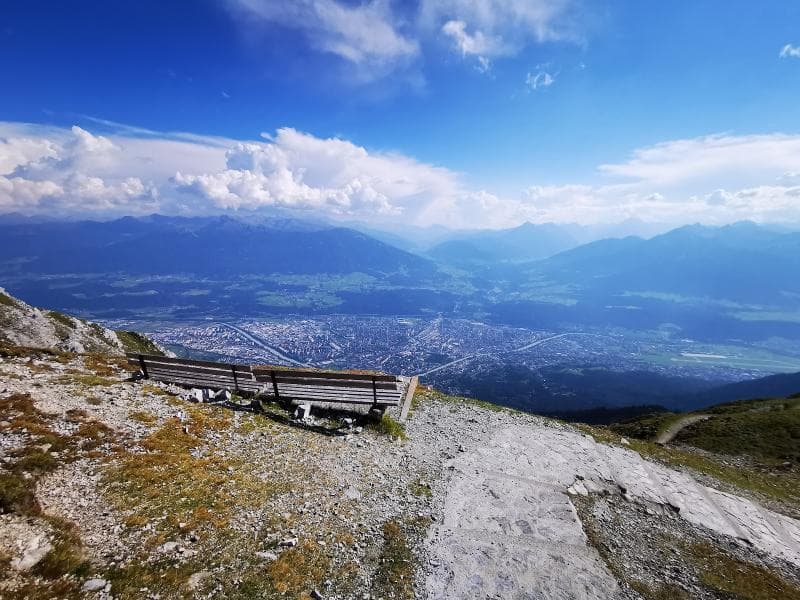
Hafelekar Peak, the Top of Innsbruck, offers breathtaking 360-degree panoramic views of the city and Alps. Discover its history and unique nature in Innsbruck, Austria.
Overview
Perched majestically above Innsbruck, Austria, Hafelekar Peak, often hailed as the 'Top of Innsbruck', offers an extraordinary alpine experience directly accessible from the city center. Reaching an elevation of 2,334 meters (7,657 feet), this prominent summit is a key part of the Nordkette mountain range, which forms the southernmost chain of the vast Karwendel Alps. From its lofty vantage point, visitors are treated to breathtaking 360-degree panoramas, where the bustling capital of the Alps sprawls below on one side, and the pristine wilderness of Austria's largest nature park extends on the other.
The journey to Hafelekar Peak is an adventure in itself, undertaken via the modern Nordkettenbahnen cable car system. This impressive feat of engineering effortlessly transports guests from the heart of Innsbruck into a dramatic high-alpine environment within minutes, making it a unique destination for both casual sightseers and avid outdoor enthusiasts alike.
History & Cultural Background
The story of reaching Hafelekar Peak is intertwined with the development of the Nordkettenbahnen, a system that began its ascent over a century ago. The initial phase, the Hungerburgbahn funicular, first opened in 1906, connecting Innsbruck with the Hungerburg district. Following this, plans for cable car sections extending further into the Nordkette were realized, with the cable car lines to Seegrube and Hafelekar commencing operation in 1928, solidifying the mountain's role as an accessible attraction.
The early 21st century brought a significant modernization, particularly to the Hungerburgbahn. The striking, glacier-like stations were reimagined and designed by the renowned Iraqi-British architect Zaha Hadid, adding a touch of contemporary architectural artistry to the alpine landscape. This blend of historic infrastructure and modern design highlights Innsbruck's commitment to both its heritage and its future. Culturally, Hafelekar holds scientific significance too; below the summit is the Hafelekar Survey Station, a cosmic radiation observatory. It was here in 1937 that physicists Marietta Blau and Hertha Wambacher made the pioneering observation of 'nuclear disintegration stars' caused by cosmic rays, a discovery that advanced our understanding of the universe.
What Makes It Special
What truly sets Hafelekar Peak apart is the unparalleled combination of immediate accessibility and profound natural grandeur. Nowhere else can one depart from a vibrant city center and, within roughly 20 minutes, stand amidst a rugged alpine world reaching nearly 2,300 meters above sea level. The panoramic views are simply spectacular, encompassing not just the red rooftops of Innsbruck and the serpentine Inn Valley, but also a vast expanse of the surrounding Alps, stretching as far as Italy to the south and Germany to the north on a clear day.
Furthermore, Hafelekar offers a unique window into geological history. The 'Geotrail', a short path leading from the top station, reveals fascinating insights into the formation of the Karwendel mountains. Interpretive panels explain how this towering landscape was once an ancient seabed, with fossilized corals, ammonites, and shells hinting at a prehistoric marine past. This geological narrative adds a rich, ancient layer to the otherwise strikingly modern experience of ascending the mountain.
Stories, Fun Facts & Local Details
The nickname 'Top of Innsbruck' isn't just a marketing slogan; it genuinely reflects the summit's status as the city's highest readily accessible viewpoint, offering that 'on top of the world' feeling without requiring extensive mountaineering skills. Locals and visitors alike cherish the immediate escape it provides from urban life to crisp mountain air. The aforementioned Hafelekar Survey Station continues its important work, contributing to long-term scientific research in high-altitude environments, making the peak not just a scenic spot but a living laboratory.
For the more adventurous, Hafelekar is the starting point for demanding activities. In winter, it transforms into a snow sports haven, with some of Europe's steepest ski routes, including the challenging Karrinne, attracting expert skiers and snowboarders. During warmer months, it serves as a gateway to extensive hiking trails, such as the renowned Goethe Way, and even the Innsbruck via ferrata, promising thrilling experiences amidst the Karwendel Nature Park.
Visitor Perspective
The journey to Hafelekar Peak is a seamless three-stage ascent, each offering its own charm. It begins with the futuristic Hungerburgbahn funicular from the Congress station in Innsbruck's Old Town, passing striking Zaha Hadid-designed stations. A short walk at Hungerburg leads to the Seegrubenbahn cable car, which glides silently above pine forests to the Seegrube station, a popular spot for dining and enjoying mid-mountain views. Finally, the Hafelekarbahn cable car takes you to the highest station.
From the Hafelekar top station, a short, well-maintained path (approximately 10-15 minutes) leads to the summit cross at 2,334 meters, allowing everyone to experience a true summit feeling. Whether you choose to simply soak in the panoramic views, embark on a challenging hike along the Goethe Way, or capture stunning photographs, the experience is profoundly memorable. The mountain weather can change quickly, so dressing in layers and checking forecasts is advisable for an optimal visit. This fusion of accessibility, natural beauty, and historical depth makes Hafelekar Peak an essential and unforgettable part of any trip to Innsbruck.
Coordinates: 11.38632, 47.31283
View on Google Maps💬 How Travelers Describe This Place
Based on community votes
Interesting
958Beautiful
743Unique
719Photogenic
382Must See
176
Traveler Stories
Discover memorable experiences shared by travelers who have visited this place.
No traveler stories yet.
Be the first traveler to share what made this place memorable.

Tour
By
Spot
Discover amazing places around the world. Your journey starts here.
Explore
© 2026 TourBySpot. All rights reserved.