Guided Tour Areas
Geneva, Switzerland
Explore the Guided Tour Areas of the Palais des Nations in Geneva, Switzerland. Discover its history, significant chambers, art, and diplomatic role.
Overview
Embark on a captivating journey through the 'Guided Tour Areas' of the Palais des Nations in Geneva, Switzerland, the distinguished European headquarters of the United Nations. This iconic complex, nestled within the picturesque Ariana Park, offers visitors a unique opportunity to step behind the scenes of international diplomacy and global cooperation. Guided tours provide direct insight into the pivotal work undertaken by the United Nations, from maintaining peace to fostering development and upholding human rights across the globe. It's an immersive experience, revealing the historical gravitas and contemporary relevance of this significant institution.
History & Cultural Background
The story of the Palais des Nations begins not with the United Nations, but with its predecessor, the League of Nations. Constructed between 1929 and 1938, the Palais was originally envisioned as the headquarters for the League, a groundbreaking initiative for international peace after World War I. An international architectural competition in the 1920s eventually led to a collaborative design by five architects, aiming to create a space conducive to calm and independent international discussions. Following the dissolution of the League of Nations, the Palais des Nations transitioned in 1946 to become the European base for the newly formed United Nations, a role it has maintained and expanded upon ever since. The sprawling complex is situated in the beautiful Ariana Park, a substantial green oasis bequeathed to the City of Geneva in 1890 by Gustave de Revilliod de la Rive, with the conditions that it remain accessible to the public and that he be buried there.
What Makes It Special
What truly sets a tour of the Palais des Nations apart is the direct engagement with spaces where world-altering decisions have been, and continue to be, made. Visitors gain access to historic conference rooms and chambers that echo with decades of international discourse. Highlights include the magnificent Assembly Hall, capable of seating 2,000 people and historically the largest room in the palace, and the Council Chamber, adorned with impressive frescoes by Spanish artist José-Maria Sert. Another architectural marvel is the Human Rights and Alliance of Civilizations Chamber, famously featuring a vibrant, undulating ceiling created by contemporary Spanish artist Miquel Barceló, which many describe as resembling an ocean floor. The grand Salle des pas perdus offers sweeping views of Ariana Park and even a glimpse of Mont-Blanc on clear days. Throughout the tour, you'll encounter a rich collection of artworks, statues, and gifts generously donated by member states, each telling a story of diverse cultures uniting under a common goal.
Stories, Fun Facts & Local Details
Beyond the serious work of diplomacy, the Palais des Nations holds many fascinating details. Did you know that when completed in 1938, it was considered the second-largest building complex in Europe, surpassed only by the Palace of Versailles? Beneath the foundation stone of the Palais lies a time capsule containing a list of the League of Nations member states, a copy of its Covenant, and specimen coins from all countries represented at its Tenth Assembly. Ariana Park, the verdant setting for the Palais, is home to a charming population of peacocks, many of which were gifts from India and Japan, freely roaming the grounds and adding a touch of unexpected beauty to this diplomatic hub. The design process itself involved 377 submissions, with a committee eventually commissioning five architects from different countries to collaborate, reflecting the spirit of international cooperation from its very inception. The intricate ceiling artwork by Miquel Barceló in the Human Rights Chamber was created using pigments sourced from around the globe, making it a truly global masterpiece.
Visitor Perspective
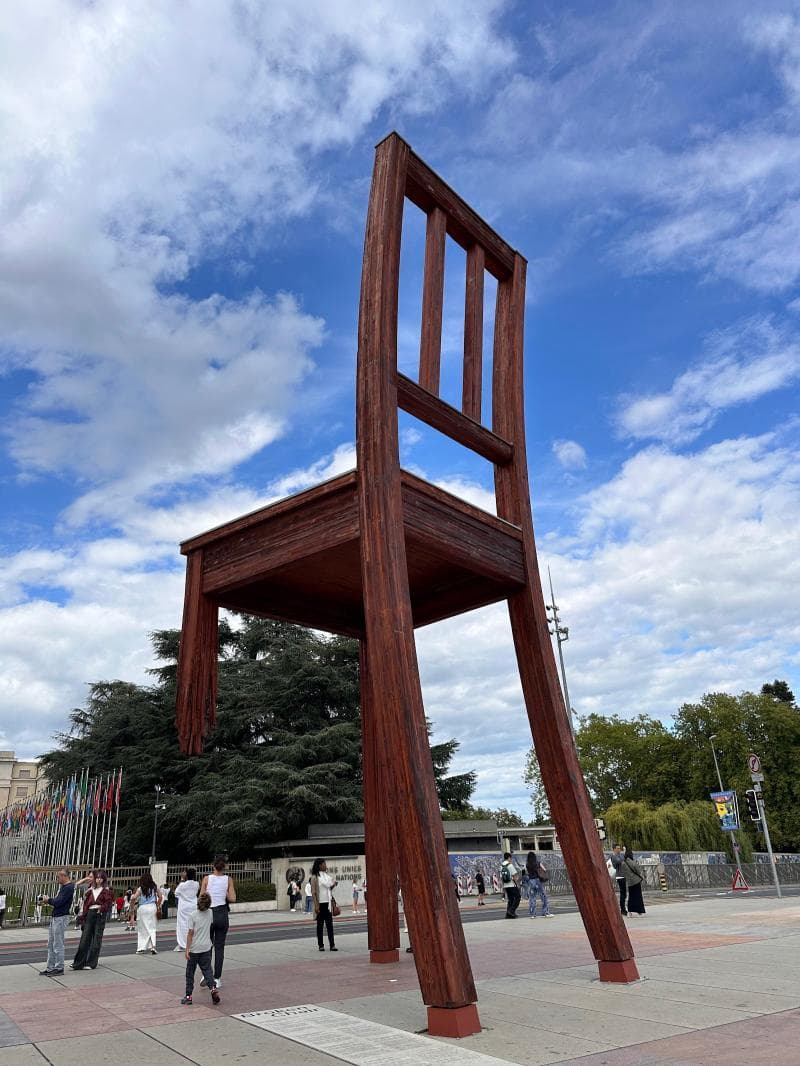
A guided tour of the Palais des Nations is designed to be informative and accessible, typically lasting about one hour and offered in many languages. Due to the Palais's active role as a working institution, tour routes can sometimes change without notice. Visitors are reminded that this is a professional working environment, so a respectful demeanor is encouraged. To ensure a smooth visit, it's essential to book tours online and in advance, as they are very popular and often sell out weeks ahead, especially for groups. All visitors aged 14 and above require registration and a digital access badge, obtained by registering on the Indico.UN system after booking. It is advised to arrive at the Pregny Gate entrance at least 30 minutes before your scheduled tour to allow ample time for security screening and transfer to the Visitors' Center. Don't forget to bring a valid passport or an ID card from the Schengen Zone for entry. Outside the main building, the striking 'Broken Chair' sculpture, a 12-meter-high symbol against landmines and cluster munitions, stands as a powerful reminder of humanitarian efforts, offering a poignant start or end to your visit.
Coordinates: 6.14056, 46.22667
View on Google Maps💬 How Travelers Describe This Place
Based on community votes
Interesting
685Unique
446Photogenic
399Must See
152Beautiful
33
Traveler Stories
Discover memorable experiences shared by travelers who have visited this place.
No traveler stories yet.
Be the first traveler to share what made this place memorable.

Tour
By
Spot
Discover amazing places around the world. Your journey starts here.
Explore
© 2026 TourBySpot. All rights reserved.