Greek Artifacts
Split, Croatia
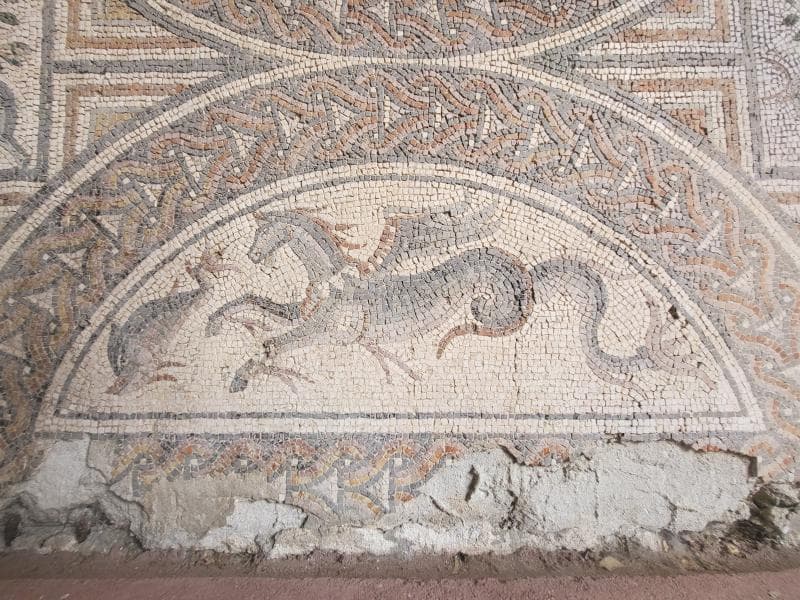
Explore ancient Greek artifacts at Split Archaeological Museum, Croatia's oldest museum. Discover Hellenistic pottery, jewelry, and inscriptions from Dalmatian colonies.
Overview
Stepping into the Split Archaeological Museum offers a unique journey through time, particularly into the profound influence of ancient Greece on Croatia's Dalmatian coast. Within its venerable walls, you'll discover the Greek-Hellenistic Collection, a treasure trove of over 5,200 registered items that vividly narrate the story of early Greek colonization in the Adriatic. As Croatia's oldest museum, established in 1820, it houses an unparalleled inventory of artifacts spanning the Archaic, Classical, and Hellenistic periods, generally dating from the 6th to the 1st centuries BCE. [3, 4, 5, 6, 10, 17, 18]
The museum itself is a calm retreat, offering a more serene experience compared to the bustling city center. Its collection, meticulously arranged both chronologically and topographically, allows visitors to trace the narrative of Greek civilization's expansion and its deep roots in this region. The Greek artifacts, collected from significant ancient Greek settlements like Issa (modern-day Vis) and Pharos (modern-day Stari Grad on Hvar), are displayed across the museum's large hall and within its atmospheric lapidarium. [3, 8, 9, 15]
History & Cultural Background
The eastern Adriatic coastline, where Split now stands, was a crucial area for Greek expansion and trade. Ancient Greek colonists established settlements here, most notably on the islands of Vis (Issa) and Hvar (Pharos), leaving an indelible mark on the local Illyrian culture. These colonies flourished, becoming vibrant centers of commerce and cultural exchange, linking the Greek world with the indigenous communities and, later, with the emerging Roman power. [3, 15, 16, 20]
The artifacts within the Greek-Hellenistic Collection confirm various facets of the political, economic, social, and religious life of these early Greek colonists. They showcase not only the achievements of Greek civilization but also their adaptation to and influence on local circumstances. From sophisticated pottery used in daily life and rituals to intricate jewelry and significant public inscriptions, each piece tells a part of this ancient narrative. The museum's continuous efforts in documenting and presenting these finds provide a comprehensive insight into the spread of Greek culture along the Eastern Adriatic. [3]
What Makes It Special
What truly sets the Greek Artifacts collection apart is its role as the oldest and largest inventory of objects from all phases of Greek art discovered in Dalmatia. It offers an unbroken historical record from the 6th century BCE through the Hellenistic era. Among its most celebrated pieces is the gravestone dedicated to the hero Kallias, which bears the oldest Greek inscription in verse found in Croatia. This poignant four-line epitaph, written in the Ionian dialect, honors Kallias, who reportedly died in a naval battle against the Illyrians, leaving behind a son named Harmo. [3]
Beyond the unique inscriptions, the collection features a diverse range of artifacts. You'll encounter exquisitely painted ceramic vases, including Black and Red Figure ware, alongside imported and locally produced Gnathian ware. Terracotta statues, delicate stucco sculptures, gold jewelry, glass unguentaria, and amphorae used for transporting goods further illustrate the richness of Greek material culture in the region. The sheer volume and variety of these items provide an unparalleled glimpse into the daily lives, beliefs, and artistic expressions of ancient Greeks in Dalmatia. [3]
Stories, Fun Facts & Local Details
Imagine the bustling port of ancient Issa, where Greek traders exchanged goods and ideas with local Illyrians. The artifacts here are echoes of those interactions. For instance, the ceramic wares not only reveal artistic trends but also speak of trade routes and economic prosperity. The presence of imported pottery alongside local imitations suggests a vibrant cultural dialogue and the adoption of Greek customs by the indigenous population. [3]
A fascinating detail is how some artifacts were found. Many were discovered by chance on the Central Dalmatian islands and coastal belt, later acquired through purchase or donation, and systematically cataloged by the museum since its earliest inventory logs. The evolution of the collection's organization, from an 'Antiquities Section' to the 'Greco-Illyrian Collection,' and finally to its current 'Greek-Hellenistic Collection' designation in 1993, reflects evolving archaeological understanding and classification methods. [3]
The museum's holdings from sites like Pharos on Hvar, which was a significant Greek colony, connect directly to narratives of colonization and conflict. The discovery of a Greek sword and spearhead in a 4th-century BC communal grave on Hvar, though not explicitly stated to be in the Split museum, highlights the martial aspects of these early settlements and the challenges they faced in a new land. Such discoveries add a deeper, human layer to the displayed artifacts, inviting contemplation of the lives and struggles of these ancient settlers. [16]
Visitor Perspective
For the curious traveler, the Greek Artifacts section of the Split Archaeological Museum offers an enriching and insightful experience. The permanent exhibition, thoughtfully laid out, provides ample explanatory texts, maps, and photographs to contextualize the displays. This allows for a deeper appreciation of Greek civilization's impact on the Eastern Adriatic. [3]
Whether you're an archaeology enthusiast or simply a traveler with an interest in history, spending an hour or two exploring this collection is highly rewarding. The museum's serene environment, often less crowded than other Split attractions, provides a perfect setting for quiet contemplation of these ancient treasures. It’s an opportunity to understand Dalmatia's ancient past, not just to observe it, making it a compelling stop for anyone wanting to connect with the region's millennia-old heritage. [9, 10, 13]
Coordinates: 16.43444, 43.51556
View on Google Maps💬 How Travelers Describe This Place
Based on community votes
Photogenic
915Beautiful
211Interesting
123Unique
74Must See
20
Traveler Stories
Discover memorable experiences shared by travelers who have visited this place.
No traveler stories yet.
Be the first traveler to share what made this place memorable.

Tour
By
Spot
Discover amazing places around the world. Your journey starts here.
Explore
© 2026 TourBySpot. All rights reserved.