Great South Tower
Prague, Czech Republic
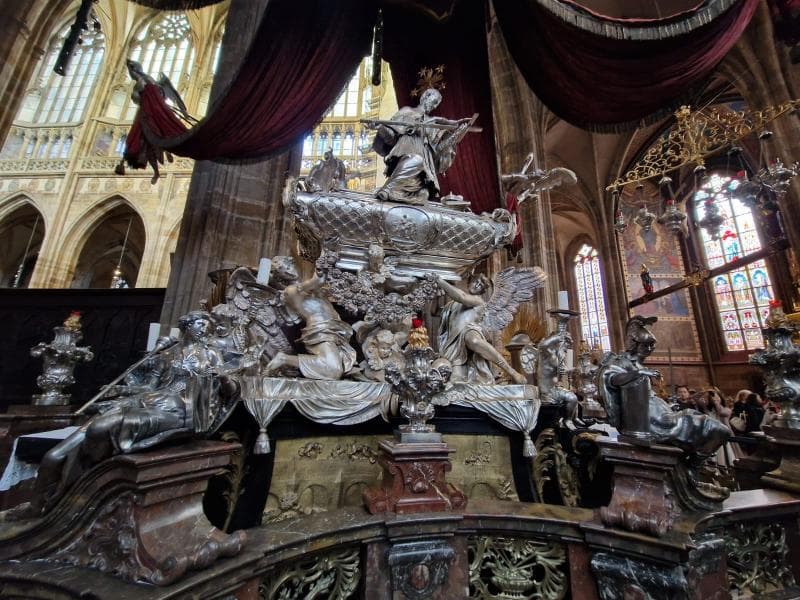
Ascend Prague's Great South Tower at St. Vitus Cathedral, Czech Republic. Discover centuries of history, colossal bells, and panoramic city views. A captivating climb through time.
Overview
Standing majestically within the sprawling complex of Prague Castle, the Great South Tower of St. Vitus Cathedral is an iconic landmark, instantly recognizable on Prague's skyline. Reaching a height of nearly 100 meters, it offers unparalleled panoramic views of the city's historic districts, the Vltava River, and beyond. This architectural marvel is not merely a vantage point, but a journey through centuries of Bohemian history, embodying a unique blend of Gothic, Renaissance, and Baroque styles. Ascending its winding staircase, visitors are not just climbing a tower, but traversing a living museum, gaining an intimate perspective on one of Europe's most significant cathedrals and its grand bells.
History & Cultural Background
The story of the Great South Tower is intrinsically linked with that of St. Vitus Cathedral itself, a monumental undertaking that spanned nearly six centuries. Construction on the tower began in the late 14th century, around 1396, under the renowned architect Peter Parler, who also made significant contributions to the cathedral's choir and St. Wenceslas Chapel. However, like much of the cathedral, the tower's completion was delayed by historical events, most notably the Hussite Wars in the 15th century, leaving its Gothic structure unfinished for an extended period.
The 16th century saw the addition of a Renaissance gallery and a helmet-shaped spire, crowning Parler's Gothic foundations with a new artistic expression. Later, in the 18th century, this original helmet was replaced by the Baroque dome visible today, creating the distinctive multi-period silhouette. This blend of Gothic, Renaissance, and Baroque elements speaks volumes about the continuous evolution of Czech architecture and the resilience of its creators, reflecting various cultural and political shifts throughout Prague's history. Parler's workshop also influenced the development of Late Gothic style across Central Europe.
What Makes It Special
Beyond its commanding height, what truly sets the Great South Tower apart is its remarkable fusion of architectural styles. The base firmly rooted in Gothic design transitions seamlessly into Renaissance elegance with its viewing gallery, topped by an ornate Baroque dome. This patchwork construction is a testament to the centuries it took to complete and offers a rare visual narrative of architectural history.
Inside, the tower houses the Czech Republic's largest and heaviest bell, Zikmund (or Sigismund). Cast in 1549, this colossal bell weighs approximately 15 tons and requires a team of six bell-ringers to operate – four to swing the bell into motion and two to manipulate its clapper. Visitors climbing the 287 steps to the observation deck can view this impressive artifact up close, gaining insight into the intricate art of bell-casting and ringing.
The winding staircase itself, with its 287 steps, is an experience. Each step brings you closer to a breathtaking 360-degree panorama, revealing not only Prague Castle's courtyards but also the iconic Charles Bridge, the charming Old Town, and the Lesser Town. The view also provides a unique perspective on the cathedral's intricate roofline and spires, a reward well worth the climb.
Stories, Fun Facts & Local Details
The Great South Tower, and particularly its monumental Zikmund bell, is steeped in local lore and legend. One of the most captivating tales revolves around the Zikmund bell's clapper. Legend has it that if the clapper breaks, something terrible will befall the country. This prophecy gained an eerie resonance in 2002 when the clapper indeed cracked, just weeks before catastrophic floods devastated parts of the Czech Republic. This event highlights how deeply embedded such legends are in the local consciousness.
Another fascinating detail is the clock on the tower, which has been adorning its facade since 1552. Imagine the countless generations that have looked up to this clock, marking the passage of time over centuries of change. The mechanism of this 16th-century Cathedral clock can even be observed during a visit.
Historically, the tower suffered damage when its supporting beams, weakened by a great fire at Prague Castle, collapsed, causing bells to fall. Such incidents add to the tower's rich and sometimes dramatic narrative. There's even a legend about Emperor Charles IV's death causing all the tower's bells to ring by themselves.
Visitor Perspective
For the curious traveler, a visit to the Great South Tower offers a deeply enriching experience. While the climb of 287 steps can be challenging, it is consistently described as being incredibly rewarding. The circular staircase, though narrow, provides occasional glimpses of the massive bells, breaking up the ascent. It's an opportunity to physically engage with history, feeling the worn stone beneath your feet that countless others have ascended for centuries.
The viewing gallery, situated at approximately 52 meters, provides a truly spectacular 360-degree vista of Prague. This isn't just a view; it's a panorama that allows you to trace the city's historical layers, from the ancient castle grounds to the red-tiled roofs, bridges, and spires that define Prague's unique beauty. It offers a moment of quiet reflection, allowing visitors to grasp the sheer scale and architectural grandeur of St. Vitus Cathedral and its surrounding urban tapestry.
Access to the tower typically requires a separate ticket and is generally accessible only in good weather. It is important to note that due to the narrow, winding nature of the staircase, it may not be suitable for those with severe mobility issues or claustrophobia. However, for those able to undertake the climb, the Great South Tower promises an unforgettable encounter with Prague's history, artistry, and breathtaking beauty.
Coordinates: 14.40056, 50.09083
View on Google Maps💬 How Travelers Describe This Place
Based on community votes
Must See
886Beautiful
564Unique
201Interesting
121Photogenic
87
Traveler Stories
Discover memorable experiences shared by travelers who have visited this place.
No traveler stories yet.
Be the first traveler to share what made this place memorable.

Tour
By
Spot
Discover amazing places around the world. Your journey starts here.
Explore
© 2026 TourBySpot. All rights reserved.