Great Gallery
Vienna, Austria
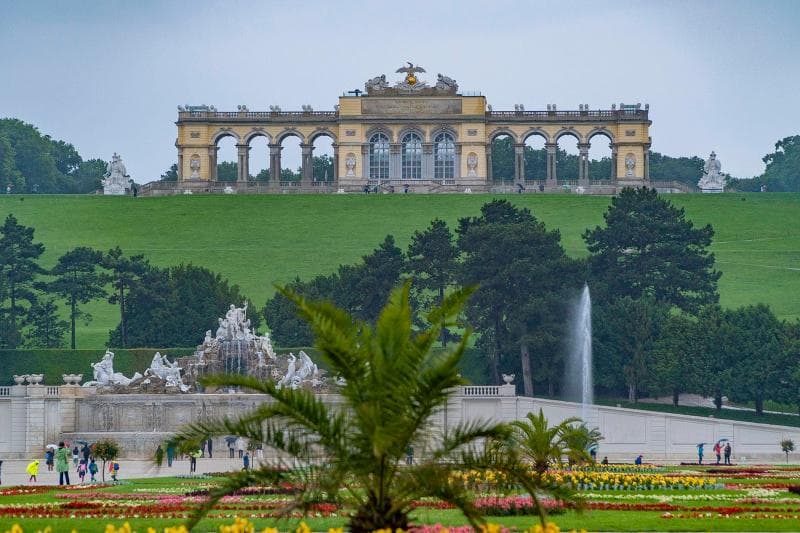
Discover the Great Gallery at Schönbrunn Palace in Vienna, Austria – a magnificent Rococo ceremonial hall, rich in Habsburg history and dazzling artistry.
Overview
The Great Gallery, nestled within the illustrious Schönbrunn Palace in Vienna, Austria, stands as a breathtaking testament to imperial grandeur and Rococo artistry. This magnificent ceremonial hall is not just an architectural marvel; it serves as the vibrant heart of the palace, captivating visitors with its opulent decor and storied past. Measuring an impressive 43 meters in length and nearly 10 meters in width, its grand scale was perfectly suited for the lavish courtly events, balls, and receptions of the Habsburg monarchy. Today, this historic space continues to host significant state receptions and prestigious concerts, allowing its imperial legacy to live on.
History & Cultural Background
Schönbrunn Palace, originally a hunting lodge, transformed into the opulent summer residence of the Habsburg rulers, largely thanks to the vision of Empress Maria Theresa. Her comprehensive remodeling efforts, commencing around 1743, elevated the palace to a symbol of imperial power and prestige. The Great Gallery's exquisite decoration dates to this period, around 1760. The room's magnificent ceiling frescoes, painted by the Italian artist Gregorio Guglielmi between 1755 and 1761, are central to its splendor, depicting a rich program glorifying Habsburg rule under Maria Theresa. These frescoes showcase Maria Theresa and her husband, Franz Stephan, as the rulers of the Holy Roman Empire, surrounded by personified virtues such as justice, clemency, and munificence.
The western fresco embodies the 'pax austriaca' or Austrian peace, featuring Concordia, the goddess of concord, flanked by Abundantia (Abundance) and Pax (Peace), presiding over Ceres (agriculture), Bacchus (viticulture), and Mercury (commerce), with Apollo representing the arts and sciences. Conversely, the eastern fresco is an allegorical celebration of Maria Theresa's military prowess, with Mars, the god of war, and Minerva, the goddess of warfare, overseeing military instruction. The intricate stucco work, executed by Albert Bolla in 1761 and 1762, complements the frescoes, creating a harmonious and overwhelmingly splendid Rococo interior.
What Makes It Special
The Great Gallery's allure lies in its unparalleled Rococo splendor. The harmonious interplay of white-and-gold stucco, towering windows, and strategically placed crystal mirrors creates an atmosphere of dazzling light and boundless space. The mirrors not only amplify the natural light but also reflect the magnificent gilded decoration and the sparkling chandeliers, producing an illusion of even greater expansiveness and grandeur. This masterful design choice ensured that the hall was always bathed in light, whether from daylight or the hundreds of candles that once illuminated it. Beyond its aesthetic brilliance, the Great Gallery holds a profound historical significance. It served as the primary setting for the most important court functions, reflecting the power and majesty of the Habsburg dynasty. Its status as a venue for critical historical events, both during the monarchy and in the modern era, truly sets it apart as a unique cultural treasure.
Stories, Fun Facts & Local Details
The Great Gallery's walls could tell countless tales of imperial festivity and political intrigue. During Maria Theresa's reign, the gallery was the backdrop for countless balls and banquets. A striking statue of Maria Theresa herself, depicted at the age of twenty-three in her Hungarian coronation robes, stands proudly in the middle of the hall, a reminder of her formidable presence. Even after the fall of the monarchy, the Republic of Austria recognized the gallery's importance, continuing to use it for official state receptions. Notably, it hosted the reception following the signing of the Austrian State Treaty in 1955.
Perhaps one of its most famous moments in recent history occurred in 1961 when it served as the venue for the legendary meeting between US President John F. Kennedy and Soviet Premier Nikita Khrushchev, an event of immense global significance during the Cold War. Originally, the grand carved wooden and gilt chandeliers held 72 candles each. In 1898, electricity was introduced, and the gallery was eventually illuminated by 868 light bulbs. A testament to ongoing preservation, the Great Gallery underwent an extensive renovation in 2012, which included installing an innovative lighting system designed to recreate the warm glow of candlelight, ensuring its historic ambiance endures for future generations.
Visitor Perspective
For any curious traveler exploring Schönbrunn Palace, visiting the Great Gallery is an essential experience, often highlighted as one of the most impressive ceremonial halls in Europe. Included as part of the palace's 'State Rooms' tour, it offers an immersive journey into the imperial past. Standing within its walls, one can almost hear the echoes of grand orchestras and imagine the rustle of ball gowns, gaining a profound sense of the daily routines and extraordinary lives of the emperors and empresses who once graced this space. It is a place where history feels alive, offering a unique opportunity to connect with the grandeur and cultural legacy of the Habsburgs in Vienna. The gallery continues to provide an atmospheric setting for concerts, offering visitors an opportunity to experience its splendor in a living, breathing context.
Coordinates: 16.311865, 48.184516
View on Google Maps💬 How Travelers Describe This Place
Based on community votes
Photogenic
953Unique
695Beautiful
396Must See
286Interesting
22
Traveler Stories
Discover memorable experiences shared by travelers who have visited this place.
No traveler stories yet.
Be the first traveler to share what made this place memorable.

Tour
By
Spot
Discover amazing places around the world. Your journey starts here.
Explore
© 2026 TourBySpot. All rights reserved.