Grand Hall
Sarajevo, Bosnia and Herzegovina
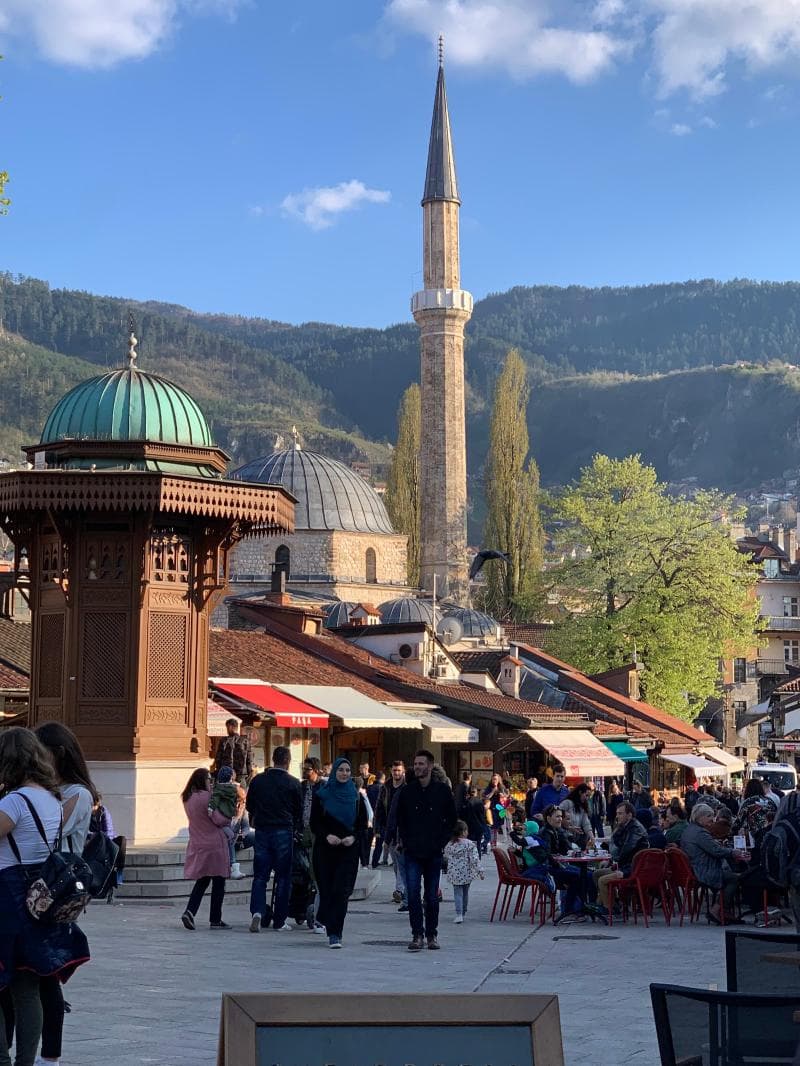
Explore the Grand Hall of Sarajevo City Hall, a stunning Pseudo-Moorish masterpiece and symbol of resilience in Sarajevo, Bosnia and Herzegovina.
Overview
The Grand Hall, nestled within the magnificent Sarajevo City Hall, known locally as Vijećnica, stands as a vibrant testament to Sarajevo's enduring spirit and rich cultural tapestry. This architectural marvel, with its distinctive Pseudo-Moorish design, is not merely a building but a symbol of the city's ability to rise from adversity. Originally conceived as a grand municipal building, it now serves as a dynamic cultural hub, hosting significant events, exhibitions, and diplomatic gatherings. Visitors entering the Grand Hall are immediately enveloped by its splendor, a fusion of Eastern and Western architectural traditions that speaks volumes about Sarajevo's unique identity.
History & Cultural Background
The story of Sarajevo City Hall, and by extension its Grand Hall, begins in the late 19th century during the Austro-Hungarian period. Construction commenced in 1892 and was completed in 1896, with its formal opening on April 20, 1896. Designed primarily by Karel Pařík, Alexander Wittek, and Ćiril Iveković, its pseudo-Moorish style was inspired by Mamluk-period buildings in Cairo, aiming to harmonize with the city's Muslim heritage. Initially, it served as the City Hall and parliament house, the seat of Sarajevo's administration. However, its function transformed after World War II, becoming the National and University Library of Bosnia and Herzegovina in 1949. This era saw it house an extraordinary collection of manuscripts, books, and documents, representing centuries of Bosnian heritage.
Tragedy struck during the Siege of Sarajevo in the Bosnian War. On the night of August 25-26, 1992, the City Hall was hit by heavy artillery and incendiary bombs, setting it ablaze. The fire caused immense damage, destroying approximately 90% of the library's collection, an irreplaceable loss of about two million units, including precious 16th-century manuscripts. This devastating event transformed the Vijećnica into a poignant symbol of wartime destruction. A painstaking and extensive restoration effort began in 1996, relying on surviving documentation, architectural fragments, and historical photographs. With significant international support, the building was meticulously rebuilt to replicate its original grandeur, finally reopening on May 9, 2014, on Europe Day and the Day of Victory over Fascism.
What Makes It Special
The Grand Hall's unique Pseudo-Moorish architecture is its defining characteristic, making it one of Sarajevo's most recognizable landmarks. The exterior's bold geometric patterns, pointed arches, and vibrant color interplay are mirrored in the breathtaking interior. Upon entering, visitors are greeted by a majestic central atrium topped with an ornate glass dome that floods the space with natural light. Elegant staircases, intricately decorated columns, and colorful tilework create an atmosphere of unparalleled grandeur. The main hall itself boasts a hexagonal structure adorned with balconies and intricate Islamic-inspired painting and plaster decoration in white, yellow, turquoise, and brown. Ornate stained glass windows scatter jewel-toned light across the polished floors, enhancing the warm gilding and carved wood. Every detail, from the rounded pillars and arches to the molded surfaces in cornices and friezes, celebrates the fusion of diverse artistic influences, reflecting the city's historical role as a meeting point of civilizations.
Stories, Fun Facts & Local Details
Beyond its architectural splendor, the Grand Hall and Sarajevo City Hall hold deep historical narratives. It famously hosted Archduke Franz Ferdinand and his wife Sophie for a reception on June 28, 1914, just hours before their assassination, an event that triggered World War I. The building's resilience is further highlighted by the local legend of 'Inat Kuća,' or the 'House of Spite.' When the Austro-Hungarian authorities sought to build the City Hall, a local man refused to move his house. After negotiations, he agreed only if his house was dismantled stone by stone and rebuilt exactly as it was on the opposite bank of the Miljacka River. This house still stands today, a quirky testament to Bosnian defiance. The tragic loss of millions of books during the 1992 fire is another poignant detail, underscoring the invaluable cultural heritage preserved within its walls before its destruction. Today, in a lighter vein, the elegant main hall has become popular for wedding photographers, drawn by its stunning aesthetics.
Visitor Perspective
For any curious traveler, a visit to the Grand Hall offers an immersive journey through Sarajevo's complex history and vibrant culture. Visitors typically spend 30-60 minutes exploring the interior, which includes the grand staircase, the stained glass windows, and the oriental arches. It is recommended to arrive early in the morning to avoid larger tour groups and capture unobstructed photographs of the reading rooms and the stunning atrium. Photography is generally allowed without flash in most areas, enabling visitors to capture the intricate details and the play of light. Beyond admiring the architecture, the building often hosts exhibitions on the city's history, literature, art, and archaeology, including displays dedicated to its own restoration. These exhibits provide deeper context and understanding of the building's tumultuous past and its significance in contemporary Sarajevo, making the experience both visually rewarding and intellectually enriching. Guided tours are available for those seeking a more in-depth narrative.
Coordinates: 18.43323, 43.85912
View on Google Maps💬 How Travelers Describe This Place
Based on community votes
Beautiful
804Unique
733Must See
563Interesting
404Photogenic
336
Traveler Stories
Discover memorable experiences shared by travelers who have visited this place.
No traveler stories yet.
Be the first traveler to share what made this place memorable.

Tour
By
Spot
Discover amazing places around the world. Your journey starts here.
Explore
© 2026 TourBySpot. All rights reserved.