Grand Foyer
Zagreb, Croatia
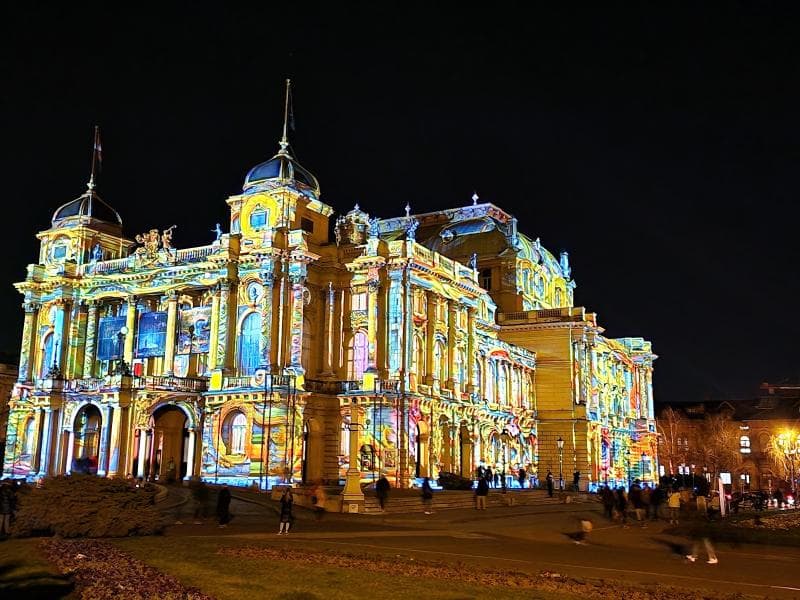
Explore the Grand Foyer of the Croatian National Theatre in Zagreb, Croatia. Discover its opulent Neo-Baroque architecture and the artistic brilliance of Ivan Tišov's ceiling.
Overview
Stepping into the Grand Foyer of the Croatian National Theatre (HNK) in Zagreb, Croatia, is like entering a vibrant portal to a bygone era of elegance and artistic grandeur. This exquisite space, a central feature of the theatre's magnificent Neo-Baroque architecture, serves not merely as a passageway but as an integral part of the visitor's cultural experience. It is a testament to Croatia's rich artistic heritage, designed to prepare and enchant guests even before the main performance begins. With its sophisticated design and artistic embellishments, the foyer offers a captivating introduction to one of Zagreb's most iconic cultural institutions.
History & Cultural Background
The Croatian National Theatre building itself is a masterpiece, unveiled in 1895, and designed by the renowned Viennese architectural duo Ferdinand Fellner and Hermann Helmer. This celebrated firm was responsible for over forty theatre buildings across Europe, and their signature Neo-Baroque style is evident in HNK Zagreb's opulent details. The theatre's construction was a monumental undertaking, involving over two hundred local craftspeople, and completed in a remarkably short sixteen months. Its opening was a significant cultural declaration for Croatia, underscoring the nation's burgeoning identity and commitment to the arts. Within this grand structure, the foyer received its own artistic touch with the ceiling of the first-floor foyer being adorned with a painting by Ivan Tišov, a distinguished Croatian painter, applied in 1911. Tišov, educated in Munich and Vienna, brought a style characterized by academic realism, often incorporating elements of symbolism and secession, to his large-scale public commissions and church art. His work in the foyer contributes to the rich tapestry of the theatre's interior, reflecting the artistic currents of the late 19th and early 20th centuries.
What Makes It Special
The Grand Foyer stands out for several reasons, blending functional versatility with breathtaking aesthetics. Foremost among its unique features is the exquisite ceiling painting by Ivan Tišov. While specific details of this particular work are not broadly documented, Tišov's known style of academic realism infused with symbolism suggests a piece of profound artistic and allegorical depth, inviting contemplation and admiration from those who look upward. Beyond its permanent artistry, the foyer with an upper balcony is a remarkably flexible space. It frequently transforms to host a variety of events, from intimate concerts and elegant receptions to art exhibitions and promotional gatherings. This adaptability allows the space to serve the community beyond regular theatrical performances, fostering a dynamic cultural hub within the city. The generous capacity, accommodating up to 120 people in a concert layout, 100 for seated dinners, and 250 for standing events, highlights its role as a premier venue.
Stories, Fun Facts & Local Details
The very design philosophy behind the Croatian National Theatre emphasized that the experience of attending a performance should begin long before the curtain rises. The grand Neo-Baroque facade, with its 'curved walls, paired columns, and sculpted ornament,' and the ceremonial entrance, were deliberately crafted to 'slow people down before a performance.' This intention extends profoundly to the Grand Foyer. It was conceived as a space where guests could gather, socialize, and immerse themselves in the atmosphere of artistic anticipation. The foyer's grandeur was, and remains, an essential element in setting the stage for the drama, opera, or ballet to follow. It speaks volumes about the value placed on public ceremonial spaces and the communal aspect of cultural engagement in Zagreb during the late 19th century. Visitors are still encouraged to arrive early to fully appreciate the foyers, allowing the architectural splendor to become part of their evening's narrative.
Visitor Perspective
For any traveler exploring Zagreb, a visit to the Croatian National Theatre is a must, and special attention should be given to its Grand Foyer. As you step inside, you're immediately enveloped by the warmth and richness of the Neo-Baroque style. The vibrant atmosphere and artistic details invite you to linger, to gaze up at Tišov's ceiling, and to imagine the countless patrons who have graced this space over more than a century. It's a place that transcends its architectural function, offering a sensory journey through Croatian art and history. Whether you are attending a performance or simply admiring the building's interior during a tour, the Grand Foyer provides a moment of awe, a quiet appreciation for the dedication to beauty and culture that defines this national treasure. It's a reminder that true grandeur lies not just in size, but in the intricate details and the stories they tell. This space truly makes arriving at the theatre an event in itself, enriching the entire cultural outing.
Coordinates: 15.97004, 45.80942
View on Google Maps💬 How Travelers Describe This Place
Based on community votes
Interesting
836Unique
620Must See
594Photogenic
522Beautiful
83
Traveler Stories
Discover memorable experiences shared by travelers who have visited this place.
No traveler stories yet.
Be the first traveler to share what made this place memorable.

Tour
By
Spot
Discover amazing places around the world. Your journey starts here.
Explore
© 2026 TourBySpot. All rights reserved.