Goya Collection
Madrid, Spain
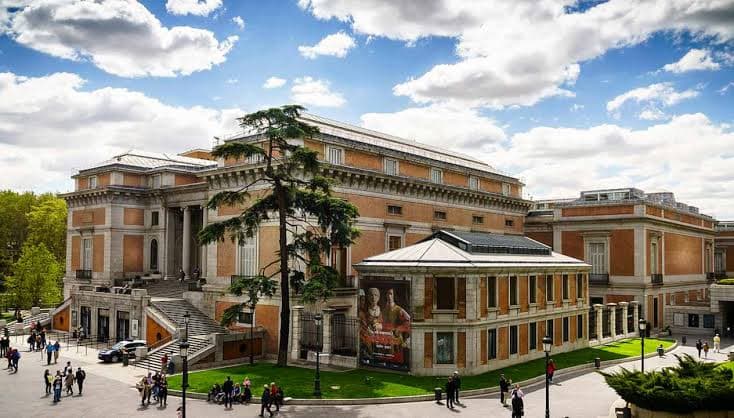
Explore the Goya Collection at the Prado Museum in Madrid, Spain. Discover masterpieces from his entire career, including the haunting Black Paintings.
Overview
Stepping into the Prado Museum in Madrid offers a profound journey through art history, and at its heart lies the unparalleled Goya Collection. This extensive and vital collection presents an extraordinary panorama of Francisco de Goya y Lucientes' career, spanning his early works as a court painter to the deeply personal and often unsettling creations of his later years. The Prado houses the most significant assembly of Goya's art worldwide, comprising more than half of his known output, including paintings, drawings, prints, and documents. It is here, within the museum's hallowed halls, that visitors can truly grasp the evolution of an artist who bridged the gap between the Old Masters and modern art, chronicling a tumultuous era with unflinching honesty and emotional depth.
History & Cultural Background
Francisco de Goya's life (1746–1828) was intertwined with a period of immense change in Spain and Europe, from the Enlightenment to the Peninsular War and the subsequent restoration of a conservative monarchy. His artistic journey began with lighter, more decorative works, such as the vibrant tapestry cartoons created for royal residences. As his career progressed, Goya became a renowned court painter, capturing the likenesses of royalty and aristocracy, notably in works like 'Charles IV of Spain and His Family'. However, personal hardships, including a severe illness that left him profoundly deaf around 1792, and the horrors he witnessed during the Napoleonic Wars (1808-1814), profoundly shifted his artistic vision. This led to a 'dark stage' in his art, where he explored themes of conflict, suffering, and human irrationality, transforming him into a chronicler of his time and a pioneer of psychological realism.
What Makes It Special
What sets the Prado's Goya Collection apart is its comprehensive nature, allowing visitors to trace the artist's entire trajectory. From the charming rococo style of his tapestry cartoons to the sharp social commentary of his print series like 'Los Caprichos', and the raw emotional power of his historical paintings, every facet of Goya's genius is on display. Masterpieces such as 'The Third of May 1808' stand as revolutionary depictions of war, transforming anonymous victims into universal symbols of resistance. Perhaps the most unique and compelling aspect is the room dedicated to the 'Black Paintings'. These 14 haunting works, initially murals from his private home, are unlike anything else in art history, offering a glimpse into the artist's deepest anxieties and darkest visions.
Stories, Fun Facts & Local Details
The 'Black Paintings' hold a particularly captivating story. Painted directly onto the plaster walls of Goya's country house, known as the Quinta del Sordo (House of the Deaf Man), between 1819 and 1823, these works were never intended for public eyes. Goya, isolated and suffering from profound deafness, used his home as a canvas for his private exorcisms, creating disturbing scenes with dark tones and a predominance of black. Following his death, these murals were controversially 'hacked off' the walls and transferred to canvas by a French banker, Baron Frédéric Émile d'Erlanger, who later donated them to the Spanish state, finding their permanent home at the Prado. Among these, 'Saturn Devouring His Son' is perhaps the most famous and disturbing, depicting the Roman titan in a frenzied act, a stark reflection of Goya's own fears and a commentary on time and destruction. Another interesting pair, 'The Naked Maja' and 'The Clothed Maja', showcase Goya's daring and innovative approach to portraiture, generating controversy in their time.
Visitor Perspective
Visiting the Goya Collection at the Prado is an intensely moving experience. The sheer volume and diversity of his works allow for a deep immersion into the mind of this Spanish master. Walking through the galleries dedicated to his early, brighter works, then transitioning to the emotionally charged historical pieces, and finally encountering the raw power of the 'Black Paintings', provides a profound understanding of Goya's artistic and personal journey. The room housing the 'Black Paintings' often leaves visitors in a contemplative, sometimes even disturbed, state, with their dark, twisted, and scarily real imagery challenging viewers to confront uncomfortable truths about humanity. The museum's careful curation allows for a clear narrative of his evolution, making the Goya Collection not just a display of art, but a powerful historical and psychological exploration. It is a journey that reveals why Goya is considered one of the first truly modern artists, whose insights into the human condition remain profoundly relevant today.
Coordinates: -3.69213, 40.41378
View on Google Maps💬 How Travelers Describe This Place
Based on community votes
Unique
836Interesting
797Photogenic
286Beautiful
255Must See
86
Traveler Stories
Discover memorable experiences shared by travelers who have visited this place.
No traveler stories yet.
Be the first traveler to share what made this place memorable.

Tour
By
Spot
Discover amazing places around the world. Your journey starts here.
Explore
© 2026 TourBySpot. All rights reserved.