Government Quarter
Berlin, Germany
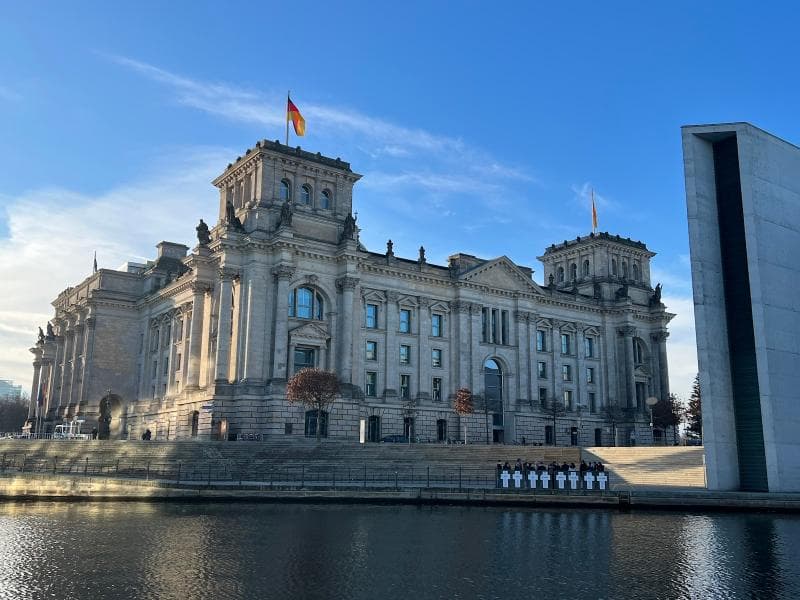
Explore Berlin's Government Quarter, home to the iconic Reichstag Building. Discover Germany's political heart, rich history, and transparent democracy.
Overview
The Government Quarter, known in German as the Regierungsviertel, represents the pulsating heart of German democracy in Berlin. Far from being merely a collection of administrative buildings, it is a dynamic district where history, architecture, and political life intertwine. At its core stands the iconic Reichstag Building, now home to the German Bundestag. This quarter, nestled along the picturesque Spree River, embodies the spirit of a reunified Germany, symbolizing openness, transparency, and a profound commitment to democratic principles. It invites curious travelers to explore not just governmental functions, but a rich narrative of national evolution.
This is where critical decisions shaping the nation are made, yet it remains remarkably accessible to the public, offering a unique opportunity to witness the workings of modern governance firsthand. The district's design and accessibility are a testament to Germany's democratic ideals.
History & Cultural Background
The story of the Government Quarter is deeply etched into Germany's turbulent past. The Reichstag Building, designed by Paul Wallot in a grand Neo-Renaissance style, was completed in 1894 to house the parliament of the German Empire. Its facade proudly bears the inscription 'Dem Deutschen Volke' – 'To the German People' – added in 1916, a powerful declaration of its purpose.
For decades, it served as a stage for pivotal moments, from the vibrant debates of the Weimar Republic to the tragic Reichstag fire in 1933. This devastating event, used by Adolf Hitler as a pretext to consolidate power, marked the beginning of the building's long period of neglect and symbolic degradation under the Nazi regime. Severely damaged during World War II, particularly during the Battle of Berlin, the Reichstag stood as a scarred relic throughout the Cold War, a stark reminder of a divided nation.
With German reunification in 1990, the decision was made to restore Berlin as the capital and the Reichstag as the seat of parliament. A monumental reconstruction and redesign, led by British architect Lord Norman Foster from 1995 to 1999, transformed the war-battered edifice. Foster's vision integrated a striking modern glass dome, symbolizing the transparency of democracy, directly above the historic plenary chamber. This renovation ushered in a new era for the building and the surrounding district, leading to the creation of the 'Band des Bundes' (Federal Ribbon), an architectural ensemble of modern parliamentary buildings stretching across the Spree, connecting the former East and West parts of the city.
What Makes It Special
What sets Berlin's Government Quarter apart is its seamless blend of historical gravity and forward-looking design. The Reichstag Building itself is a masterpiece of architectural contrast, marrying its original Neo-Renaissance grandeur with the contemporary brilliance of Foster's glass dome. This dome is not just an aesthetic feature; it is a profound symbol of transparent governance, allowing visitors to literally look down into the parliamentary proceedings below.
Beyond the Reichstag, the 'Band des Bundes' forms a powerful architectural statement. This 'Federal Ribbon' consists of modern parliamentary and governmental buildings like the Federal Chancellery (Bundeskanzleramt), the Paul-Löbe-Haus, and the Marie-Elisabeth-Lüders-Haus, all linked by bridges over the Spree. This ensemble represents the new Germany – open, connected, and committed to overcoming past divisions. The district's thoughtful urban planning emphasizes accessibility and dialogue, reflecting a conscious effort to make politics tangible and visible to the citizenry.
Stories, Fun Facts & Local Details
The Government Quarter is rich with stories and quirky details that bring its history to life. The phrase 'Dem Deutschen Volke' above the Reichstag's entrance wasn't always there; it was added in 1916, after considerable debate. Interestingly, Kaiser Wilhelm II initially dismissed Wallot's architectural design as 'the pinnacle of bad taste.'
One of the most memorable events post-reunification was the artist duo Christo and Jeanne-Claude's 'Wrapped Reichstag' project in 1995, where the entire building was draped in shimmering fabric, captivating global attention before its renovation. This artistic intervention foreshadowed the building's renewed significance.
Visitors often hear the Federal Chancellery affectionately nicknamed 'the washing machine' by locals, a playful nod to its distinctive cube-like central structure with round windows. This casual moniker highlights the approachable nature of Berliners towards their political landscape. The Marie-Elisabeth-Lüders-Haus, another parliamentary building, even houses a segment of the original Berlin Wall as a memorial, ensuring that the city's divided past is never forgotten within the halls of its unified government.
Visitor Perspective
For any curious traveler, a visit to Berlin's Government Quarter offers a uniquely immersive experience. The undisputed highlight is the opportunity to visit the Reichstag Building, particularly its iconic glass dome and roof terrace. Pre-registration online is essential for gaining entry, but the panoramic views of Berlin's cityscape and the fascinating perspective into the plenary chamber below are well worth the planning. An audio guide available at the dome provides insightful historical and architectural context as you ascend the spiral ramps.
Beyond the Reichstag, the entire district is conducive to exploration on foot. Guided walking tours provide deeper insights into the individual buildings, their functions, and the historical significance of the area, including the Chancellery and other parliamentary offices. For a different perspective, consider a river cruise along the Spree, which offers stunning views of the 'Band des Bundes' from the water, highlighting how these modern structures harmoniously integrate with the riverine landscape. The Government Quarter's proximity to other major landmarks, such as the Brandenburg Gate and the Holocaust Memorial, makes it an integral and easily accessible part of any Berlin itinerary, inviting visitors to ponder Germany's journey from its complex past to its democratic present.
Coordinates: 13.3761, 52.5186
View on Google Maps💬 How Travelers Describe This Place
Based on community votes
Beautiful
847Must See
685Unique
513Interesting
482Photogenic
62
Traveler Stories
Discover memorable experiences shared by travelers who have visited this place.
No traveler stories yet.
Be the first traveler to share what made this place memorable.

Tour
By
Spot
Discover amazing places around the world. Your journey starts here.
Explore
© 2026 TourBySpot. All rights reserved.