Glass Dome
Berlin, Germany
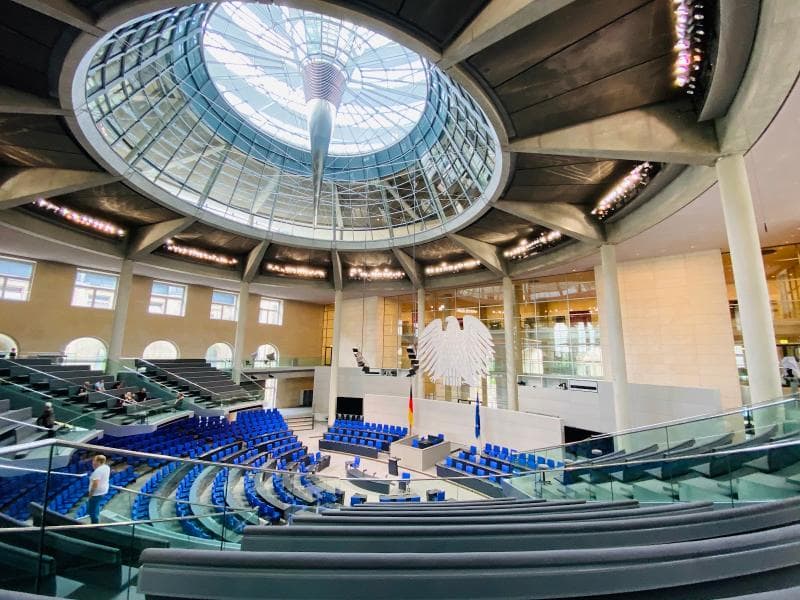
Explore the Glass Dome at Berlin's Reichstag Building. Discover its stunning architecture, symbolic transparency, and panoramic city views in Germany.
Overview
Perched atop the historic Reichstag Building in Berlin, Germany, the Glass Dome is a striking modern architectural marvel that serves as a powerful symbol of transparency and democracy. Designed by the renowned British architect Sir Norman Foster, this iconic structure offers visitors unparalleled 360-degree panoramic views of the vibrant Berlin cityscape. More than just an observation deck, the dome is an integral part of the German parliament, the Bundestag, directly overlooking its debating chamber. Its futuristic design, juxtaposed against the Reichstag's venerable facade, embodies Germany's journey towards a unified and open future.
History & Cultural Background
The Reichstag Building, originally constructed between 1884 and 1894 by architect Paul Wallot, has witnessed pivotal moments in German history. It suffered severe damage during the 1933 fire and was further devastated during World War II. For decades after the war, the building stood largely in ruins, its original dome having been destroyed.
With the reunification of Germany in 1990 and the subsequent decision to reinstate Berlin as the capital, a comprehensive renovation of the Reichstag was undertaken. Sir Norman Foster won the commission for the redesign in 1992, with reconstruction commencing in 1994 and concluding in 1999. While Foster's initial designs did not include a dome, the Bundestag ultimately requested its inclusion, drawing inspiration from an earlier concept by Gottfried Böhm. The new Glass Dome was specifically conceived to symbolize a unified, democratic Germany, emphasizing the idea that the people are 'above' the government, a stark contrast to previous eras.
What Makes It Special
The Glass Dome is a masterpiece of intelligent and sustainable architecture. Its modern steel and glass construction creates a compelling dialogue with the historic Neo-Renaissance architecture of the Reichstag Building. At its core is a massive mirrored cone, ingeniously designed to reflect natural daylight deep into the Bundestag's debating chamber below, significantly reducing the need for artificial lighting and improving energy efficiency. This eco-friendly approach is complemented by an electronically controlled sun shield that tracks the sun's movement, preventing direct solar gain and glare for those inside.
Visitors embark on a unique journey up two intertwining steel spiral ramps, reminiscent of a double helix, that lead to the very summit of the dome. From this vantage point, not only do you get expansive views of Berlin, but you can also look directly down into the plenary chamber, gaining a rare insight into the workings of German parliamentary democracy. The entire structure, weighing 800 tons, stands 23.5 meters high with a diameter of 40 meters, making it a truly impressive feat of engineering.
Stories, Fun Facts & Local Details
The Glass Dome's journey to becoming an iconic landmark is filled with interesting anecdotes. It wasn't part of Sir Norman Foster's initial vision for the Reichstag's redesign, but was added at the specific request of the German government, making it a collaborative evolution in design. The architectural choice of glass symbolizes transparency, echoing the commitment to an open and accessible government.
A powerful historical detail visible on the Reichstag's facade, dating back to 1916, is the inscription 'Dem Deutschen Volke,' meaning 'To the German People.' This enduring message underscores the democratic principles that the building now champions. While not within the dome itself, visitors exploring the building's historical layers can also observe preserved graffiti left by Soviet soldiers during the 1945 Battle of Berlin, a poignant reminder of the city's tumultuous past and resilience. The Reichstag Building, with its accessible dome, has become the most-visited parliament in the world, welcoming nearly three million visitors annually.
Visitor Perspective
Visiting the Glass Dome offers a memorable experience for any traveler to Berlin. Admission is free of charge, but it is essential to register in advance through the Bundestag's official website due to high demand and strict security protocols. Upon arrival, visitors must present a valid, original photo identification document. Security screenings are mandatory before ascending to the dome via a dedicated elevator.
Once at the top, an audio guide, available in multiple languages, provides fascinating commentary on the Reichstag's history, the dome's architecture, and the surrounding Berlin landmarks visible from the panoramic rooftop terrace. The dome is generally open daily from 8 AM to midnight, with the last entry at 10 PM. However, it is closed all day on December 24th and from 4 PM on December 31st, with additional closures for cleaning, maintenance, or parliamentary sessions, so checking the official website before your visit is highly recommended. From this unique vantage point, you can identify famous sights such as the Brandenburg Gate, the Berlin TV Tower, and the meandering Spree River, making it an indispensable part of your Berlin itinerary.
Coordinates: 13.3761, 52.5186
View on Google Maps💬 How Travelers Describe This Place
Based on community votes
Beautiful
671Interesting
617Must See
356Unique
220Photogenic
161
Traveler Stories
Discover memorable experiences shared by travelers who have visited this place.
No traveler stories yet.
Be the first traveler to share what made this place memorable.

Tour
By
Spot
Discover amazing places around the world. Your journey starts here.
Explore
© 2026 TourBySpot. All rights reserved.