Gipsoteca Bartolini
Florence, Italy
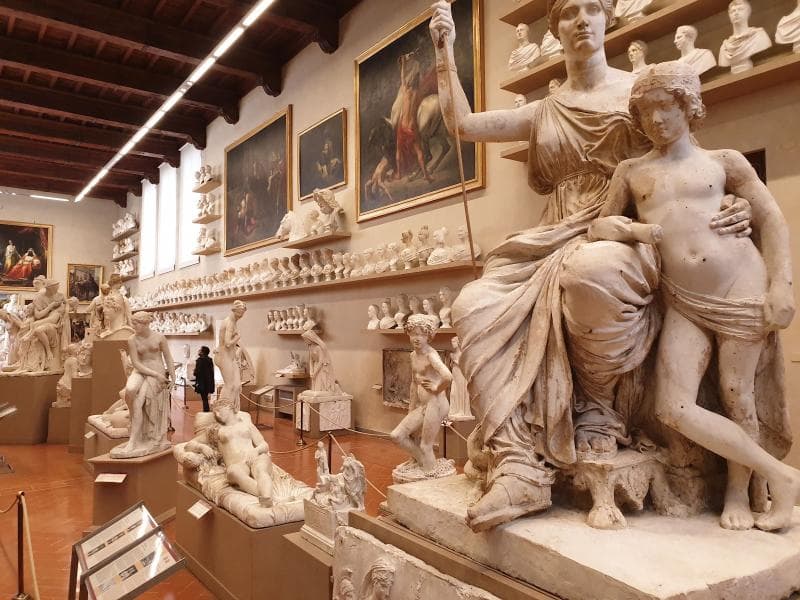
Explore Gipsoteca Bartolini in Florence, Italy, a unique collection of 19th-century plaster casts by Lorenzo Bartolini. Discover the artistic process and historical context within the Accademia Gallery.
Overview
Nestled within the renowned Accademia Gallery in Florence, Italy, lies a captivating treasure often overshadowed by Michelangelo's iconic David: the Gipsoteca Bartolini. This unique collection is not merely a display of finished artworks but a fascinating glimpse into the artistic process itself. It houses a vast array of 19th-century plaster casts, primarily by the influential sculptor Lorenzo Bartolini and his talented student, Luigi Pampaloni.
The Gipsoteca, meaning 'hall of models,' meticulously recreates Bartolini's original studio, offering visitors an unparalleled opportunity to explore the journey from concept to final marble sculpture. Following an important restoration, the Gipsoteca Bartolini reopened to the public in 2022, presenting its rows of white plaster casts alongside contemporary 19th-century paintings in a spectacular new light.
History & Cultural Background
The Accademia Gallery itself boasts a rich history, established in 1784 by Grand Duke Peter Leopold of Tuscany. Its original purpose was to serve as a teaching institution, providing students from the adjacent Accademia delle Belle Arti (Academy of Fine Arts) with exemplary masterpieces for study and inspiration.
The space now occupied by the Gipsoteca Bartolini once served a very different function; it was the women's ward of the former San Matteo hospital. Lorenzo Bartolini (1777-1850), the central figure of this collection, was a celebrated Italian sculptor and a distinguished professor at the Florentine Academy of Fine Arts during the 19th century. His artistic approach was distinct, blending Neoclassical ideals with a remarkable emphasis on naturalistic detail and sentimental piety, setting him apart from contemporaries heavily influenced by Antonio Canova. Bartolini's talent attracted numerous patrons, including influential foreign aristocrats who resided in Florence.
What Makes It Special
What truly sets the Gipsoteca Bartolini apart is its comprehensive collection of over 250 plaster models, which provide a rare and intimate look into a sculptor's creative process. These models are more than mere preparatory sketches; they are often the only surviving records of works whose final marble versions have been lost or damaged over time.
Walking through the Gipsoteca is like stepping back into 19th-century Florence. The busts and figures vividly showcase the aesthetic tastes, fashionable hairstyles, and attire of the period, from head to toe. Visitors can observe the fascinating technical details of sculpture, such as the small nails embedded in the plaster casts, which served as crucial reference points for transferring the model's dimensions accurately to the marble block.
The collection features models of renowned historical figures like Machiavelli and Brunelleschi, as well as portraits of wealthy foreign noblemen who frequented Bartolini's studio. Bartolini was celebrated for his exceptional ability to capture not just physical likeness but also the psychological depth and expressive personality of his subjects. The Gipsoteca also includes other artworks, such as paintings and sculptures that received awards from the Academy of Fine Arts.
Stories, Fun Facts & Local Details
Lorenzo Bartolini was known for his unconventional and revolutionary teaching methods. He famously challenged academic traditions by insisting that his students model directly from nature, rather than strictly copying ancient masterpieces. In one notable instance, he even brought a hunchbacked model into his class, asserting that all aspects of nature held beauty and provided valuable lessons for artists.
His impressive clientele included none other than Napoleon Bonaparte, who was a significant patron of his work. The Gipsoteca's collection also features busts of other famous personalities who were part of 19th-century European high society, such as composers Rossini and Liszt, the poet Lord Byron, and writer Madame de Stael.
Adding another layer of historical intrigue, a small fresco by Pontormo, painted around 1514, is discreetly located along the left side of the Gipsoteca. This early work by Pontormo depicts a scene of daily life within the old hospital, serving as a poignant reminder of the hall's original purpose before it became a sanctuary for artistic models.
Visitor Perspective
For a curious traveler seeking a deeper understanding of art and history, the Gipsoteca Bartolini offers a remarkably serene and contemplative experience. Unlike the often-crowded halls around Michelangelo's David, this section tends to be quieter, allowing for a more intimate engagement with the artworks.
Visitors gain a profound appreciation for the meticulous craftsmanship and intellectual thought behind 19th-century sculpture. An engaging video within the Gipsoteca further enhances this understanding by demonstrating the ancient and intricate technique of creating plaster casts, guiding you through each step of the sculptor's process. The historical context of the Accademia as a former teaching institution makes the Gipsoteca particularly relevant, showcasing where generations of artists honed their skills and pushed the boundaries of their craft.
Coordinates: 11.2587, 43.7769
View on Google Maps💬 How Travelers Describe This Place
Based on community votes
Photogenic
836Must See
287Interesting
255Beautiful
231Unique
86
Traveler Stories
Discover memorable experiences shared by travelers who have visited this place.
No traveler stories yet.
Be the first traveler to share what made this place memorable.

Tour
By
Spot
Discover amazing places around the world. Your journey starts here.
Explore
© 2026 TourBySpot. All rights reserved.