Giant Buddha Statue
Vientiane, Laos
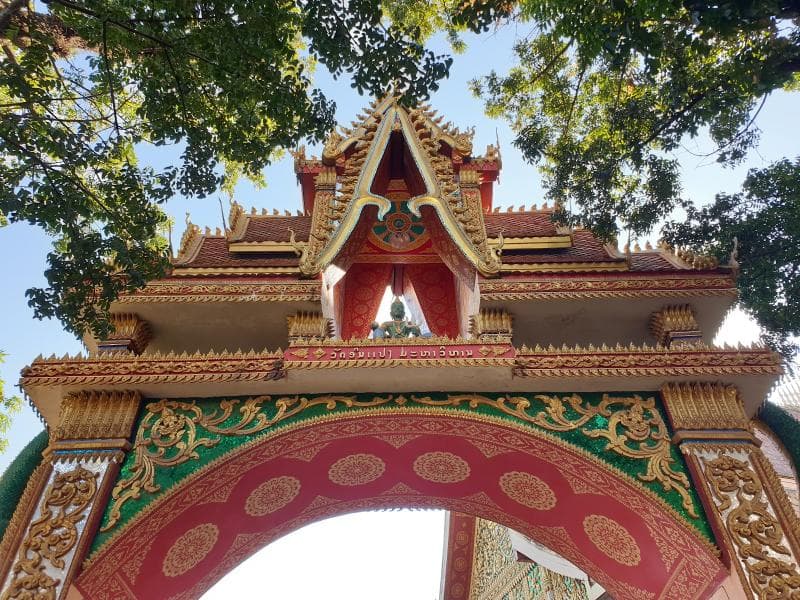
Discover the Giant Buddha Statue (Phra Ong Teu) at Wat Ong Teu Mahawihan in Vientiane, Laos. Explore the historical, spiritual, and cultural heritage of this revered temple and its colossal bronze Buddha.
Overview
Nestled in the heart of Vientiane, Laos, Wat Ong Teu Mahawihan stands as a beacon of spiritual and cultural heritage, particularly renowned for its magnificent Giant Buddha Statue. This revered temple is often affectionately known as the 'Temple of the Heavy Buddha' due to the impressive size of its central bronze image, Phra Ong Teu. The name 'Ong Teu' itself refers to an ancient Lao unit of weight, underscoring the statue's immense scale and significance.
As one of the most important and respected Buddhist temples in Vientiane, Wat Ong Teu Mahawihan offers visitors a profound glimpse into the country's enduring faith and rich artistic traditions. Its serene ambiance and architectural splendor make it a focal point for both local devotees and curious travelers seeking to understand the spiritual essence of Laos.
History & Cultural Background
The origins of Wat Ong Teu Mahawihan trace back to the 16th century, a period often regarded as the 'golden age' of Buddhism in Laos. The temple was originally founded by King Setthathirath I, a prominent figure who also moved the capital of the Lan Xang Kingdom to Vientiane. Initially serving as a royal chapel and a place for ceremonies of allegiance to the king, the temple evolved significantly over time.
By the 17th century, under the reign of King Souligna Vongsa, Wat Ong Teu transformed into a vital center for Buddhist education, attracting monks from across Southeast Asia to study the teachings of the Dhamma. This tradition continues today, with the temple housing the Lao Buddhist Institute, a major institution for training monks and studying Theravada Buddhist religion.
Like many historical sites in Vientiane, the temple faced destruction during the Siamese invasion in 1828. However, it was meticulously rebuilt and restored throughout the 19th and 20th centuries, ensuring its legacy as a cherished landmark and spiritual hub.
What Makes It Special
The undoubted centerpiece of Wat Ong Teu Mahawihan is the Phra Ong Teu, a magnificent bronze Buddha statue. Standing at an impressive height of over 5.8 to 6 meters and weighing several tons, this colossal image is the largest Buddha statue in Vientiane. It captivates onlookers with its aura of serenity and grace.
The statue is depicted in the traditional seated posture of meditation, with one hand gently resting in its lap and the other touching the earth in the Bhumisparsha Mudra. This gesture symbolizes the Buddha's enlightenment and his steadfastness against earthly temptations. The intricate details of its flowing robes, elaborate headdress, and serene facial features are a testament to the exquisite craftsmanship involved in its creation.
Beyond the statue, the temple's architecture is a captivating blend of traditional Lao and Thai styles, characterized by an elegant design, ornate decorations, and a symmetrical layout. The main hall, or 'sim,' features a multi-tiered roof adorned with intricate wooden carvings and gilded ornaments. Vibrant murals depicting scenes from Buddhist mythology and the life of the Buddha embellish its facade, while naga serpent guardians and lotus-shaped finials add to its decorative richness. The temple's design reflects the 'Luang Prabang I style,' noted for its sparing use of brickwork and rectangular form.
Stories, Fun Facts & Local Details
The very name 'Wat Ong Teu' derives from an ancient Lao unit of weight, highlighting the statue's legendary heaviness. Local folklore reinforces this, with a popular tale suggesting that invaders who plundered Vientiane in past centuries were unable to remove the massive bronze Buddha from the monastery grounds due to its colossal weight. This story adds a layer of mystique to the already revered image.
The temple's grounds are often filled with the quiet murmur of monks chanting from the adjacent Buddhist Institute. Visitors might catch the subtle scent of sandalwood and incense or witness elderly women respectfully placing sticky rice as offerings during morning alms. These everyday moments offer an authentic experience of living Buddhist traditions.
Visitor Perspective
Visiting Wat Ong Teu Mahawihan is an opportunity to immerse oneself in a profound sense of peace and spiritual tranquility. The temple is not merely a historical monument but an active monastery where the rhythms of Buddhist life continue uninterrupted. Travelers can observe monks going about their daily routines, and sometimes even engage in 'monk chat' sessions, offering a unique chance to learn about Buddhism directly from practitioners.
The vibrant wall frescoes and intricate wooden ornaments inside the main hall invite quiet contemplation, encouraging visitors to spend time at the base of the Heavy Buddha statue. The combination of its deep historical roots, artistic grandeur, and living spiritual practice makes Wat Ong Teu Mahawihan a truly enriching destination for anyone exploring the cultural heart of Vientiane, Laos.
Coordinates: 102.6038, 17.9656
View on Google Maps💬 How Travelers Describe This Place
Based on community votes
Photogenic
964Unique
926Beautiful
646Interesting
482Must See
380
Traveler Stories
Discover memorable experiences shared by travelers who have visited this place.
No traveler stories yet.
Be the first traveler to share what made this place memorable.

Tour
By
Spot
Discover amazing places around the world. Your journey starts here.
Explore
© 2026 TourBySpot. All rights reserved.