Gate of Salutation
Istanbul, Turkey
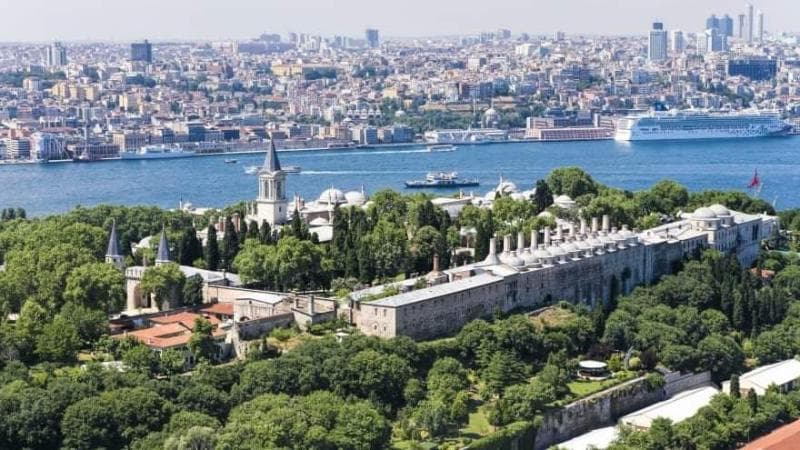
Explore the Gate of Salutation at Topkapi Palace, Istanbul, Turkey. Discover its history, unique architecture, and the imperial protocols of the Ottoman Empire.
Overview
The Gate of Salutation, known in Turkish as Bâb-üs Selâm or Orta Kapı (Middle Gate), stands as a formidable and historically rich entrance within the illustrious Topkapi Palace in Istanbul, Turkey. It marks a significant transition point, leading visitors from the public First Courtyard into the more private and ceremonially crucial Second Courtyard, also known as Divan Square. This impressive gate, with its distinctive architecture, is more than just a physical barrier; it served as a powerful symbol of Ottoman authority and the strict protocols governing access to the Sultan's world.
Constructed with a fortress-like facade featuring two grand, octagonal towers capped with conical roofs, the Gate of Salutation immediately conveys strength and impregnability. Today, it remains a central feature for anyone exploring the Topkapi Palace Museum, offering a tangible connection to the ceremonies and power dynamics of the Ottoman Empire.
History & Cultural Background
The Gate of Salutation's origins trace back to the reign of Sultan Mehmed the Conqueror, who initiated the construction of Topkapi Palace shortly after the conquest of Constantinople in 1453. While its initial construction dates to this early period, the gate underwent renovations, with its iconic twin turrets acquired during the reign of Suleyman the Magnificent in the 16th century. An inscription above the gilt wrought iron doors notably bears the date 1524. The architectural style, particularly of its towers, appears to draw influence from Byzantine design, blending seamlessly into the rich tapestry of Istanbul's historical landscape.
For nearly four centuries, until the mid-19th century, Topkapi Palace served as the administrative heart and primary residence of the Ottoman Sultans. The Gate of Salutation was thus a daily witness to the empire's governance, state affairs, and ceremonial life. It separated the outermost court, accessible to a wider public, from the inner sanctums where critical decisions were made and imperial life unfolded. The very act of passing through this gate was steeped in cultural and political significance, establishing a profound sense of hierarchy and respect for imperial power.
What Makes It Special
What truly sets the Gate of Salutation apart is its role as a 'true entrance' to the inner sanctum of Topkapi Palace. It wasn't merely a gateway but a meticulously crafted instrument of statecraft, designed to reinforce the absolute authority of the Sultan. The gate's robust construction, reminiscent of a medieval European castle, projected an image of military might and resilience, reflecting the Ottoman Empire's dual identity as both a powerful military force and a center of sophisticated culture.
The intricate calligraphy, including Quranic verses and the Sultan's tughra (monogram), adorning the archway further highlighted the divine and absolute source of the power residing within. This blend of architectural grandeur and symbolic detail made every passage through the Bâb-üs Selâm a conscious acknowledgment of the imperial presence. It physically and psychologically marked the transition from the bustling external world to a realm governed by strict protocol and disciplined silence.
Stories, Fun Facts & Local Details
One of the most compelling aspects of the Gate of Salutation is the strict protocol associated with its passage. Only the Sultan himself was permitted to ride through this gate on horseback. Everyone else, regardless of their rank—including the powerful Grand Viziers and foreign ambassadors—was required to dismount their horses before approaching, walking the rest of the way as a sign of submission and respect. This enforced act of humility was a daily ritual, a subtle yet powerful reinforcement of the Sultan's supreme position in the imperial hierarchy.
Beneath its imposing exterior, the Gate of Salutation held a darker history too. Statesmen who fell out of favor were known to be imprisoned in small, gloomy cells within its towers. In a chilling display of imperial justice, the severed heads of disgraced officials were occasionally exhibited in its niches, serving as a grim warning to others. This duality, where ceremonial grandeur met ruthless justice, made the Bâb-üs Selâm a place that inspired both immense aspiration and profound fear, truly a threshold of absolute power. The gate was also perpetually guarded by the Kapıcılar, the corps of Gatekeepers, whose silent, imposing presence ensured the sanctity of the Second Courtyard.
Visitor Perspective
Today, visitors to Topkapi Palace enter through the Gate of Salutation, stepping through centuries of history into the Second Courtyard. While the solemn protocols of old are no longer in effect, the gate's imposing structure and historical weight still evoke a sense of awe and wonder. As you pass beneath its arch, it's easy to imagine the throngs of officials, ambassadors, and courtiers who once walked this very path, all dismounting to show reverence for the Sultan. The Gate of Salutation offers a unique opportunity to immerse oneself in the grandeur and intricate traditions of the Ottoman Empire, providing a profound historical experience in the heart of Istanbul. It serves as a powerful reminder of a bygone era, where every architectural detail and every ceremonial act held deep significance.
Coordinates: 28.984028, 41.013056
View on Google Maps💬 How Travelers Describe This Place
Based on community votes
Beautiful
839Photogenic
587Must See
546Interesting
334Unique
282
Traveler Stories
Discover memorable experiences shared by travelers who have visited this place.
No traveler stories yet.
Be the first traveler to share what made this place memorable.

Tour
By
Spot
Discover amazing places around the world. Your journey starts here.
Explore
© 2026 TourBySpot. All rights reserved.