Gardens
Vientiane, Laos
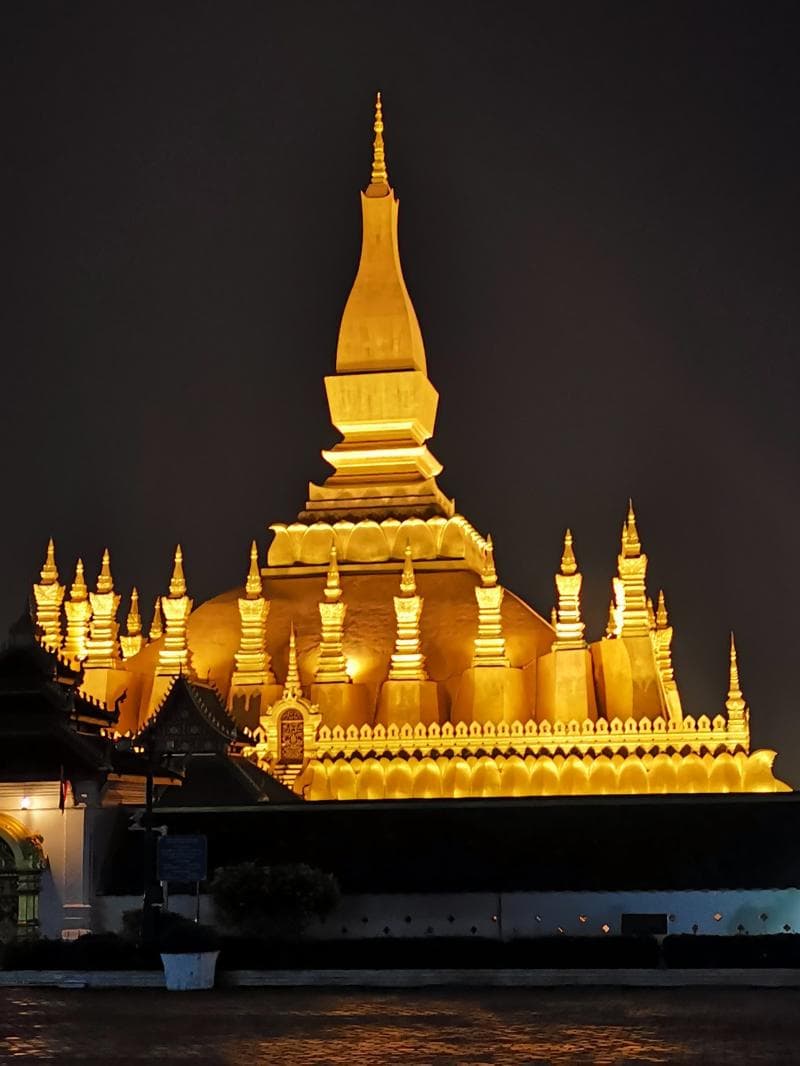
Explore the serene Gardens of Pha That Luang, surrounding the golden stupa in Vientiane, Laos. Discover its history, culture, and tranquil beauty.
Overview
Nestled in the heart of Vientiane, Laos, the majestic Pha That Luang complex is much more than just a golden stupa; it is a sprawling sanctuary where spirituality, history, and natural beauty intertwine. The 'Gardens' of Pha That Luang refer to the expansive and meticulously maintained grounds that embrace this national symbol. These grounds encompass not only serene green spaces but also tranquil courtyards, reflecting pools, and pathways that invite quiet contemplation. Visitors are encouraged to stroll through this sacred enclosure, where the vibrant golden hues of the stupa are beautifully contrasted by lush foliage and detailed stone carvings. It is a place designed to soothe the spirit, offering a peaceful escape from the bustling city outside its walls.
Once, vehicles could drive around the entire complex, but today the area is gated, creating a pedestrian-friendly environment that enhances the visitor experience, allowing for uninterrupted exploration of its spiritual and aesthetic offerings.
History & Cultural Background
The origins of Pha That Luang trace back to a profound legend: it is believed that Buddhist missionaries sent by Emperor Ashoka enshrined a sacred relic, a breastbone of the Buddha, here as early as the 3rd century BC. While the initial structure was thought to be a Hindu temple or a Mon-Khmer temple, the monument as we see it today largely began to take form in the 16th century. King Setthathirat, after relocating his capital from Luang Prabang to Vientiane in 1566, commissioned the construction of the grand stupa, transforming it into a magnificent Buddhist monument.
Over the centuries, the complex, including its grounds, has endured significant damage due to invasions, particularly from the Siamese. Each time, it has been rebuilt and restored, often reflecting the architectural styles and artistic sensibilities of its era. The current reconstruction, undertaken by French architects in the 1930s, aimed to restore the stupa and its surroundings to its historical grandeur. The gardens and architectural elements found throughout the complex are rich with symbolism, often representing Buddhist cosmology, with the stupa's three tiers symbolizing the path to enlightenment.
What Makes It Special
The true magic of the Gardens at Pha That Luang lies in their ability to frame and complement the awe-inspiring golden stupa, creating a holistic spiritual experience. The grounds are not merely decorative but are integral to the complex's religious and cultural identity. They feature beautifully adorned areas with gardens, reflecting pools, and statues of mythical creatures and deities, adding to the grandeur and architectural beauty.
Within these extensive grounds are two active monasteries, Wat That Luang Neua (Northern Monastery) and Wat That Luang Tai (Southern Monastery), where monks continue to live and study, offering visitors a glimpse into daily monastic life. The presence of ancient Buddhist sculptures, Khmer and Lao artifacts, and peaceful courtyards contributes to an atmosphere of deep historical reverence and spiritual tranquility. The statue of King Setthathirat, honoring his contributions to the Great Stupa, stands proudly in the Saysettha gardens near the main entrance, welcoming visitors.
Stories, Fun Facts & Local Details
One of the most compelling stories associated with Pha That Luang is the legend of the Buddha's breastbone, enshrined within the stupa. This relic has made the site a focal point for Buddhist pilgrims for centuries.
The meticulously maintained grounds are also the vibrant heart of the annual Boun That Luang Festival, a spectacular event held during the full moon of the 12th lunar month (usually November). This festival transforms the peaceful gardens into a bustling hub of religious ceremonies, candlelight processions, traditional performances, and cultural events, attracting thousands of pilgrims and visitors from around the world. It's a time when the gardens truly come alive, filled with offerings, music, and the collective devotion of the Lao people. The intricate floral motifs, gilded carvings, and graceful archways visible throughout the gardens and complex showcase the exquisite craftsmanship passed down through generations of Lao artisans.
Visitor Perspective
For the curious traveler, exploring the Gardens of Pha That Luang is an enriching journey. The spacious layout allows for unhurried walks, providing ample opportunities to admire the stupa's golden splendor from various vantage points and to absorb the serene environment. Observing the daily routines of the monks, who are often seen traversing the grounds, adds an authentic layer to the visit.
Many visitors find that arriving in the early morning offers the most profound experience; the cooler air, fewer crowds, and the soft, glowing light reflecting off the stupa create an almost magical ambiance. The tranquil courtyards and the quiet rustle of leaves provide a perfect backdrop for reflection. It is an opportunity to connect with Laos's rich spiritual traditions and to witness a true masterpiece of Buddhist architecture and landscaping, leaving one with a lasting sense of peace and cultural appreciation.
Coordinates: 102.63425, 17.9761667
View on Google Maps💬 How Travelers Describe This Place
Based on community votes
Unique
896Photogenic
550Must See
102Beautiful
95Interesting
28
Traveler Stories
Discover memorable experiences shared by travelers who have visited this place.
No traveler stories yet.
Be the first traveler to share what made this place memorable.

Tour
By
Spot
Discover amazing places around the world. Your journey starts here.
Explore
© 2026 TourBySpot. All rights reserved.