Garden Lapidarium
Split, Croatia
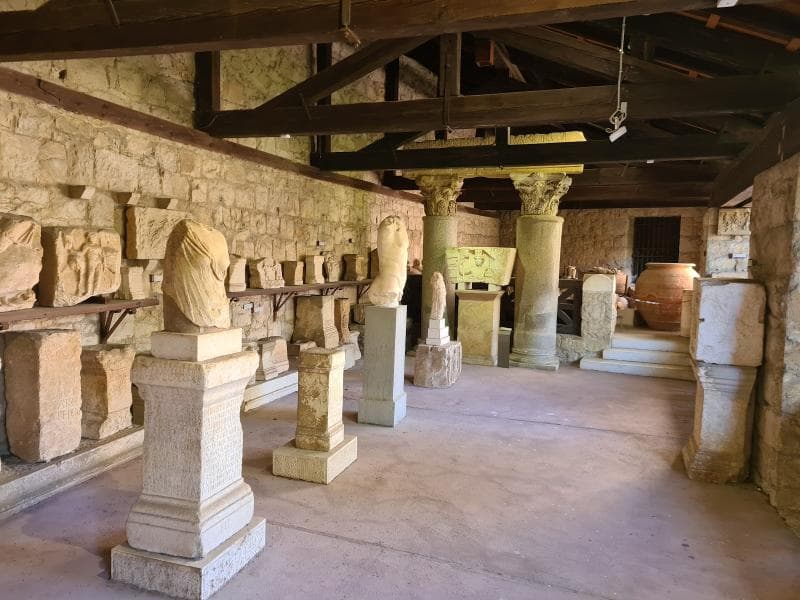
Explore the serene Garden Lapidarium at Split Archaeological Museum in Split, Croatia. Discover ancient Roman and medieval stone artifacts.
Overview
Nestled within the venerable Split Archaeological Museum in Split, Croatia, lies a serene and historically rich sub-spot known as the Garden Lapidarium. Far from being a mere collection of stones, this outdoor gallery offers a captivating journey through the region's layered past. A lapidarium, derived from the Latin word 'lapis' meaning stone, is a dedicated space for displaying stone monuments. At the Split Archaeological Museum, this concept comes to life as a remarkable covered gallery and open-air exhibition that gracefully wraps around the museum building, providing a tranquil and evocative setting for its ancient treasures.
As Croatia's oldest museum, established in 1820, the Split Archaeological Museum boasts an extensive collection of some 150,000 artifacts that chronicle the history of Dalmatia from prehistoric times through the early Middle Ages. The Garden Lapidarium plays a crucial role in this narrative, showcasing a significant portion of the museum's stone monuments, including an impressive array of inscriptions, sarcophagi, and architectural fragments primarily unearthed from the nearby ancient Roman city of Salona and its surroundings.
History & Cultural Background
The origins of the Split Archaeological Museum, and by extension its Lapidarium, trace back to 1820, making it a pioneering institution in Croatia's cultural landscape. Its establishment was decreed by the Dalmatian government in Zadar, following an official visit by Emperor Francis I in 1818, who recognized the immense historical and cultural heritage of Split and Solin.
While the initial museum building was erected in 1821 near Diocletian's Palace, the ever-growing collection necessitated a larger, purpose-built structure. A pivotal figure in the museum's history was Don Frane Bulić, a renowned Catholic priest, archaeologist, and historian, who served as director from 1884 to 1926. He was instrumental in the construction of the current museum building, completed in 1914. His dedicated research efforts, particularly in the ancient city of Salona, significantly enriched the museum's holdings.
The artifacts presented within the Lapidarium span various historical epochs, encompassing Greek, Roman, and medieval periods. Many pieces originate from the ruins of Salona, once the capital of the Roman province of Dalmatia and a thriving ancient city. These stone relics – from monumental sarcophagi to intricate inscriptions – offer tangible connections to the lives, beliefs, and artistic expressions of the ancient inhabitants of this Adriatic region.
What Makes It Special
What truly distinguishes the Garden Lapidarium is its harmonious blend of historical depth and atmospheric presentation. Unlike conventional indoor displays, this lapidarium extends into the open air, utilizing a series of arcades that surround the main museum building and an adjoining garden. This architectural choice transforms the viewing experience, allowing natural light and the Mediterranean climate to interplay with the ancient stones.
The collection itself is a testament to the region's rich archaeological heritage. Visitors encounter a diverse range of stone monuments, including elaborate Roman sarcophagi that once held the remains of Salona's elite, fragments of architectural decoration that adorned public buildings and temples, and numerous epigraphic inscriptions that offer direct insights into the social, political, and religious life of ancient communities.
The deliberate placement of these heavy, enduring artifacts within an open, yet sheltered, environment creates a unique sense of permanence and reflection. It invites contemplation on the passage of time and the civilizations that have shaped this vibrant corner of Croatia. The Lapidarium's design means it's not only a place of learning but also a beautiful, contemplative space.
Stories, Fun Facts & Local Details
Imagine wandering among the very stones that formed the foundations of ancient Salona. The Garden Lapidarium makes this possible, offering an immersive 'touch of antiquity' as one travel guide aptly puts it. The stone inscriptions, in particular, whisper tales of Roman citizens, their triumphs, and their tragedies, often detailing names, professions, and dedications. Thousands of such stone epitaphs from Salona are housed within the museum's collections, making this one of the most comprehensive epigraphic collections in the region.
A delightful aspect of the Garden Lapidarium, especially during Split's warm summer months, is its role as a peaceful refuge. The covered arcades and the surrounding garden provide welcome shade and a cool, atmospheric escape from the bustling city center and the intense Mediterranean sun. It's often cited as one of the museum's 'most photogenic spaces,' where the interplay of light and shadow on the ancient carvings creates a timeless beauty. This makes it a favored spot for visitors seeking both cultural enrichment and a moment of quiet contemplation amidst nature.
Visitor Perspective
For the curious traveler, a visit to the Garden Lapidarium is an enriching and contemplative experience. The walk through the arcades, lined with monumental sculptures and fragments, feels like stepping into an open-air historical textbook. The sheer scale and detail of many pieces, such as sarcophagi adorned with mythological scenes or elaborate floral motifs, are impressive.
The layout allows for an unhurried exploration, encouraging visitors to closely examine the intricate carvings and decipher the weathered inscriptions that narrate stories from millennia ago. It's a place where the allure of archaeology connects directly with a sense of origin and deep historical roots. The blend of the museum's architectural setting with the natural elements of the garden creates a truly unique environment, fostering a deeper understanding of Dalmatia's ancient past beyond mere observation. Many find it to be a uniquely atmospheric space, offering shelter and a moment of peace, making it a highlight of the Archaeological Museum visit.
Coordinates: 16.43487572504272, 43.51580916740614
View on Google Maps💬 How Travelers Describe This Place
Based on community votes
Beautiful
623Interesting
545Unique
343Must See
302Photogenic
20
Traveler Stories
Discover memorable experiences shared by travelers who have visited this place.
No traveler stories yet.
Be the first traveler to share what made this place memorable.

Tour
By
Spot
Discover amazing places around the world. Your journey starts here.
Explore
© 2026 TourBySpot. All rights reserved.