Gallery of Maps
Rome, Italy
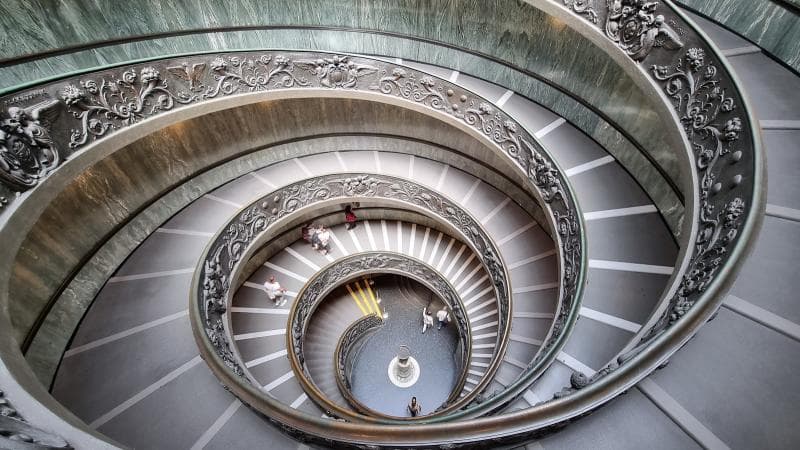
Explore the magnificent Gallery of Maps within the Vatican Museums in Rome, Italy, featuring 40 stunning 16th-century frescoed maps of Italy.
Overview
Stepping into the Gallery of Maps, or 'Galleria delle Carte Geografiche' in Italian, within the Vatican Museums in Rome, Italy, is like entering a vibrant, historical atlas. This breathtaking 120-meter-long corridor is adorned with 40 colossal frescoed maps of Italy, stretching from floor to ceiling. It's a truly immersive experience, guiding visitors through the diverse landscapes and territories of the Italian peninsula as they were perceived in the late 16th century. Positioned along the main route leading to the Sistine Chapel, this gallery often leaves visitors awestruck by its sheer scale and intricate detail, presenting a spectacular fusion of art and cartography.
History & Cultural Background
The creation of the Gallery of Maps was a monumental undertaking commissioned by Pope Gregory XIII between 1580 and 1583. The project's iconographic design was entrusted to Ignazio Danti, a Dominican friar renowned as a mathematician, astronomer, and cosmographer. Under his direction, a large team of artists, including Girolamo Muziano and Cesare Nebbia, completed the frescoes in a remarkable three years.
The gallery served a dual purpose: to showcase the geographical and cultural richness of Italy and to assert the territorial and spiritual authority of the Papacy during the Counter-Reformation. By depicting the various regions and dominions of Italy, the Pope aimed to create a visual statement of scope and influence, emphasizing the Church's reach well beyond the confines of Rome. This wasn't merely a decorative act; it was a powerful political and religious declaration etched onto the very walls of the Vatican.
What Makes It Special
What sets the Gallery of Maps apart is its unparalleled synthesis of art and early modern science. The 40 frescoed maps, each approximately 13 feet high, offer an incredibly detailed topographical representation of Italy. They showcase mountains, rivers, cities, and even historical events, blending artistic beauty with impressive scientific knowledge for its era.
The maps are arranged to give the illusion of walking across Italy from north to south, with the regions facing the Tyrrhenian Sea on one side and those facing the Adriatic Sea on the other, conceptually divided by the Apennine Mountains. The vaulted ceiling above is equally magnificent, richly decorated with religious scenes, allegorical figures, and ornamental grotesques, adding another layer of artistic grandeur to the space. This combination creates a visually overwhelming and deeply immersive experience.
Stories, Fun Facts & Local Details
- Remarkable Accuracy: Despite being created over 400 years ago, these maps are considered to be over 80 percent accurate, a testament to the cartographic skills of Ignazio Danti and his team.
- A Pope's Perspective: Some maps appear 'upside down' from a modern viewer's perspective. This isn't a mistake; in the 16th century, cartographers often oriented maps for the most logical visual presentation of a specific territory, rather than strictly placing north at the top.
- Beyond Italy: The gallery includes maps of territories such as Avignon (France) and Malta, not because they were geographically part of Italy, but because they fell under papal jurisdiction at the time, underscoring the political message of the artwork.
- Italia Antiqua and Nova: At the end of the corridor, visitors will find two maps of Italy: 'Italia Antiqua' (Ancient Italy) and 'Italia Nova' (New Italy). While visually identical, the 'Italia Antiqua' map names regions as they were known in Roman times, while 'Italia Nova' reflects the names used in the late 16th century, highlighting the historical continuity and changes.
- Celestial Ceiling: The ceiling frescoes depict major religious events associated with the territories shown on the maps below, weaving together sacred history with geographical representation.
Visitor Perspective
The Gallery of Maps is an essential and unforgettable stop for most visitors to the Vatican Museums. As you walk its impressive length, the vibrant colors and incredible detail of the frescoes command attention, truly transporting you back to Renaissance Italy. It's easy to get swept up in the grandeur, but remember to look up at the stunning vaulted ceiling, which is a masterpiece in itself and often overlooked in the rush.
While it can get crowded, especially as visitors make their way toward the Sistine Chapel, taking a moment to pause and absorb the intricate artistry is highly rewarding. Many find it to be one of the most visually stunning and memorable spaces within the entire museum complex, offering a unique journey through history, art, and the fascinating world of 16th-century cartography. To fully appreciate its splendor, consider booking an early entry ticket to avoid peak crowds.
Coordinates: 12.4536, 41.9067
View on Google Maps💬 How Travelers Describe This Place
Based on community votes
Beautiful
995Interesting
839Must See
603Unique
388Photogenic
289
Traveler Stories
Discover memorable experiences shared by travelers who have visited this place.
No traveler stories yet.
Be the first traveler to share what made this place memorable.

Tour
By
Spot
Discover amazing places around the world. Your journey starts here.
Explore
© 2026 TourBySpot. All rights reserved.