Gallery of Honour
Amsterdam, Netherlands
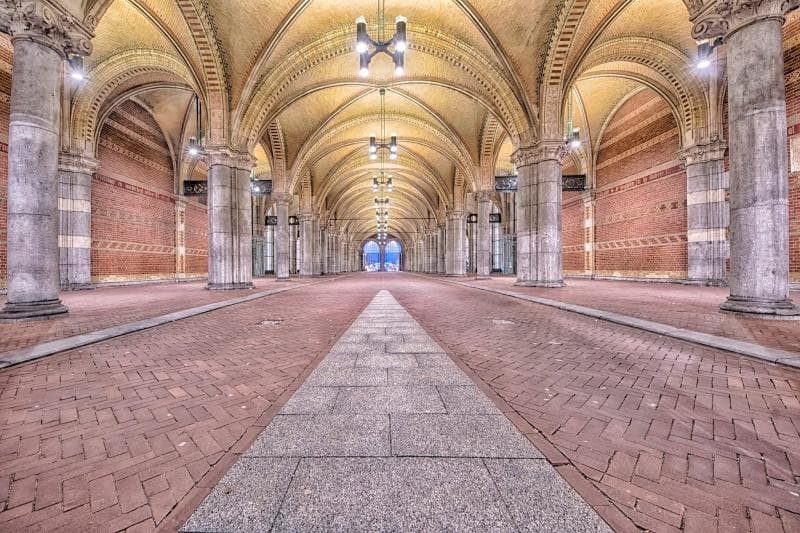
Explore the Gallery of Honour in Amsterdam's Rijksmuseum, home to Dutch Golden Age masterpieces like Rembrandt's 'The Night Watch' and Vermeer's 'The Milkmaid'. Discover Dutch art and history in the Netherlands.
Overview
The Gallery of Honour, or 'Eregalerij' in Dutch, stands as the illustrious heart of the Rijksmuseum in Amsterdam, Netherlands. It is an extended corridor designed to lead visitors towards the awe-inspiring 'Night Watch Gallery'. This central hall proudly showcases masterpieces predominantly by the great artists of the Dutch Golden Age, offering a profound journey through 800 years of Dutch art and history. More than just a passageway, it serves as a testament to Dutch national identity and pride, embodying the vision of its architect to illustrate how all people can be creative.
Housed within the iconic Neo-Gothic building of the Rijksmuseum, the Gallery of Honour presents a curated collection of some of the nation's most celebrated artworks. The gallery's structure itself, with its side alcoves displaying world-renowned paintings, forms an integral part of the museum's grand narrative. Visitors are invited to immerse themselves in a collection that resonates with both historical significance and artistic brilliance, making it a must-visit for anyone exploring Amsterdam's rich cultural landscape.
History & Cultural Background
The Rijksmuseum's origins trace back to 1798 when the Dutch government initiated efforts to educate its citizens about their ancestry by gathering a national art collection. Initially established in The Hague as the Nationale Kunst-Gallerij, the collection was moved to Amsterdam in 1808 by King Louis Napoleon, brother of Napoleon Bonaparte. The current magnificent building, designed by architect Pierre Cuypers, first opened its doors in 1885.
Cuypers' architectural masterpiece seamlessly blends Gothic and Renaissance elements, and his design for the Gallery of Honour reflects a profound cultural intent. He envisioned the space to not only elevate the Dutch spirit but also to demonstrate the universal nature of creativity. The gallery's layout remarkably resembles the nave of a Gothic cathedral, with its alcoves dedicated to artists rather than saints, creating a sacred space for art. After a comprehensive ten-year renovation, the main building, including the Gallery of Honour, reopened in 2013, solidifying its place as a cornerstone of Dutch heritage.
What Makes It Special
The Gallery of Honour is unique for its concentration of ‘crème de la crème’ Dutch Golden Age masterpieces, leading dramatically to Rembrandt's monumental 'The Night Watch'. This colossal painting is strategically positioned at the gallery's end, much like a high altar in a church, serving as its focal point. Along the extended corridor, side alcoves house other iconic works by Dutch masters such as Johannes Vermeer, Frans Hals, and Jan Steen.
Iron beams inscribed with the names of these celebrated painters frame the alcoves, while semi-circular wall sections above proudly display the coats of arms of the eleven provinces of the Netherlands and their respective capital cities. Beyond its artistic treasures, the gallery itself is an architectural marvel. Interestingly, the Gallery of Honour is sometimes referred to as a 'whispering gallery' due to an accidental acoustic phenomenon where faint whispers can be heard clearly from specific vantage points, adding a subtle layer of intrigue to the visitor's experience.
Stories, Fun Facts & Local Details
One of the most remarkable stories associated with the Gallery of Honour concerns Rembrandt's 'The Night Watch'. In 1934, a unique emergency exit was cut into the floor of the gallery, large enough for the painting to be swiftly removed in times of crisis. This massive artwork, measuring 3.6 by 4.4 meters, was even larger originally, having been cut down to fit a new display location in the past.
Another fascinating detail is that Johannes Vermeer's name was not initially carved into the iron beams of the gallery, as his genius had not yet been fully 'rediscovered' when the Rijksmuseum building was constructed. Historically, the Gallery of Honour predominantly featured works by male artists until a significant change in March 2021. For the first time in over 200 years, the Rijksmuseum permanently hung works by female Dutch Golden Age painters—Judith Leyster, Gesina ter Borch, and Rachel Ruysch—in the gallery, aiming to highlight the previously 'underexposed' role of women in Dutch cultural history. Furthermore, the Rijksmuseum was a pioneer in museum photography policies, being one of the first major institutions globally to grant broad permission for visitors to take photos in 2013.
Visitor Perspective
For many travelers to Amsterdam, a visit to the Gallery of Honour is a highlight of their Rijksmuseum experience, with most making a direct route to it. It offers an unparalleled opportunity to witness some of the world's most iconic artworks firsthand. To ensure a smooth visit, it's highly recommended to book tickets online in advance and reserve a time slot, as the museum is a popular destination. The Rijksmuseum also offers a free app with special tours and smart routes, allowing visitors to delve deeper into the stories behind the masterpieces at their own pace. While 'The Night Watch' often draws large crowds, other masterpieces like Vermeer's 'The Milkmaid' also command significant attention, creating a vibrant and engaging atmosphere.
Coordinates: 4.8802, 52.354
View on Google Maps💬 How Travelers Describe This Place
Based on community votes
Unique
872Beautiful
846Interesting
684Photogenic
363Must See
87
Traveler Stories
Discover memorable experiences shared by travelers who have visited this place.
No traveler stories yet.
Be the first traveler to share what made this place memorable.

Tour
By
Spot
Discover amazing places around the world. Your journey starts here.
Explore
© 2026 TourBySpot. All rights reserved.