Galerie d’Apollon
Paris, France
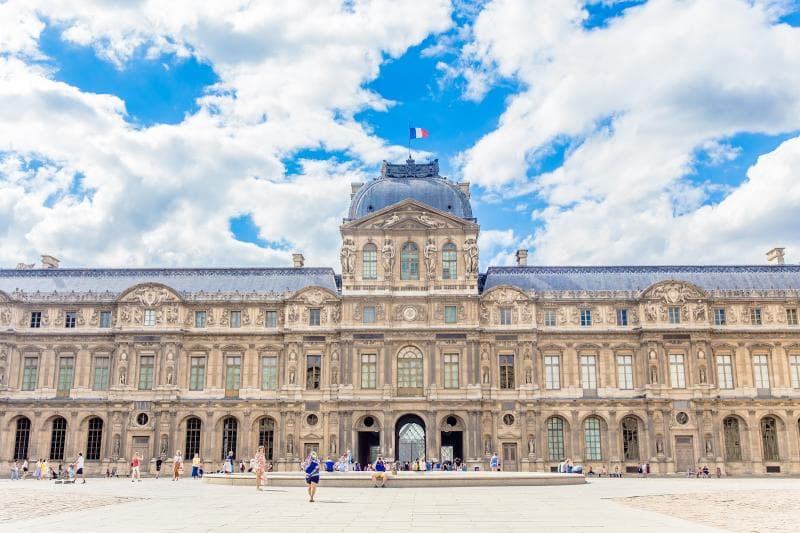
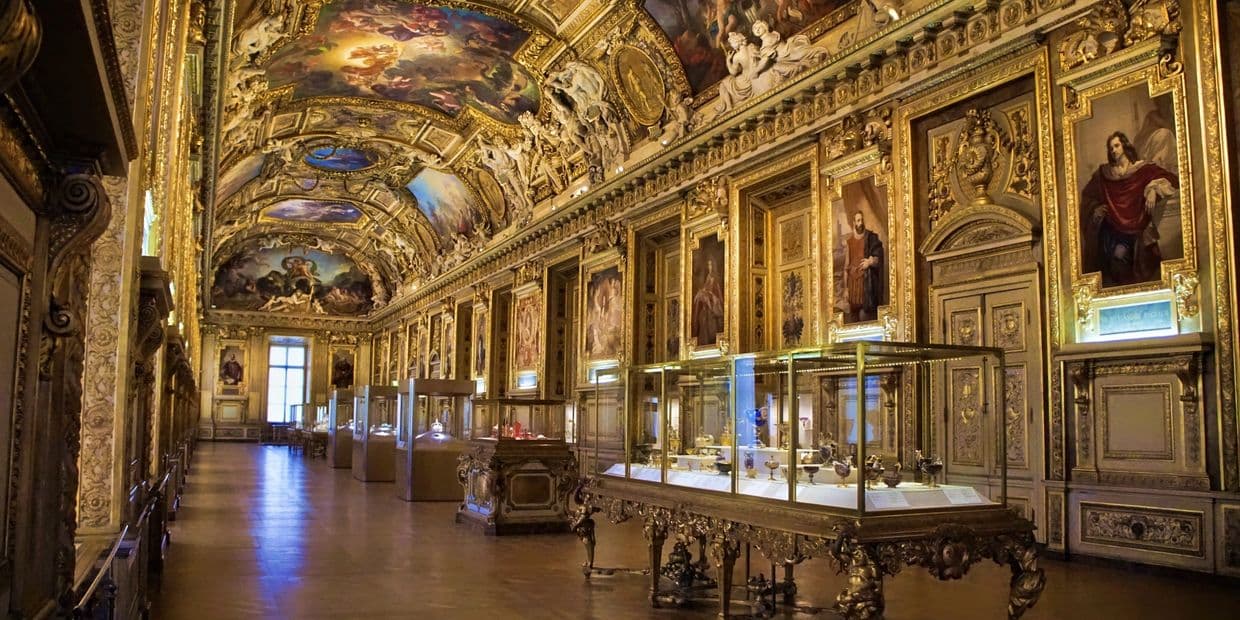
Explore the opulent Galerie d’Apollon in the Louvre Museum, Paris, France. Discover its Baroque art, royal history, and dazzling French Crown Jewels.
Overview
Deep within the illustrious Louvre Museum in Paris, France, lies the breathtaking Galerie d’Apollon, a chamber of unparalleled Baroque splendor. This magnificent gallery, often celebrated as a masterpiece in its own right, captivates visitors with its opulent decorations, gilded surfaces, and grand scale. It's a key highlight for those exploring the Louvre, not only for its artistic grandeur but also for its historical significance as a display space for the French Crown Jewels. Designed to impress and inspire, the Galerie d’Apollon offers a vivid journey into the heart of French royal artistry and power.
History & Cultural Background
The story of the Galerie d’Apollon begins in the 17th century, under the ambitious reign of King Louis XIV, often known as the Sun King. A fire in February 1661 tragically destroyed the Petite Galerie, a previous iteration of the space. Louis XIV, then only 23, seized this disaster as an opportunity to create something grander, commissioning architect Louis Le Vau and painter Charles Le Brun to rebuild and adorn the gallery. Le Brun was tasked with the immense decorative program, conceiving a theme centered around Apollo, the Greek god of the sun, light, and arts. This allegorical choice was a direct nod to Louis XIV's own identity as the 'Sun King,' symbolizing his power, order, and good government.
While Le Brun began the monumental task, he did not live to complete it, and the gallery remained unfinished for nearly two centuries after Louis XIV moved his court to Versailles. Various artists contributed to its embellishment over time. It was not until the mid-19th century, under the direction of architect Félix Duban, that the gallery saw its completion, with Eugène Delacroix painting the spectacular central ceiling depicting 'Apollo Slaying the Serpent Python' in 1850.
What Makes It Special
The Galerie d’Apollon stands as an exceptional example of Baroque artistry and a testament to French royal ambition. Its richly decorated ceiling, a canvas for mythological scenes, celebrates Apollo's journey across the sky, surrounded by symbolic representations of seasons, months, hours, and zodiac signs. The interplay of painted décor, stucco, and intricate gilding creates a visual symphony that prefigures the famed Hall of Mirrors at the Palace of Versailles, serving as its direct inspiration and model. The gallery's design, with its alternating architectural elements and sculptures by artists like François Girardon, showcases an extraordinary blend of different art forms.
Beyond its architectural and artistic merits, the Galerie d’Apollon gained additional prominence as the home for a significant portion of the French Crown Jewels. Since 1887, this magnificent setting has provided a dazzling backdrop for crowns, tiaras, and historic diamonds, including the famous Regent Diamond, making it a repository of both artistic and material wealth.
Stories, Fun Facts & Local Details
One of the most captivating aspects of the Galerie d’Apollon is its deep connection to the 'Sun King' Louis XIV. The entire decorative scheme was a carefully orchestrated political project, associating the monarch's power with the divine radiance of the sun god. The gallery's construction spanned over 200 years, highlighting the long-term dedication to its intricate design and the continuity of artistic patronage through different eras. Among the treasures it housed, the Regent Diamond is particularly notable. Once weighing 426 carats, it was cut down to a brilliant 140.64 carats and is considered one of the finest diamonds globally, having been fortunately excluded from an 1887 sale of most French Crown Jewels.
In October 2025, the gallery unfortunately experienced a jewel heist, where several items were stolen. Following this incident, the remaining Crown Jewels were temporarily removed for security and are planned for display in a more secure location within the museum, though visitors can still admire the gallery's inherent artistic grandeur.
Visitor Perspective
Stepping into the Galerie d’Apollon is an immersive experience. The sheer opulence and scale of the room can be overwhelming, yet deeply moving. Visitors are immediately enveloped by the shimmering gold, the intricate details of the frescoes, and the majestic ceiling that seems to narrate ancient myths. Even with the recent changes regarding the display of the Crown Jewels, the gallery itself remains a primary attraction, allowing travelers to walk through a space that once symbolized the pinnacle of royal power and artistic achievement. It’s a place where one can truly feel the echoes of history and appreciate the artistic ambition that shaped France. It is advisable to check the Louvre Museum's official website for the latest information on the gallery's opening status and specific exhibits, as sections of the museum can close periodically for maintenance or other reasons.
Coordinates: 2.337644, 48.860611
View on Google Maps💬 How Travelers Describe This Place
Based on community votes
Photogenic
931Unique
692Interesting
491Beautiful
261Must See
49
Traveler Stories
Discover memorable experiences shared by travelers who have visited this place.
No traveler stories yet.
Be the first traveler to share what made this place memorable.

Tour
By
Spot
Discover amazing places around the world. Your journey starts here.
Explore
© 2026 TourBySpot. All rights reserved.