Front Square
Dublin, Ireland
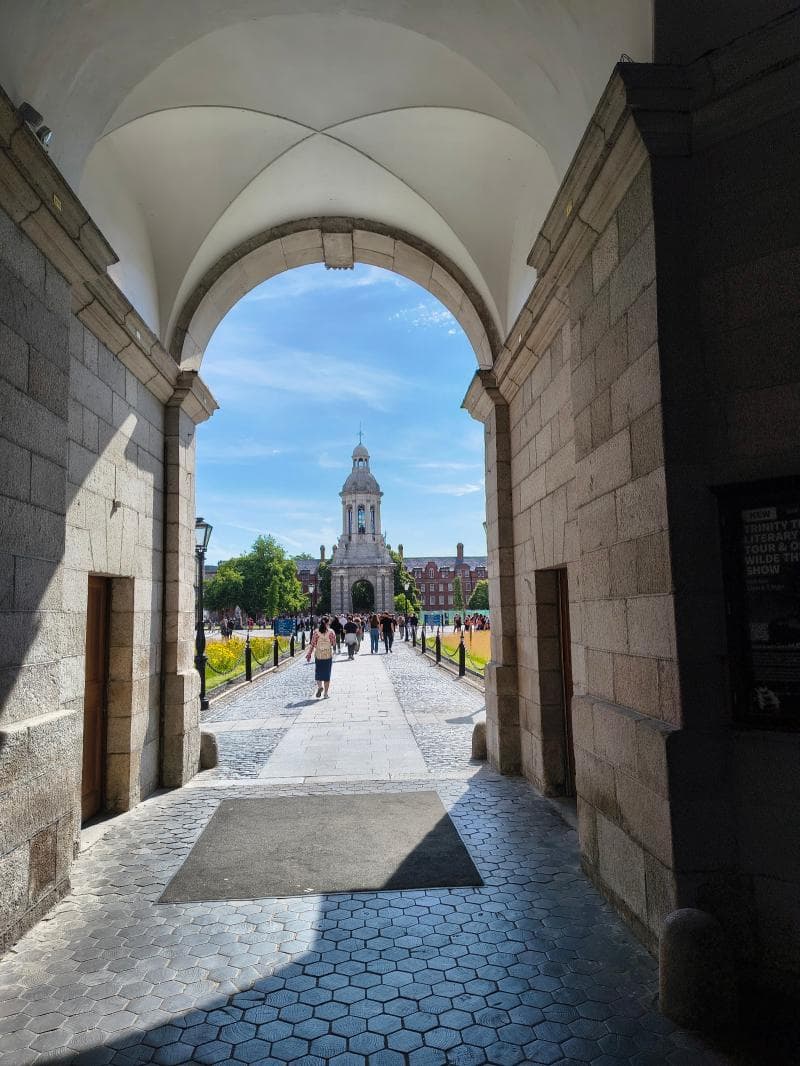
Explore Front Square, the historic heart of Trinity College Dublin, Ireland. Discover stunning neoclassical architecture, the iconic Campanile, and rich academic traditions in this tranquil oasis.
Overview
Front Square is the majestic gateway and ceremonial heart of Trinity College Dublin, a distinguished institution nestled in the vibrant capital of Ireland. As the primary entrance to the university, it serves as both a grand welcoming space and a bustling public forum. The square immediately captivates visitors with its harmonious blend of historic architecture and lively academic atmosphere. It is, in fact, an amalgamation of two distinct historical areas: Parliament Square and the beginning of what leads into Library Square, each contributing to its unique character. Dominated by stately 18th-century buildings, Front Square is where many of Trinity's compelling stories begin, inviting curious travellers to step into centuries of rich history and tradition.
Key landmarks framing this iconic space include the impressive Campanile, an elegant bell tower that acts as an architectural pivot and a central visual focus. Flanking the square are significant structures such as the Examination Hall and the Chapel, which stand in classical symmetry, along with the dignified Regent House, which overlooks the square. Front Square provides an immediate sense of the college's historic prestige, creating a tranquil oasis within the city's dynamic pace.
History & Cultural Background
Trinity College Dublin was founded in 1592 by royal charter on the site of the former Augustinian Priory of All Hallows, establishing a tradition of scholarship that predates the university itself by centuries. The college's initial brick buildings, dating from the late 16th century, occupied only a small portion of what is now Front Square. The current architectural character of Front Square, particularly Parliament Square, is largely defined by the substantial building projects of the 18th century, showcasing an elegant neoclassical style. Notable structures like the Examination Hall, completed in 1786, and the Chapel, completed in 1798, were designed by Sir William Chambers and epitomize this period of architectural grandeur.
The iconic Campanile, a freestanding square-plan bell tower designed by Sir Charles Lanyon, was a later addition, completed between 1852 and 1854. Its construction was the culmination of earlier, unrealized plans for the central void in Front Square. This evolution reflects Trinity's continuous adaptation and growth, blending layers of history from its medieval monastic roots to its 18th-century neoclassical expansion and 19th-century embellishments, all while maintaining its status as a working university.
What Makes It Special
Front Square stands out as a special place due to its remarkable architectural coherence and its profound sense of enclosure, transporting visitors into a world distinct from the bustling Dublin streets outside. The symmetrical arrangement of its dignified facades, constructed primarily from granite and limestone, conveys the college's deep-rooted prestige and history. The presence of the Campanile, with its classical proportions and sculpted details, serves as an undeniable visual anchor and one of Dublin's most photographed landmarks.
The twin buildings of the Examination Hall and the Chapel, facing each other with identical neoclassical facades, create a striking sense of balance and order. These structures, along with the main entrance's Front Arch and Regent House above it, contribute to a powerful aesthetic that marries classical ideals with academic purpose. Front Square functions not merely as an architectural showpiece but as a vibrant public forum and the symbolic heart of academic life at Trinity College.
Stories, Fun Facts & Local Details
Front Square is rich with student folklore and historical anecdotes. Perhaps the most famous superstition concerns the Campanile: legend has it that any student who walks or stands beneath the bell tower when it rings will fail their impending exams. This tradition adds a playful, yet perhaps cautionary, layer to the tower's stately presence. The Campanile itself is adorned with figurative keystones depicting ancient Greek literary figures like Homer, Socrates, Plato, and Demosthenes, representing the traditional undergraduate education. Figures on plinths at the corners symbolize the faculties of Divinity, Science, Medicine, and Law, illustrating the breadth of academic pursuits within the university.
Another intriguing urban legend speaks of an underground wine cellar beneath Front Square, which some students supposedly gain entry to during the annual Trinity Ball. These stories, whether fact or fiction, highlight the vibrant student life and the deep sense of tradition that pervades this historic space. The very ground beneath Front Square holds history, as archaeological monitoring has revealed remains of the medieval Priory of All Hallows and 16th-century brick features from the early college, dating back to 1592.
Visitor Perspective
For visitors, entering Front Square through the Front Arch is an experience akin to stepping into another world. The transition from the bustling city streets to the ordered geometry and quiet grandeur of the square is immediate and profound, offering a sense of respite and historical immersion. The campus's outdoor areas, including Front Square, are generally free to enter, allowing everyone to explore its cobblestoned expanse and admire the Georgian facades at their leisure.
Walking through Front Square offers the chance to trace the paths of famous past students and scholars, soaking up the atmosphere that has inspired countless minds over centuries. Guided tours, often led by students, offer engaging insights into the history, architecture, and hidden stories of the square and the wider college, providing a truly human perspective on this esteemed institution. While the Old Library and the Book of Kells are major draws, the sheer beauty and historical weight of Front Square itself make it an essential and memorable part of any visit to Trinity College Dublin.
Coordinates: -6.254572, 53.343794
View on Google Maps💬 How Travelers Describe This Place
Based on community votes
Must See
896Photogenic
585Unique
550Interesting
56Beautiful
28
Traveler Stories
Discover memorable experiences shared by travelers who have visited this place.
No traveler stories yet.
Be the first traveler to share what made this place memorable.

Tour
By
Spot
Discover amazing places around the world. Your journey starts here.
Explore
© 2026 TourBySpot. All rights reserved.