Front Hall
Hanoi, Vietnam
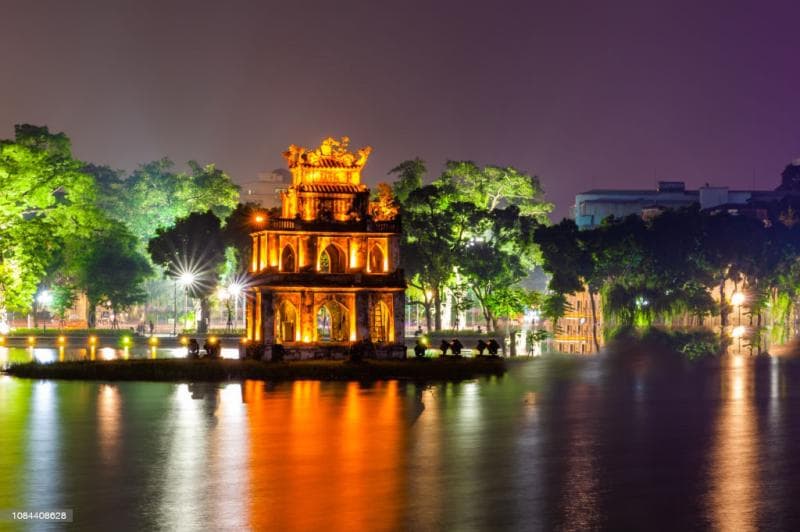
Explore the historic Front Hall (Tien Duong) of Tran Quoc Pagoda, Hanoi, Vietnam. Discover its ancient architecture, revered statues, and cultural significance.
Overview
The Front Hall, known as Tien Duong (Tiền Đường) in Vietnamese, serves as the primary entrance and an essential ceremonial space within the historic Tran Quoc Pagoda in Hanoi, Vietnam. Nestled gracefully on a small islet in West Lake, the pagoda itself is recognized as the oldest Buddhist temple in Hanoi, boasting over 1,500 years of history. The Front Hall welcomes visitors into this sacred complex, setting the tone for the spiritual journey ahead with its traditional Vietnamese architectural charm.
Constructed with striking red-tiled roofs, robust wooden pillars, and intricate carvings, the Front Hall reflects the exquisite craftsmanship of ancient Vietnamese builders. It is a vital area where Buddhist rituals and ceremonies are regularly observed, fostering a serene and reverent atmosphere for both worshippers and curious travelers. Positioned strategically, it seamlessly connects to other significant structures within the pagoda, such as the Incense Burning House and the Upper House, forming a harmonious architectural ensemble.
History & Cultural Background
The history of Tran Quoc Pagoda, and by extension its integral Front Hall, stretches back to the 6th century. It was originally built in 541 during the Early Ly Dynasty, initially named Khai Quoc Pagoda, meaning 'National Founding'. The pagoda was first located along the Red River, but due to erosion, it was relocated in 1615 to its current peaceful setting on Kim Ngu Islet in West Lake.
Its current name, Tran Quoc, meaning 'defending the nation', was bestowed during the reign of King Le Hy Tong (1681-1705), signifying the temple's enduring role in safeguarding the country and promoting peace. Over centuries, the pagoda has undergone several renovations, including a significant restoration in 1815, yet it has consistently preserved its ancient atmosphere and traditional architectural style. Recognized as a National Historical and Cultural Monument in 1989, Tran Quoc Pagoda, with its prominent Front Hall, stands as a profound symbol of Vietnamese Buddhism and cultural heritage.
What Makes It Special
The Front Hall distinguishes itself as a dynamic space where the spiritual heart of Tran Quoc Pagoda beats. It is not merely an entrance but a vibrant center for Buddhist rituals and ceremonies, creating a deeply spiritual ambiance for all who enter. The hall is home to a collection of unique and valuable statues, notably the revered statue of Buddha Shakyamuni in Nirvana, often referred to as the Reclining Buddha.
This particular statue, crafted from wood with glossy golden paint, is celebrated as one of the most beautiful examples of Buddhist sculpture in Vietnam. Its intricate details showcase the extraordinary artistry and profound spiritual devotion of past generations. Beyond this masterpiece, the Front Hall also houses many other shimmering bronze statues, contributing to its significance as a small museum of priceless ancient artifacts. The architectural layout, featuring layers of buildings including the Front Hall, Incense Burning House, and Upper Hall, often forms a 'Công' (工) shape, embodying harmony and traditional Buddhist principles.
Stories, Fun Facts & Local Details
Visiting the Front Hall of Tran Quoc Pagoda offers more than just sightseeing; it provides a glimpse into centuries of tradition and belief. The Incense Burning House (Nha Thieu Huong), seamlessly connected to the Front Hall, is where worshippers light incense as offerings of respect and spiritual devotion. The pervasive scent of incense contributes to the temple's tranquil and meditative atmosphere, inviting a deeper connection to the spiritual essence of the pagoda.
Historically, the pagoda, including its main halls, was a favored destination for Vietnamese kings and royal families during important festivals, full moon days, and Tet (Lunar New Year) celebrations. This royal patronage underscores the pagoda's long-standing importance and sacred status within Vietnamese society. It is said that the statue of Shakyamuni Buddha in Nirvana found here embodies transcendence, serenity, and the pursuit of inner peace, deeply resonant with Buddhist teachings. The pagoda's location on West Lake, surrounded by greenery, makes it an exceptionally picturesque setting, especially during sunrise and sunset.
Visitor Perspective
As you approach Tran Quoc Pagoda, the Front Hall (Tien Duong) is your gateway to this ancient sanctuary. To fully appreciate the spiritual ambiance and show respect, visitors are advised to dress modestly and respectfully, ensuring shoulders and knees are covered. It is also customary to remove hats, umbrellas, and shoes before entering the shrine areas, a gesture of reverence in Buddhist practice.
The pagoda is open daily, generally from morning until late afternoon, with entrance being free of charge, though donations are welcome. For a more peaceful and contemplative experience, it is recommended to visit early on weekday mornings, as the pagoda can become quite busy, particularly on the first and fifteenth days of the lunar month when many locals come to pray. A visit to the Front Hall offers a tranquil retreat and a meaningful immersion into Hanoi's rich spiritual and cultural heritage.
Coordinates: 105.83678862448232, 21.047842527417696
View on Google Maps💬 How Travelers Describe This Place
Based on community votes
Beautiful
831Photogenic
685Interesting
433Must See
232Unique
211
Traveler Stories
Discover memorable experiences shared by travelers who have visited this place.
No traveler stories yet.
Be the first traveler to share what made this place memorable.

Tour
By
Spot
Discover amazing places around the world. Your journey starts here.
Explore
© 2026 TourBySpot. All rights reserved.