French Paintings
Copenhagen, Denmark
Explore the French Paintings at Ny Carlsberg Glyptotek in Copenhagen, Denmark. Discover Impressionist & Post-Impressionist masterpieces by Monet, Degas, Gauguin, and Van Gogh.
Overview
The French Paintings collection at the Ny Carlsberg Glyptotek in Copenhagen, Denmark, offers a captivating journey into 19th-century French art. This esteemed collection is a testament to the passionate vision of its founder, Carl Jacobsen, the son of the founder of Carlsberg Breweries, who began acquiring French artworks in 1878. Housed within the architecturally stunning Glyptotek, the collection provides a comprehensive look at the artistic revolutions that swept through France, particularly focusing on the pre-Impressionist, Impressionist, and Post-Impressionist movements. It presents an intimate dialogue with masterpieces that shaped modern art, from contemplative landscapes to vibrant depictions of Parisian life. Visitors can immerse themselves in a thoughtfully curated environment where the legacy of French artistic innovation is preserved and celebrated.
History & Cultural Background
The genesis of the French Paintings collection is inextricably linked to Carl Jacobsen (1842-1914), a Danish industrial magnate and one of Denmark's most significant art patrons. Jacobsen's deep admiration for contemporary French artists began in the late 19th century, influencing the development of taste for French art in Denmark. He was particularly fascinated by the works he encountered at annual exhibitions in Paris. His first French acquisition, 'La Musique' by E. Delaplanche, was made in 1878. From that point, his collection grew steadily.
The Ny Carlsberg Glyptotek itself opened its doors in 1897, primarily to house Jacobsen's burgeoning 'modern collection,' which included both French and Danish works. The period of 1800-1925 in France was marked by significant political upheaval and artistic conflict, as artists moved away from strict academic traditions towards more realistic and expressive forms. The collection powerfully reflects this era of profound change, showcasing the shift from Salon-approved art to the revolutionary techniques and philosophies of the avant-garde. Jacobsen's commitment ensured that these pivotal moments in art history found a permanent home in Copenhagen.
What Makes It Special
What sets the French Paintings collection apart is its remarkable breadth and depth, capturing the essence of a transformative period in art. It features an extensive array of works by pioneering Impressionist and Post-Impressionist masters. Visitors will encounter iconic names such as Claude Monet, Camille Pissarro, Pierre-Auguste Renoir, Edgar Degas, Paul Cézanne, Vincent van Gogh, Henri de Toulouse-Lautrec, and Pierre Bonnard. The collection also includes earlier influential artists like Camille Corot, Gustave Courbet, and Édouard Manet, who challenged academic norms and paved the way for Impressionism.
A particular highlight is the exceptional representation of Paul Gauguin, with over 40 works spanning paintings, ceramics, woodcarvings, and drawings, offering an unparalleled insight into his diverse artistic practice. Furthermore, the Glyptotek boasts a complete collection of Edgar Degas's bronze sculptures, cast from his original wax figures. These unique sculptures, which Degas used to meticulously study human and animal movement, provide a rare glimpse into the artist's creative process and his fascination with form and motion. The collection not only showcases masterpieces but also includes minor works and sketches, revealing the technical experiments that defined this innovative period.
Stories, Fun Facts & Local Details
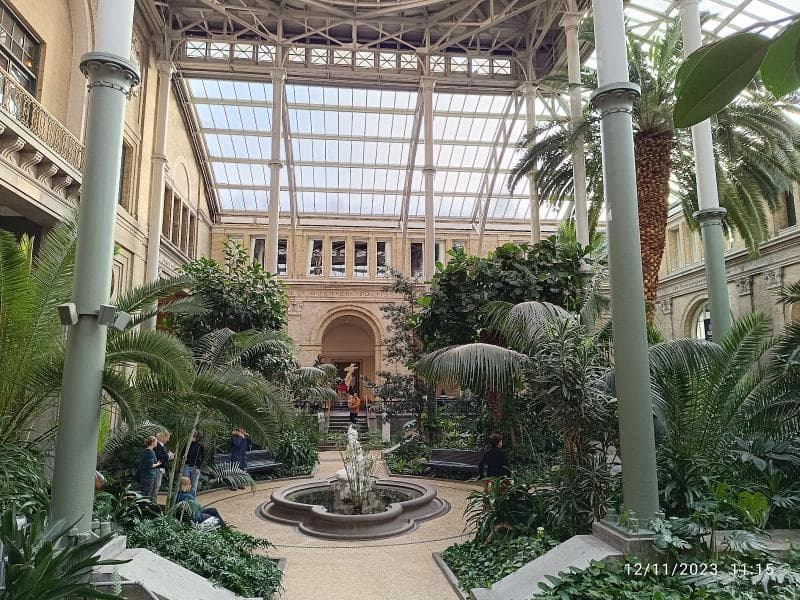
Carl Jacobsen's passion for French art was so profound that it profoundly shaped his vision for the Glyptotek. He believed in the educational role of art, aiming to spread moral and political messages through public exhibitions. His personal touch is evident throughout the museum, which incorporates a magnificent Winter Garden, a serene space where art and nature converge under a wrought-iron dome and towering palm trees. This garden often hosts significant sculptures, setting a unique atmosphere for viewing the surrounding collections.
One fascinating detail is the museum's acquisition of a lithograph from Gauguin's 'Volpini Suite,' opening a new chapter in its already world-renowned Gauguin collection and showcasing a lesser-known aspect of the artist's graphic work. The museum's dedication to preserving and presenting the complete set of Degas's bronze sculptures underscores its commitment to comprehensive artistic representation. These bronzes, originally considered mere 'practice pieces' by Degas, were posthumously cast and now offer invaluable insights into his artistic journey. The Glyptotek's careful curation invites visitors to not just observe art but to engage with the stories behind the artworks and their collectors.
Visitor Perspective
Visiting the French Paintings collection within the Ny Carlsberg Glyptotek is an experience designed for immersive contemplation. The galleries are arranged to allow a pleasurable stroll through one of art history's most radical periods, presented in a clear and accessible manner. While the museum is renowned for its extensive collection of ancient sculptures, the French paintings hold their own as a powerful draw, captivating audiences with their vibrant colors, innovative techniques, and profound narratives. The exhibition spaces are modern, with light-colored walls that ensure the focus remains squarely on the artworks.
Expect to spend ample time wandering through rooms filled with masterpieces that chronicle the shift from academic rigor to the dynamic freedom of Impressionism and the introspective depth of Post-Impressionism. The thoughtfully organized display encourages visitors to discover connections between different artists and movements. Whether you are an art historian or a curious traveler, the collection offers a rich and compelling narrative about the inventiveness and intensity of late 19th and early 20th-century French art. The quiet repose and active contemplation afforded by the Glyptotek's unique blend of art and architecture make it a truly special destination in Copenhagen.
Coordinates: 12.5698, 55.6702
View on Google Maps💬 How Travelers Describe This Place
Based on community votes
Interesting
996Must See
658Unique
585Photogenic
143Beautiful
69
Traveler Stories
Discover memorable experiences shared by travelers who have visited this place.
No traveler stories yet.
Be the first traveler to share what made this place memorable.

Tour
By
Spot
Discover amazing places around the world. Your journey starts here.
Explore
© 2026 TourBySpot. All rights reserved.