Frederik VIII Palace
Copenhagen, Denmark
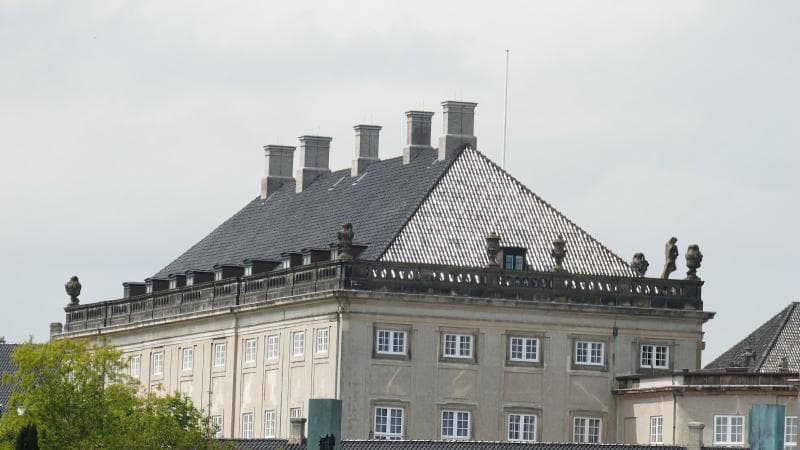
Discover Frederik VIII's Palace, the private residence of King Frederik X and Queen Mary within Amalienborg Palace in Copenhagen, Denmark.
Overview
Nestled within the iconic Amalienborg Palace complex in Copenhagen, Denmark, Frederik VIII's Palace stands as a testament to royal history and contemporary Danish monarchy. Also historically known as Brockdorff's Palace, this distinguished building is one of four identical Rococo-style palaces that frame the majestic octagonal Amalienborg courtyard. Today, it serves as the official private residence for His Majesty King Frederik X and Her Majesty Queen Mary and their children, making it a vibrant center of royal life in the Danish capital.
Amalienborg, recognized as the Royal Family's winter residence, is a masterpiece of Danish architecture and an important cultural landmark. While the palace itself is not generally accessible to the public, its presence defines a significant part of Copenhagen's royal quarter, offering a glimpse into the traditions of one of the world's oldest monarchies.
History & Cultural Background
The story of Frederik VIII's Palace begins in the mid-18th century, when the Amalienborg complex was conceived as part of the grand Frederiksstaden district by King Frederik V. Construction of what would become Frederik VIII's Palace took place between 1750 and 1760, originally commissioned for Baron Joachim Brockdorff, hence its initial name, Brockdorff's Palace.
After Brockdorff's passing in 1763, the palace changed hands, eventually being acquired by King Frederik V. From 1767 to 1827, it served a different purpose entirely, housing the prestigious Royal Danish Military Academy, also known as the Army Cadet Academy. A pivotal moment in its history occurred in 1794 when Christiansborg Palace, the then-royal residence, was destroyed by fire. This event led the royal family to acquire the Amalienborg palaces, transforming them into their new permanent home.
Frederik VIII's Palace underwent a significant refurbishment in the French Empire style between 1827 and 1828, led by architect Jørgen Hansen Koch, preparing it for its future royal inhabitants. Throughout the years, it accommodated various members of the royal family, including Crown Prince Frederik (IX) and Princess Ingrid.
What Makes It Special
What truly sets Frederik VIII's Palace apart is its dual role: a historical monument steeped in Rococo elegance and a dynamic, living royal home. It represents a unique blend of historical preservation and modern functionality, a characteristic highlighted by its extensive renovations completed in 2010.
These renovations, which began around 2004, meticulously brought the palace up to contemporary standards while honoring its rich architectural heritage. This transformation ensured that the palace could serve as a fitting private residence for the then-Crown Prince Frederik and Crown Princess Mary, equipped with both private living spaces and facilities for administrative and ceremonial duties.
While Amalienborg comprises four distinct palaces, Frederik VIII's Palace is distinguished by its direct association with the reigning monarch, symbolizing the continuity and evolution of the Danish monarchy. Unlike Christian VIII's Palace, which houses the Amalienborg Museum and is open to the public, Frederik VIII's Palace maintains its privacy as an active royal residence.
Stories, Fun Facts & Local Details
Frederik VIII's Palace holds many layers of history and personal narratives. Before its comprehensive renovation, it briefly housed a small kindergarten and classroom for the current King Frederik X (then Crown Prince) and his brother, HRH Prince Joachim, in the early 1970s, offering a charming insight into the palace's less formal past.
The palace's original name, Brockdorff's Palace, links it directly to Baron Joachim Brockdorff, for whom it was initially built. Interestingly, the overall Amalienborg complex was designed by the court architect Nicolai Eigtved, whose vision united the four palaces into a cohesive Rococo masterpiece. Although the interiors differ, the exteriors of the four palaces appear identical, contributing to the harmonious aesthetic of the palace square.
The palace is owned by the Danish state and managed by the Palaces and Properties Agency, reflecting its status as a national treasure. While visitors cannot enter Frederik VIII's Palace, the daily Changing of the Guard ceremony in the Amalienborg square offers a captivating spectacle, connecting the public with the royal tradition that continues to thrive within these historic walls.
Visitor Perspective
For the curious traveler researching Copenhagen's royal attractions, Frederik VIII's Palace offers an external experience of grandeur and historical significance. As the private residence of King Frederik X and Queen Mary, it is not open for public tours. However, its prominent position within the Amalienborg Palace square makes it an integral part of any visit to the area.
Visitors can immerse themselves in the regal atmosphere by walking around the octagonal courtyard, appreciating the palace's elegant Rococo architecture from the outside. The highlight for many is witnessing the traditional Changing of the Royal Guard, which takes place daily at noon in the square. This ceremony provides a direct, albeit visual, connection to the living monarchy that resides within Frederik VIII's Palace.
For a deeper dive into royal history and to experience the interiors of one of the Amalienborg palaces, the Amalienborg Museum, located in the neighboring Christian VIII's Palace, is highly recommended. Here, you can explore royal collections and learn more about the Danish royal family's past, providing context and appreciation for the private and public lives lived within the walls of Amalienborg.
Coordinates: 12.59, 55.6838
View on Google Maps💬 How Travelers Describe This Place
Based on community votes
Must See
852Photogenic
665Interesting
645Unique
244Beautiful
80
Traveler Stories
Discover memorable experiences shared by travelers who have visited this place.
No traveler stories yet.
Be the first traveler to share what made this place memorable.

Tour
By
Spot
Discover amazing places around the world. Your journey starts here.
Explore
© 2026 TourBySpot. All rights reserved.