Fram Polar Ship
Oslo, Norway
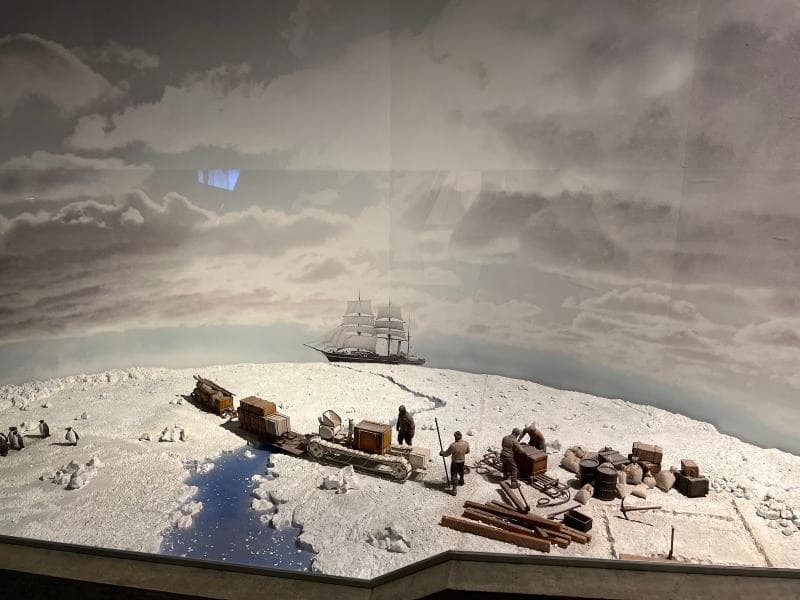
Discover the Fram Polar Ship in Oslo, Norway, the strongest wooden vessel that sailed farthest north and south. Explore its history and epic polar expeditions.
Overview
Within the modern confines of the Fram Museum in Oslo, Norway, rests the legendary Fram Polar Ship, an unparalleled testament to human ingenuity and the enduring spirit of exploration. Hailed as the strongest wooden ship ever built, Fram holds the unique distinction of having sailed both the farthest north and the farthest south of any vessel in history, etching its name indelibly in the annals of polar exploration. This meticulously preserved ship serves as the centerpiece of a museum dedicated to Norway's heroic age of discovery, offering visitors a profound journey into the past.
History & Cultural Background
The story of the Fram begins with the visionary Norwegian explorer Fridtjof Nansen. Convinced that an east-west current traversed the Arctic Ocean, Nansen conceived a revolutionary plan: instead of fighting the ice, he would design a ship to drift with it, carrying him towards the North Pole. To realize this bold ambition, Nansen commissioned the Scottish-Norwegian shipbuilder Colin Archer. The result was the Fram, launched on October 26, 1892, a vessel unlike any before it. Its distinctive rounded hull was specifically engineered to rise above the crushing pressure of pack ice, rather than be squeezed and destroyed.
Fram embarked on three monumental expeditions, each pushing the boundaries of known geography. Its maiden voyage, Nansen's Arctic expedition from 1893 to 1896, saw the ship intentionally frozen into the Arctic ice, drifting for three years and validating Nansen's scientific theory. During this journey, Nansen and Hjalmar Johansen famously left the ship to attempt a sledge journey towards the North Pole, reaching a record 86°14′ N. From 1898 to 1902, under the command of Otto Sverdrup, Fram undertook a comprehensive scientific expedition to the Canadian Arctic Archipelago, mapping vast previously unknown lands and discovering numerous islands. Finally, in a dramatic and secretive turn, Roald Amundsen utilized the Fram for his historic race to the South Pole between 1910 and 1912. During this audacious journey, the Fram reached an astonishing 78°41' S, further solidifying its legendary status.
What Makes It Special
The Fram's extraordinary success lies in its radical design. Colin Archer's innovative construction featured a hull crafted from durable greenheart wood, an unusually wide beam for strength, a nearly flat keel, and retractable rudder and propeller to protect against ice damage. The ship was heavily insulated, creating a relatively comfortable home for the crew during prolonged periods in extreme cold, and even included a windmill to generate electricity for lighting. This combination of robust engineering and thoughtful amenities made Fram arguably the strongest wooden ship ever built. Beyond its structural prowess, Fram's unique capability to drift with and survive the ice allowed for unprecedented scientific observations, providing crucial oceanographic data and dispelling myths about the Arctic. Its unparalleled achievement of reaching both the most northerly and most southerly latitudes makes it a singular artifact in the history of exploration.
Stories, Fun Facts & Local Details
The name 'Fram' itself, meaning 'Forward' in Norwegian, perfectly encapsulates the spirit of the ship and its daring voyages. The expeditions aboard Fram were fraught with challenges, from the bone-chilling cold to the immense psychological toll of isolation. During Nansen's Arctic drift, the ship endured incredible pressure, once becoming so critical that the crew prepared to abandon ship. Amundsen's use of Fram for the South Pole expedition was shrouded in secrecy; he famously misled even his own crew about the destination until they had departed Madeira, shifting the original Arctic plan to Antarctica to beat his rivals. The ship's survival after its active service is a testament to national pride. After years of neglect and decay, a tireless campaign led by Otto Sverdrup in the 1920s garnered public support and funds, culminating in the ship's restoration and the opening of the Fram Museum in 1936. This monumental effort saved a national treasure for future generations.
Visitor Perspective
Today, stepping aboard the Fram Polar Ship within the Fram Museum is an incredibly immersive and tangible experience. Visitors are invited to explore the ship's original interior, walking through the crew's cabins, the cargo hold, the galley, and the engine room, gaining a vivid sense of life during these epic voyages. The museum enhances this journey with captivating exhibits, including a dramatic 270-degree panoramic film projected around the ship that recreates the sounds and sights of a polar storm, making you feel the drama of the Arctic. Interactive displays, lifelike mannequins, and audio-visual presentations further bring the explorers' stories to life. Beyond the Fram, the museum houses other significant artifacts, including the Gjøa (the first ship to navigate the Northwest Passage) and offers exciting attractions like a 4D polar flight simulator, new in 2025, providing a multi-sensory adventure through polar history. Located on the scenic Bygdøy peninsula, the museum is easily accessible from central Oslo, making it an essential stop for any curious traveler.
Coordinates: 10.6995, 59.9033
View on Google Maps💬 How Travelers Describe This Place
Based on community votes
Interesting
494Must See
242Photogenic
193Unique
125Beautiful
82
Traveler Stories
Discover memorable experiences shared by travelers who have visited this place.
No traveler stories yet.
Be the first traveler to share what made this place memorable.

Tour
By
Spot
Discover amazing places around the world. Your journey starts here.
Explore
© 2026 TourBySpot. All rights reserved.