Fossil Collection
Frankfurt, Germany
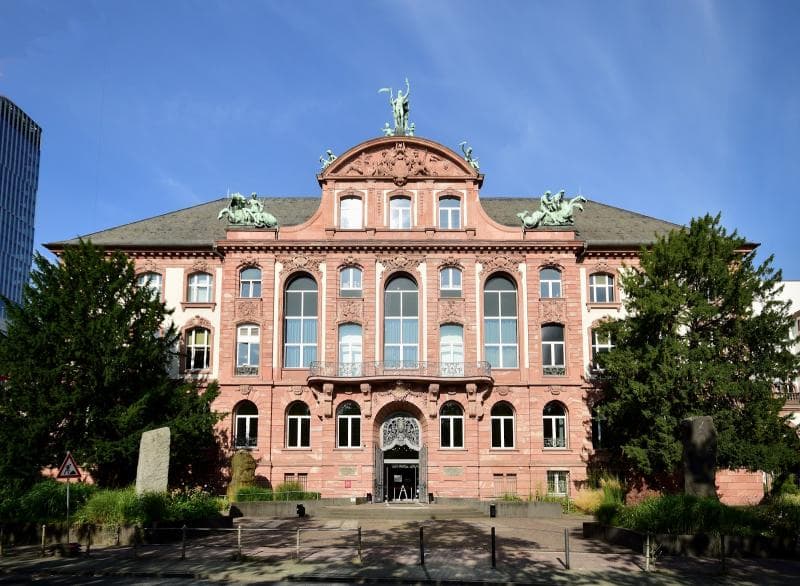
Explore the Senckenberg Natural History Museum's Fossil Collection in Frankfurt, Germany, featuring dinosaurs like Edmontosaurus and Messel Pit treasures.
Overview
Deep within the Senckenberg Natural History Museum in Frankfurt, Germany, lies the truly remarkable Fossil Collection, a treasure trove for anyone fascinated by Earth's ancient past. As one of Germany's largest and most significant natural history museums, the Senckenberg Museum dedicates substantial space to unveiling the mysteries held within fossilized remains. It's a place where millions of years of evolutionary history are preserved and presented, designed to connect groundbreaking scientific research with an eager public. The collection encompasses a vast array of paleontological findings, offering a comprehensive journey through various geological periods and the incredible life forms that once roamed, swam, or flew across our planet.
History & Cultural Background
The roots of the Senckenberg Natural History Museum stretch back to 1817, when the Senckenberg Nature Research Society was established. Named after the philanthropic physician Johann Christian Senckenberg, the society's initial mission was to champion natural sciences through dedicated research, public education, and community engagement. The museum itself officially opened its doors in 1821, though the impressive building that houses the main collections today was constructed between 1904 and 1907.
Over the decades, the museum's collections grew exponentially, fueled by extensive fieldwork, generous donations, and strategic acquisitions. A pivotal moment in its history was the inauguration of the current building in 1907, marked by the astonishing donation of an original skeleton of Diplodocus longus. This magnificent creature became the first complete dinosaur skeleton displayed at the Senckenberg Natural History Museum and an immediate crowd-pleaser. Today, the Senckenberg Nature Research Society oversees an astounding 38 million objects across its various collections worldwide, underpinning its critical role in documenting zoological, botanical, and geological developments.
What Makes It Special
The Senckenberg Fossil Collection stands out for its sheer scale and the exceptional quality of its exhibits. It proudly hosts one of the largest collections of large dinosaur skeletons in Europe, a truly awe-inspiring sight for any visitor. Among its star attractions is the towering Diplodocus, the formidable Allosaurus, and the agile Velociraptor. The museum also features a formidable T-Rex, a robust Stegosaurus, and a colossal Plateosaurus. Perhaps the most iconic is the Triceratops, represented by multiple original skulls, including one that is nearly complete and an imposing reconstruction of a full skeleton.
Another unparalleled exhibit is the virtually complete original skeleton of an Edmontosaurus, a dinosaur so rare that its fossilized skin structure has been preserved. This specimen is considered among the most important dinosaur fossils globally, offering unique insights into the appearance of these ancient reptiles. The museum also boasts an extensive array of fossils from the nearby UNESCO World Heritage site, the Messel Pit. This 'petrified ecosystem', dating back 47 million years, reveals an incredible diversity of life, including exquisitely preserved early horses – some even with fetuses still inside pregnant mares. Visitors can marvel at a fossilized Psittacosaurus, which remarkably displays clear bristles around its tail and fossilized stomach contents, providing rare clues about dinosaur coloration and diet. The museum is meticulous in distinguishing between original fossils and high-quality casts, ensuring visitors appreciate the authenticity of its many genuine specimens.
Stories, Fun Facts & Local Details
The very existence of the Senckenberg Society and, by extension, its museum, can be traced back to a rather 'macabre scandal'. In 1817, a rare black seal died at the Frankfurt Fair, and its carcass was left to rot, much to the outrage of local nature enthusiasts. This incident galvanized citizens to establish an institution dedicated to protecting and caring for such precious specimens, laying the groundwork for the museum. Even the renowned writer Johann Wolfgang von Goethe reportedly lamented the lack of scientific progress in Frankfurt in 1815, a sentiment that further spurred the society's creation.
The Triceratops has become an unofficial symbol or mascot for the Senckenberg Museum, its three horns greeting countless visitors. A fascinating detail about the rare Edmontosaurus mummy is its apparently cramped posture, which suggests the dinosaur was naturally mummified before being enveloped by sandy sediments, allowing its skin to be preserved as a fossilized impression. For the curious and the young, interactive exhibits provide memorable experiences, such as the chance to 'walk in the footsteps of a dinosaur'. The museum's 'Aha?! Science Lab' offers a hands-on experience, allowing visitors to examine natural objects, contribute to real research projects, and even engage directly with Senckenberg scientists.
Visitor Perspective
The Senckenberg Natural History Museum, particularly its Fossil Collection, is a beloved destination for visitors of all ages, though it holds a special charm for children. The sheer scale of the displays and the numerous interactive elements make for an engaging and educational experience. Each exhibit is carefully curated with detailed information, explaining the habitats, behaviors, and extinction theories surrounding the ancient creatures on display. The presentation style is both accessible and highly informative, ensuring that visitors can grasp the profound significance and historical context of the fossils before them. Many visitors naturally begin their journey in the grand dinosaur hall, where the imposing reconstructed skeletons evoke a powerful sense of awe and a deeper understanding of 'deep time' – the immense age of our planet. The museum's location, adjacent to the Goethe University's Bockenheim campus, also places it within a vibrant academic and cultural hub.
Coordinates: 8.651706198244318, 50.11770114712254
View on Google Maps💬 How Travelers Describe This Place
Based on community votes
Unique
791Interesting
514Beautiful
457Must See
252Photogenic
207
Traveler Stories
Discover memorable experiences shared by travelers who have visited this place.
No traveler stories yet.
Be the first traveler to share what made this place memorable.

Tour
By
Spot
Discover amazing places around the world. Your journey starts here.
Explore
© 2026 TourBySpot. All rights reserved.