Fortress Walls
Oslo, Norway
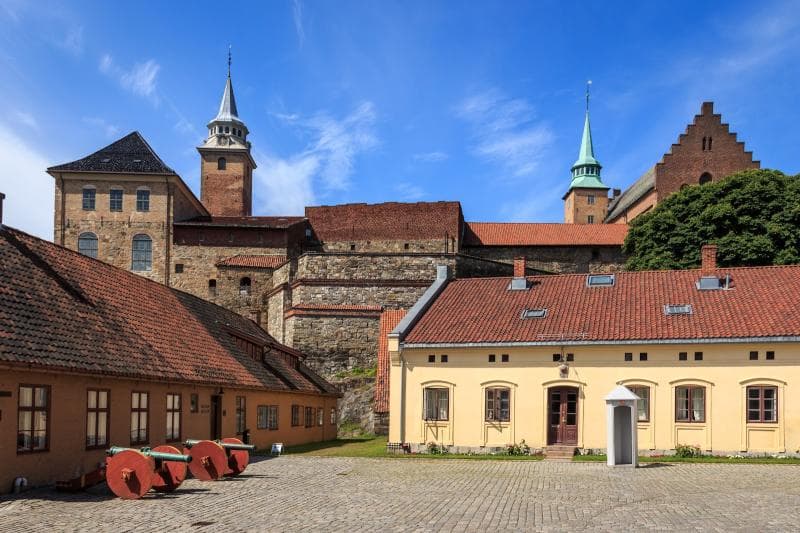
Explore the historic Fortress Walls of Akershus Fortress in Oslo, Norway. Discover centuries of history, stunning fjord views, and fascinating legends.
Overview
Perched majestically over the Oslofjord, the Fortress Walls of Akershus Fortress in Oslo, Norway, stand as a powerful testament to centuries of Norwegian history. This imposing medieval castle and stronghold, dating back to the late 13th century, offers visitors a unique journey through time, alongside breathtaking panoramic views of the city and its bustling harbour. While Akershus Fortress encompasses various buildings and museums, the perimeter walls and ramparts are the very foundation of its historical significance and continue to draw curious travellers from around the globe. The grounds, including these formidable walls, are freely accessible to the public, inviting exploration and quiet contemplation of its storied past.
History & Cultural Background
The construction of Akershus Fortress began around 1299 under King Haakon V, specifically to fortify Oslo against frequent attacks and to serve as a vital royal residence. This strategic location was crucial, positioning the fortress as the primary defense for the burgeoning city, particularly after it replaced Tønsberg as one of Norway's most important castles. The early years saw it evolve from a simple castle into a complex military installation through extensive expansions during the 14th and 15th centuries, with numerous towers, walls, and other fortifications added to bolster its defensive capabilities. Following a devastating fire in 1624, King Christian IV ordered the rebuilding of Oslo, then known as Christiania, closer to the fortress, and simultaneously transformed Akershus into a grand Renaissance castle with bastioned ramparts, changing its appearance dramatically. Remarkably, despite enduring multiple sieges throughout its long history, the fortress was never successfully captured by force, underscoring the effectiveness of its design and the resilience of its defenders. Beyond its defensive role, Akershus also served as a prison, with one notorious section referred to as 'The Slavery'. In more recent history, it was tragically occupied by Nazi Germany during World War II and became a site for the execution of Norwegian resistance members. Today, Akershus Fortress remains an active military area, housing the headquarters of the Norwegian Ministry of Defence.
What Makes It Special
The Fortress Walls of Akershus are more than just ancient stone; they are a living narrative of Norway's enduring spirit. Their exceptional strategic location, commanding the Oslofjord, provided unparalleled control over sea trade routes and naval defense, making the fortress a pivotal stronghold. This impregnable quality has cemented Akershus's status as a symbol of Norwegian resilience and strength, a fortress that stood unyielding through centuries of conflict. Walking atop these ramparts offers some of Oslo's most spectacular views, stretching across the city's rooftops, the dynamic harbour, and the serene fjord beyond. The fortress itself is a captivating architectural blend, representing a medieval castle, a Renaissance palace, and a contemporary military base all in one. Within its confines, the Royal Mausoleum serves as the revered burial place for several Norwegian monarchs, adding a layer of poignant cultural significance to this historic site.
Stories, Fun Facts & Local Details
Beyond the factual history, the Fortress Walls whisper tales that capture the imagination. It is said that Akershus Fortress was the real-life inspiration for Arendelle Castle in Disney's animated film 'Frozen'. Perhaps more chilling are the legends of its paranormal inhabitants. Akershus is widely considered one of Norway's most haunted places, with numerous reports of ghostly activity. Visitors and staff have recounted hearing whispers in dark corridors, the ominous rattling of chains, and even the appearance of spectral figures. Among the specific legends are the tormented spirit of Elsa, the wife of Governor Christen Munk, and a ghostly monk, believed to be a clergyman from the Reformation era. Another intriguing tale warns that spotting the spirit of a very large black dog portends a violent death. Historically, Knut's Tower, an original medieval section of the fortress walls, once held prisoners and later housed a horse-powered mill, its name linked to the tragic legend of Knut Alvssøn. Even the original main entrance to the castle was known evocatively as 'the dark passage'. Today, the beautiful green areas surrounding the walls serve as a popular recreational space for locals and visitors alike.
Visitor Perspective
Experiencing the Fortress Walls of Akershus is an essential part of any visit to Oslo. The great news for curious travellers is that the fortress grounds, including access to stroll along the ramparts and courtyards, are entirely free to enter. A relaxed circuit of these historic walls typically takes between 30 to 45 minutes, offering ample time to absorb the history and enjoy the stunning vistas. It's advisable to wear comfortable shoes, as the surfaces can be uneven with cobblestones, adding to the authentic medieval feel. For the best visual experience, consider visiting in the morning for calm, soft light, or in the late afternoon when the sun casts a golden glow over the fjord and city. Upon arrival, the Visitor Centre, located near the main gate, provides helpful maps and information to guide your exploration. Walking these walls allows you to stand where kings, soldiers, and citizens have stood for over 700 years, connecting you directly to Norway's rich and often dramatic past.
Coordinates: 10.735, 59.904
View on Google Maps💬 How Travelers Describe This Place
Based on community votes
Interesting
494Must See
242Photogenic
193Unique
125Beautiful
82
Traveler Stories
Discover memorable experiences shared by travelers who have visited this place.
No traveler stories yet.
Be the first traveler to share what made this place memorable.

Tour
By
Spot
Discover amazing places around the world. Your journey starts here.
Explore
© 2026 TourBySpot. All rights reserved.