Fortress Towers
Skopje, North Macedonia
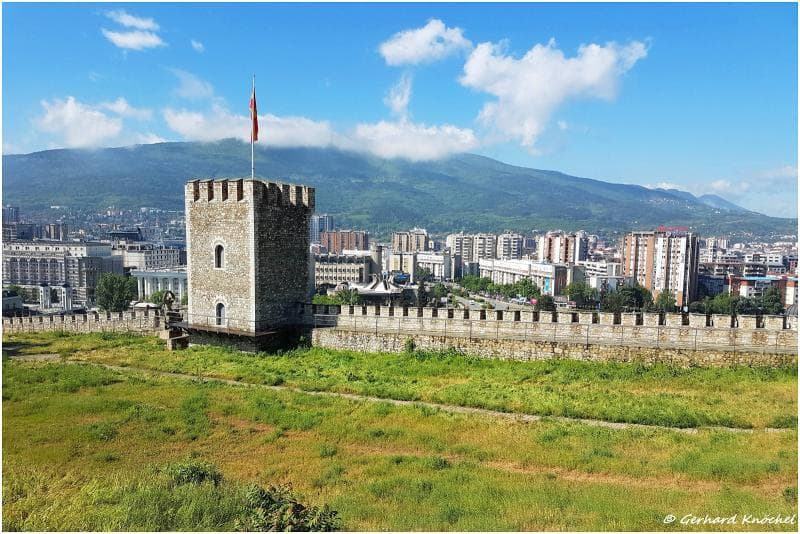
Explore the historic Fortress Towers within Skopje Fortress in Skopje, North Macedonia, offering panoramic city views and centuries of rich history.
Overview
Perched majestically on the highest point of Skopje, North Macedonia, the Skopje Fortress, affectionately known as Kale Fortress (from the Turkish word for 'fortress'), stands as a silent sentinel overseeing centuries of history. Within its ancient embrace, the Fortress Towers are more than mere architectural elements; they are enduring symbols of defense, resilience, and vantage points offering breathtaking panoramas of the city below and the Vardar River winding through it. These impressive structures, integral to the fortress's identity, encapsulate the layered past of a city that has seen the rise and fall of empires, each leaving its mark on the very stones of these formidable walls and towers.
History & Cultural Background
The history of Skopje Fortress and its towers stretches back to remarkably ancient times. Archaeological excavations indicate that the hill where the fortress stands has been continuously inhabited since the Neolithic and Bronze Ages, dating back to approximately 4000 BC. The earliest known fortress was constructed in the 6th century AD, under the reign of Byzantine Emperor Justinian I, utilizing robust yellow limestone and travertine, often salvaged from the ruins of the Roman city of Skupi, which had been devastated by a major earthquake in 518 AD. This initial construction laid the groundwork for the defensive structures, including its earliest towers, designed to guard against invaders. Over the centuries, the fortress underwent numerous reconstructions and expansions by various civilizations, including Byzantines, Bulgarians, Serbs, and Ottomans. Each era added new architectural layers, reflecting changing military strategies and cultural influences. For instance, in 1346, Stefan Dušan was crowned emperor within its walls, marking Skopje as the new capital of the Serbian Empire, highlighting the fortress's strategic importance. The towers evolved with these changes, adapting to new defensive needs and architectural styles, acting as watchtowers and strongholds throughout its turbulent history.
What Makes It Special
What truly sets the Fortress Towers apart within Kale Fortress is their profound role as silent witnesses to history and their strategic significance. More than just walls, the towers represent the evolution of defensive architecture over millennia. They stand as robust testaments to the craftsmanship of various periods, from the Byzantine era's meticulous stone masonry to later Ottoman additions. These towers offered commanding views of the surrounding valleys and river, crucial for spotting approaching armies and protecting the city's inhabitants. Exploring these towers allows visitors to literally step into the past, touching stones that have withstood earthquakes and countless sieges. The interplay of different construction materials, some bearing fragments of Latin inscriptions, tells a unique story of recycling and rebuilding throughout the ages. One prominent feature, sometimes referred to as Suleiman's Tower, is noted for its role as a strategic observation point, reflecting its importance during the Ottoman period.
Stories, Fun Facts & Local Details
The Fortress Towers are steeped in stories, echoing the lives of those who defended them. The Ottoman chronicler Evliya Çelebi, traveling through the region in 1660, described the fortress as 'a very strong and sturdy fortress with double walls', noting the exceptional refinement in its construction. This vivid account hints at the impressive stature of its towers in their prime. Historically, the fortress, including its towers, suffered significant damage during the devastating 1963 Skopje earthquake, which left many defensive structures in rubble. However, extensive reconstruction efforts, such as the restoration of the southwestern wall in 2010, have worked to preserve and highlight these crucial elements. A fun fact for locals and visitors alike is that the silhouette of Skopje Fortress, with its distinctive towers, is proudly depicted on the coat of arms of Skopje, further cementing its status as an iconic symbol of the city.
Visitor Perspective
For the curious traveler, visiting the Fortress Towers offers a unique and immersive experience. As you walk along the sturdy walls and ascend the restored towers, you're not just observing; you're connecting with the very essence of Skopje's past. From these elevated positions, the panoramic views are simply spectacular, encompassing the meandering Vardar River, the historic Old Bazaar, and the sprawling modern cityscape, with Mount Vodno rising in the distance. The open access and free entry allow for a leisurely exploration, encouraging visitors to take their time and soak in the historical atmosphere. While the fortress is an active archaeological site, and some areas may show signs of ongoing work, the opportunity to stand atop these ancient towers, feel the breeze, and gaze upon the city that they have guarded for centuries is a deeply meaningful and unforgettable part of any visit to Skopje.
Coordinates: 21.4344, 42
View on Google Maps💬 How Travelers Describe This Place
Based on community votes
Must See
996Unique
673Photogenic
186Beautiful
143Interesting
80
Traveler Stories
Discover memorable experiences shared by travelers who have visited this place.
No traveler stories yet.
Be the first traveler to share what made this place memorable.

Tour
By
Spot
Discover amazing places around the world. Your journey starts here.
Explore
© 2026 TourBySpot. All rights reserved.