Fortress Ruins
Yerevan, Armenia
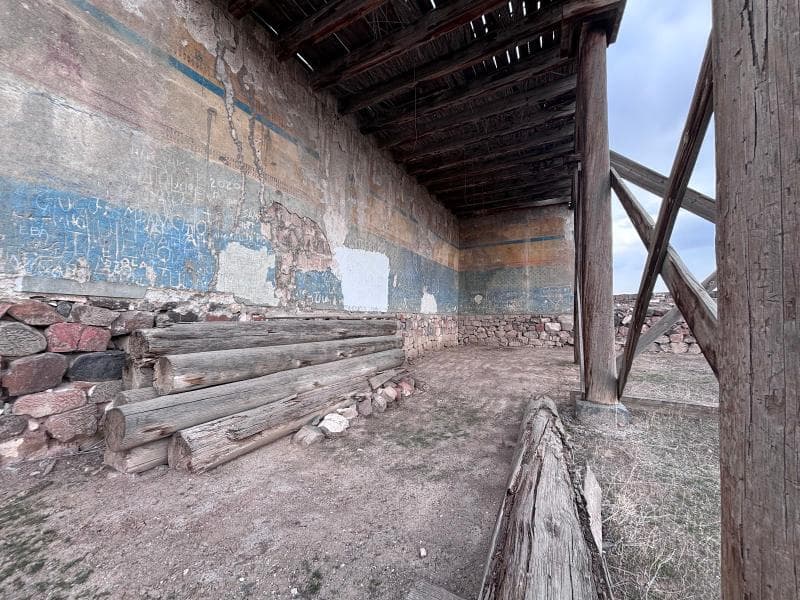
Explore Erebuni Fortress Ruins in Yerevan, Armenia – the 2,800-year-old Urartian citadel, birthplace of the capital, with ancient history and stunning views.
Overview
Perched atop Arin Berd hill in Yerevan, Armenia, the Fortress Ruins of Erebuni stand as a powerful testament to an ancient civilization. This archaeological site represents what was once the mighty Urartian fortified city of Erebuni, founded in 782 BCE by King Argishti I. Often referred to as the 'birth certificate' of modern-day Yerevan, its name is believed to be the origin of Armenia's capital. The ruins, consisting of extant foundations and lower walls, offer a unique glimpse into the sophisticated urban planning and military prowess of the Urartian Kingdom. Situated approximately 1,017 meters (3,337 feet) above sea level, the site commands panoramic views of the surrounding landscape, connecting visitors to millennia of history.
History & Cultural Background
Erebuni Fortress was strategically established by Urartian King Argishti I in 782 BCE, a remarkable 20 years before the founding of Rome. Its primary purpose was to consolidate Urartian power in the fertile Ararat Valley and serve as a formidable military stronghold guarding the kingdom's northern frontiers. The city's founding was proudly inscribed on cuneiform tablets, declaring its creation 'for the glory of Biainili (Urartu) and to instill fear among the king's enemies.' The fortress originally encompassed a triangular layout, featuring a grand palace, significant temples—including one dedicated to the supreme Urartian god Khaldi—extensive grain storehouses, and quarters for both guards and servants. Erebuni flourished as a vital political, economic, and cultural hub, particularly during the zenith of Urartian power under Argishti I. Even after the decline of the Urartian state, the site retained its importance, becoming the capital of the Persian Satrapy of Armenia under the Achaemenid Empire. Systematic archaeological excavations, which began in 1950, unearthed the crucial founding inscription and brought the fortress's layered history to light.
What Makes It Special
The Erebuni Fortress Ruins are extraordinary for several compelling reasons. Most notably, they represent the direct foundation of Yerevan, making the modern capital one of the world's oldest continuously inhabited cities. The site showcases impressive Urartian engineering, evidenced by sophisticated stone water pipes, some of which reportedly transported water from as far as Garni. Beyond its structural remains, Erebuni is celebrated for its artistic legacy. Archaeologists have discovered remarkably preserved murals and wall paintings within the citadel, featuring vibrant depictions of religious ceremonies, royal processions, and symbolic animals like bulls and lions. A recent discovery in July 2026 even unearthed a 2,600-year-old painted mural fragment retaining its vivid colors, offering unprecedented insights into Urartian artistic traditions. The numerous cuneiform inscriptions found throughout the site serve as invaluable primary sources, detailing the fortress's construction and its significance in ancient Urartian life.
Stories, Fun Facts & Local Details
The local Armenian name for the hill, 'Arin-Berd,' translates evocatively to 'Fortress of Blood,' hinting at its historical significance and strategic importance. It's a fascinating thought that the very name of modern-day Yerevan echoes its ancient Urartian predecessor, Erebuni. Imagine King Argishti I populating his newly built city with 6,600 captives from distant lands, a testament to the scale of this ambitious project. Before systematic excavations began, it's said that local residents would inadvertently collect stones from the hillside for their own construction, unaware they were gathering fragments of ancient history. To further contextualize your visit, the Erebuni Historical-Archaeological Museum, located at the foot of Arin Berd hill, houses an impressive collection of artifacts unearthed from the ruins, including pottery, weaponry, intricate jewelry, and original cuneiform tablets. The museum even features a large bas-relief depicting King Argishti I himself.
Visitor Perspective
Exploring the Erebuni Fortress Ruins is an immersive journey back in time, offering a profound connection to Armenia's ancient past. As an open-air archaeological site, visitors can freely wander among the remnants of defensive walls, the foundational outlines of the royal palace, and the sacred spaces of Urartian temples. The ascent to the top of Arin Berd hill is rewarded with breathtaking, uninterrupted views across Yerevan and the majestic Ararat Plain, providing a sense of the strategic advantage the fortress once held. The site requires a modest entrance fee, and optional guided tours are often available in multiple languages to enrich the experience with expert insights. Given the uneven terrain and exposed nature of the hilltop, it's advisable to wear sturdy shoes and bring sun protection, as shade is limited. Packing water and snacks is also recommended, as on-site facilities are minimal. To capture the site's beauty and avoid crowds, consider visiting in the late afternoon when the golden light illuminates the ancient stones or during weekday mornings. A comprehensive visit, including both the ruins and the museum, typically takes between one to two hours.
Coordinates: 44.538056, 40.140556
View on Google Maps💬 How Travelers Describe This Place
Based on community votes
Must See
539Unique
517Interesting
422Photogenic
394Beautiful
251
Traveler Stories
Discover memorable experiences shared by travelers who have visited this place.
No traveler stories yet.
Be the first traveler to share what made this place memorable.

Tour
By
Spot
Discover amazing places around the world. Your journey starts here.
Explore
© 2026 TourBySpot. All rights reserved.