Fort Saint-Jean Bridge
Marseille, France
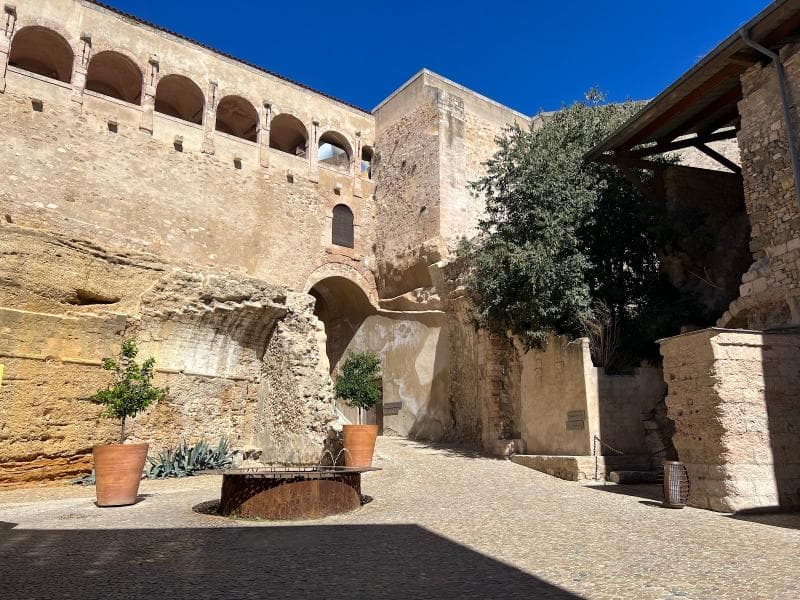
Explore the Fort Saint-Jean Bridge in Marseille, France, a stunning architectural link between the ancient fort and modern MuCEM, offering panoramic views.
Overview
Nestled at the vibrant entrance of Marseille's Old Port, the Fort Saint-Jean Bridge serves as a remarkable contemporary link, seamlessly connecting the modern architecture of the Museum of European and Mediterranean Civilisations (MuCEM) to the ancient, storied walls of Fort Saint-Jean. More than a mere pedestrian walkway, this elegant structure is a vital artery, allowing visitors to traverse centuries of history and culture with panoramic views of the Mediterranean Sea and the bustling cityscape. Designed with a striking minimalist aesthetic, the bridge invites a leisurely stroll, offering a unique perspective on Marseille's rich heritage and dynamic present. It embodies a dialogue between the past and the future, making the historic fort an accessible and integral part of the modern museum experience.
History & Cultural Background
The history of Fort Saint-Jean itself is deeply interwoven with Marseille's identity, dating back to the 12th century when it began as a commandery for the Knights Hospitaller of Saint John of Jerusalem. This strategic location at the mouth of the Old Port has always been crucial for the city's defense and maritime trade. The fortification we see today was largely constructed from 1668 to 1671 under the orders of King Louis XIV, not only to protect Marseille from external threats but also, subtly, to exert royal control over the often rebellious city.
Over the centuries, Fort Saint-Jean served various military functions, including a barracks for the French Army and, notably, as a munitions depot during World War II. An accidental explosion in 1944 severely damaged parts of the fort, leaving it in a state of disuse until its classification as a historical monument in 1964. A significant turning point came in 2013 when, following extensive restoration, the fort was reopened to the public for the first time in centuries, becoming an integral part of MuCEM. The Fort Saint-Jean Bridge, therefore, is not just a piece of infrastructure; it's a symbolic restoration of access, inviting the public to reclaim a site that was once an 'impenetrable fortress.'
What Makes It Special
What makes the Fort Saint-Jean Bridge truly special is its architectural ingenuity and its profound contextual significance. Designed by the acclaimed architect Rudy Ricciotti, the main footbridge is an engineering marvel, spanning 115 meters to connect MuCEM's J4 building with the fort. A second, 70-meter bridge extends from the fort to the historic Panier district, completing a seamless pedestrian journey across disparate parts of the city.
These bridges are crafted from Ultra-High Performance Fiber-Reinforced Concrete (UHPFRC), a material so innovative it allows for incredibly slender designs, often described as having properties close to steel, eliminating the need for bulky arches or supporting cables. The result is a sensation of floating above the water, offering unobstructed vistas of the sparkling Mediterranean, the historic Old Port with its fishing boats, and the distant Château d'If. The bridge's minimalist design ensures it complements rather than overshadows the ancient fort, emphasizing the continuity between Marseille's past and its contemporary cultural landscape.
Stories, Fun Facts & Local Details
The Fort Saint-Jean Bridge, while modern, is imbued with layers of history. Imagine the Knights Hospitaller once occupying the ground where you now walk, before the 17th-century fortifications were built. A little-known fact is that the construction of the fort by Louis XIV was not solely for defense; it was also strategically placed to turn its cannons towards the city, a clear message to the rebellious Marseillais.
The bridges themselves are a triumph of contemporary engineering, demonstrating how cutting-edge materials can create structures that feel both robust and impossibly light. Rudy Ricciotti, the architect, envisioned these walkways as 'taut threads' connecting different epochs of Marseille. Walking across, you're not just crossing a gap; you're traversing a timeline, from the Crusades-era origins of the fort to the modern cultural hub that MuCEM represents, all while experiencing Marseille's vibrant urban life unfolding below.
Visitor Perspective
For any curious traveler, the Fort Saint-Jean Bridge offers an enriching and accessible experience. Access to the outdoor areas of Fort Saint-Jean, including the bridges, is free, allowing anyone to enjoy this unique urban promenade. As you step onto the bridge, the sensation of walking above the water, with the vastness of the sea stretching out before you, is immediate and captivating. The views are simply breathtaking, encompassing the grandeur of Notre-Dame de la Garde, the lively Old Port, and the impressive J4 building of MuCEM.
It's a journey that invites contemplation: looking back at the ancient fort, with its Fanal Tower and King René Tower, and then forward to the striking contemporary architecture. The bridge encourages visitors to explore the fort's ramparts, its Mediterranean gardens, and its various exhibition spaces, seamlessly integrating them into the larger MuCEM experience. It's an opportunity to connect with Marseille's soul, understanding how deeply its history is intertwined with its maritime identity and its continuous evolution.
Coordinates: 5.3667, 43.2968
View on Google Maps💬 How Travelers Describe This Place
Based on community votes
Must See
797Interesting
695Unique
396Beautiful
286Photogenic
22
Traveler Stories
Discover memorable experiences shared by travelers who have visited this place.
No traveler stories yet.
Be the first traveler to share what made this place memorable.

Tour
By
Spot
Discover amazing places around the world. Your journey starts here.
Explore
© 2026 TourBySpot. All rights reserved.